
Foot Odor Integrated Assessment: Three-Layer Analysis of Sweat × Bacteria × Fungi
Eccrine × Brevibacterium × Tinea PedisStepped Management + Recurrent-Case Integration
Foot odor is the most underrated yet most systematically treatable site in the integrated odor clinic. The dominant drivers are high-density eccrine glands on the sole (600+ per cm²) + occlusive footwear creating heat/humidity + foot bacteria (Brevibacterium epidermidis et al.) + often-coexisting tinea pedis. Most patients improve significantly with 4 weeks of systematic home management; recurrent cases enter the medical intervention ladder.
The Microbiome Mechanism of Foot Odor
The integrated clinic evaluates the foot in three layers — which layer is imbalanced determines the next step: adjust footwear and socks, add antimicrobial spray, or treat tinea pedis.
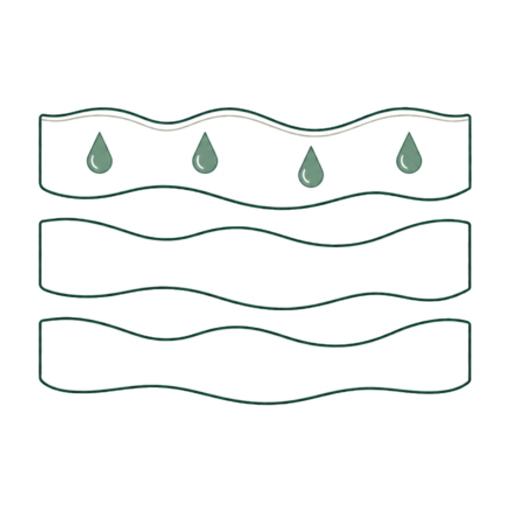
Layer 1: Eccrine + Environment
Sole eccrine density is extremely high (600+/cm²). Sweat itself is odorless, but occlusive footwear + 80%+ humidity + body heat create a perfect bacterial culture environment.
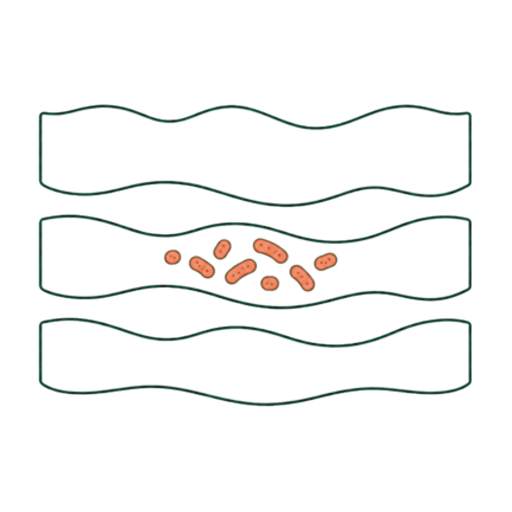
Layer 2: Bacterial Flora
Brevibacterium epidermidis, Staphylococcus, Bacillus subtilis metabolize amino acids in sweat (especially L-leucine) → produce isovaleric acid — the classic "stinky-cheese" odor.
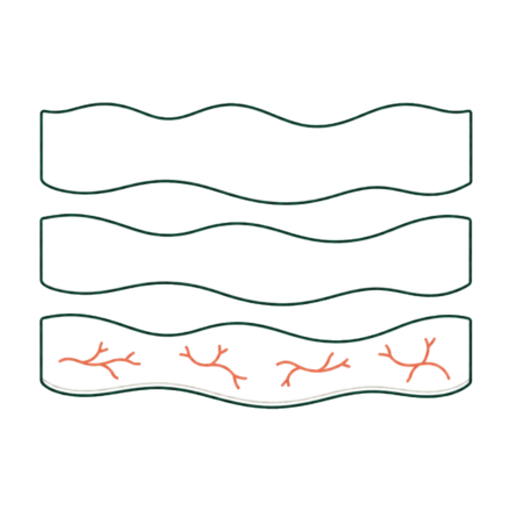
Layer 3: Tinea Pedis (Fungal)
Trichophyton rubrum, T. mentagrophytes cause athlete's foot, often coexisting with bacterial odor — peeling, fissures, interdigital itch worsen overall odor. 30-40% of recurrent cases have fungal involvement.
* Layer 1 issues improve with home management (footwear rotation + antimicrobial + socks). Layer 2+3 coexistence requires prescription antifungals. Hyperhidrosis sufferers may consider Botox for plantar sweating.
4-Week Home Protocol
Before medical intervention, most foot odor cases benefit from 4 weeks of systematic home care. Track odor intensity (self-rated 0-10) and accompanying symptoms (peeling, fissures, itch) at weeks 0, 2, and 4.
Footwear Rotation + Breathability
Rotate 2-3 pairs of shoes; dry each pair 24-48 hours after wear. Prefer breathable uppers (leather, mesh); avoid prolonged synthetic occlusion.
Antimicrobial Foot Spray / Powder
Apply antimicrobial spray (aluminum chloride / isopropyl alcohol) each morning, or antimicrobial powder. Tea-tree foot soak 2-3 times weekly (10 min / 38°C); avoid over-stripping.
Moisture-Wicking Socks
Wool / Merino / silver-ion socks (avoid 100% cotton — absorbs moisture but doesn't release). Change daily; change immediately after exercise.
Exfoliation + Moisturization
Gentle exfoliation 1-2 times weekly (foot scrub or 5-10% urea cream) reduces dead skin that feeds bacteria. Moisturize dry areas to prevent fissures.
Tinea Pedis Screening
If accompanied by peeling, fissures, or interdigital itch — possibly co-existing athlete's foot. OTC antifungal cream (terbinafine 1% / clotrimazole 1%) for 2 weeks; no improvement → see a doctor.
Medical Intervention Ladder (when 4-week home protocol fails)
The integrated clinic intervenes in three tiers based on severity and microbiome assessment. Principle: "lowest necessary intensity, regular reassessment."
| Tier | Intervention | When to Use |
|---|---|---|
| Tier 1: Prescription Antimicrobials / Antifungals | Erythromycin gel (bacterial) / prescription terbinafine 1% cream 4 weeks (fungal) / 20% aluminum chloride solution (when hyperhidrosis amplifies) | < 30% improvement after 4-week home protocol |
| Tier 2: Hyperhidrosis Management | Botox injection — 1 shot per 1 cm on the sole; reduces sweat output 60-80%; 6-month effect | Hyperhidrosis is the dominant amplifier, not fungal or bacterial |
| Tier 3: Advanced Assessment | Microbiome panel (flora analysis), biofilm management, oral antifungals for refractory tinea pedis (itraconazole / fluconazole, with LFT evaluation) | 8 weeks of Tier 1+2 with no improvement, or recurrent relapse |
* All medical interventions are individualized; results may vary. Plantar Botox falls within this clinic's hyperhidrosis specialty; effects and risks are discussed by Dr. Liu in person during consultation.
When to See the Integrated Odor Clinic
If any of the following apply, book an integrated assessment rather than trying yet another foot spray:
- < 30% improvement after 4 weeks of systematic home protocol
- Accompanying obvious peeling, fissures, interdigital itch (suspected co-existing tinea pedis)
- Recurrent — relapsing 2+ times per year, needs root-cause clarification
- Plantar sweat heavy enough to require 2-3 sock changes daily (Botox candidate)
- Concurrent odor at underarm / scalp / other sites needing integrated handling
Foot odor integrated assessment is performed during the in-person Odor Map initial consultation. Book on LINE; fee and duration are individualized based on your described condition.
Frequently Asked Questions
Q1.Can foot odor be "cured"?
Q2.I wash my feet daily but odor persists — am I doing it wrong?
Q3.How effective is plantar Botox?
Q4.Tinea pedis keeps coming back — what now?
Q5.Suitable for children / teens?
Q6.Is plantar Botox painful?
Dr. Ta-Ju Liu
Lead Physician, Clear Odor Integrated Odor Clinic
"Foot odor is usually a 'system-solvable' problem — home management + microbiome assessment + Botox/antifungal when needed. The integrated value is sparing you from trying yet another foot spray."
From shoe closet to consult room — one solution
Not another foot spray problem — a systematic one. Book an integrated assessment to address root causes.
Book Odor Map ConsultationCan't use LINE? Leave us your contact details
Replies within 1 hour during business hours — we only use this info to respond
Learn More About Foot Odor
Foot Odor Comprehensive Guide: Dr. Ta-Ju Liu on the Microbiome Truth Behind 'Washing Daily but Still Smelly', a 4-Week Home Protocol, and the Tier 1-3 Medical Intervention Ladder
Foot odor is not primarily about 'unclean feet' — it stems from the dense eccrine glands on the soles (600+ per cm²), the hot and humid environment created by closed footwear, foot bacteria (Brevibacterium, Staphylococcus), and the frequently co-existing tinea pedis (athlete's foot). Dr. Ta-Ju Liu maps out 5 clinical archetypes, a 4-week systematic home protocol, a Tier 1-3 medical intervention ladder (including plantar Botox injection for hyperhidrosis management), an integrated approach to recurrent cases, and a pathway for the Olfactory Reference Syndrome (OlRS) gray zone — and explains why 'simultaneously rotating footwear + antimicrobial care + treating tinea pedis' works better than chasing one more spray. A reading framework to help you understand which type you belong to and where to start, before your consultation.
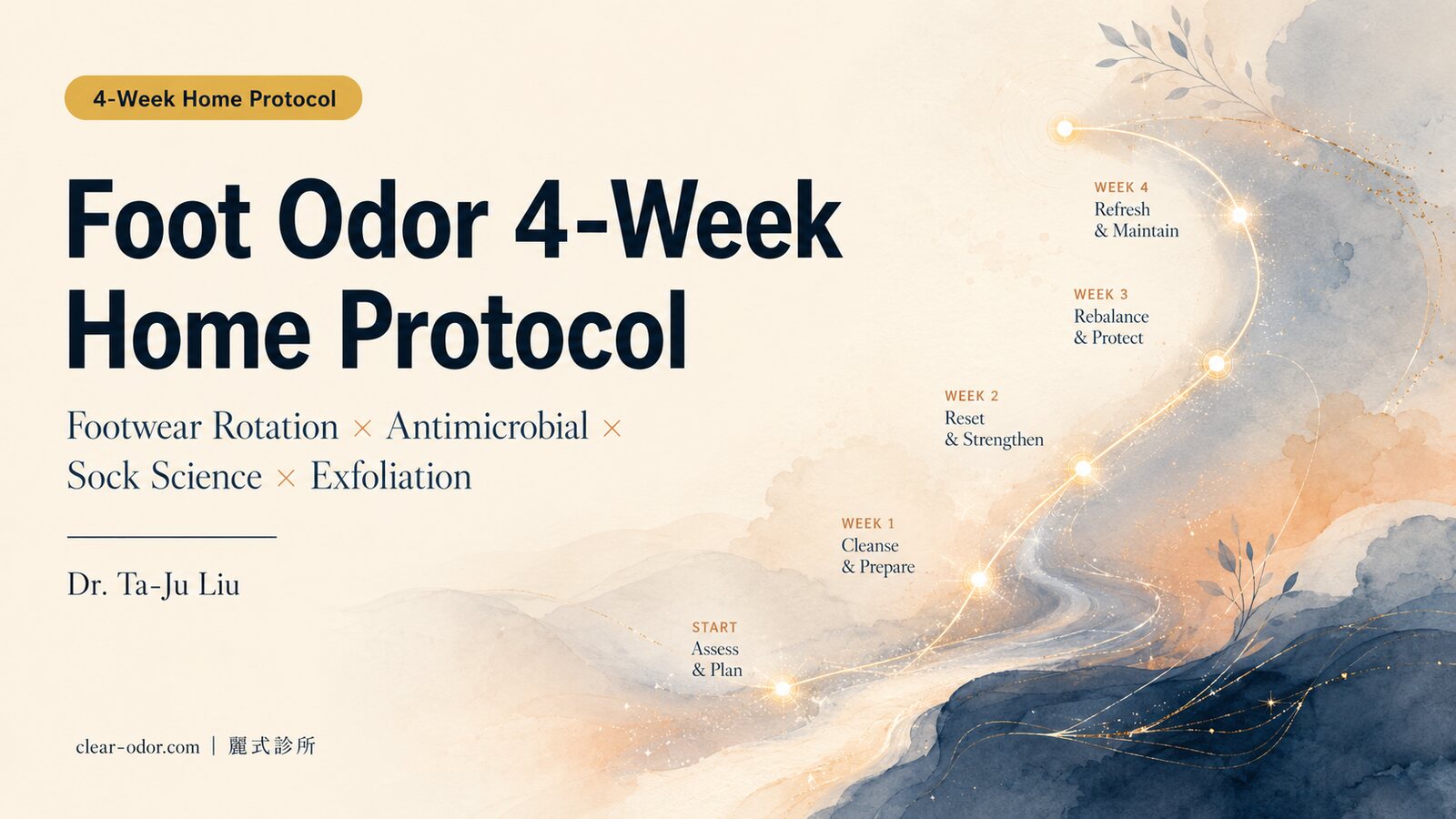
Foot Odor 4-Week Home Protocol: Dr. Ta-Ju Liu on Footwear Rotation, Antimicrobial Sprays, Sock Material Science, Exfoliation, and a Self-Assessment Record
The core of foot odor home management is not 'buying a more expensive foot spray' — it's intervening across 5 dimensions simultaneously: footwear, antimicrobials, sock material, exfoliation, and tinea pedis screening. This article lays out a 4-week day-by-day SOP — Week 0 baseline recording, Week 1 launching the 5 actions, Week 2 footwear disinfection, Week 3 lifestyle factor adjustment, Week 4 evaluation and decision. Includes comparison tables for shoe materials / sock materials / antimicrobial ingredients / exfoliation products, 5 signals for tinea pedis screening, a downloadable self-assessment record format, and when to escalate to Tier 1 prescription intervention or plantar Botox injection.

Plantar Botox Complete Guide: Dr. Ta-Ju Liu on the Mechanism, Injection Details, ~6-Month Duration, Pain Management, and Comparison with Palmar and Axillary Injections
Plantar Botox injection is a mid-tier intervention for the 'hyperhidrosis-amplified' subset of foot odor and for patients who are not surgical candidates — it blocks the nerve signals to eccrine glands, reduces sweat output by 60-80%, and lasts roughly 6 months. This article walks through the mechanism of Botox on eccrine glands, injection details (one needle per 1 cm, 30-40 needles per foot, depth, pain management), indications and contraindications, comparison with palmar and axillary injections, the re-treatment strategy after the ~6-month window, possible side effects (transient changes in muscle sensation, bruising, injection-site reactions), and how to combine it with environmental management (footwear rotation, antimicrobial spray, tinea pedis screening) into a layered plan.
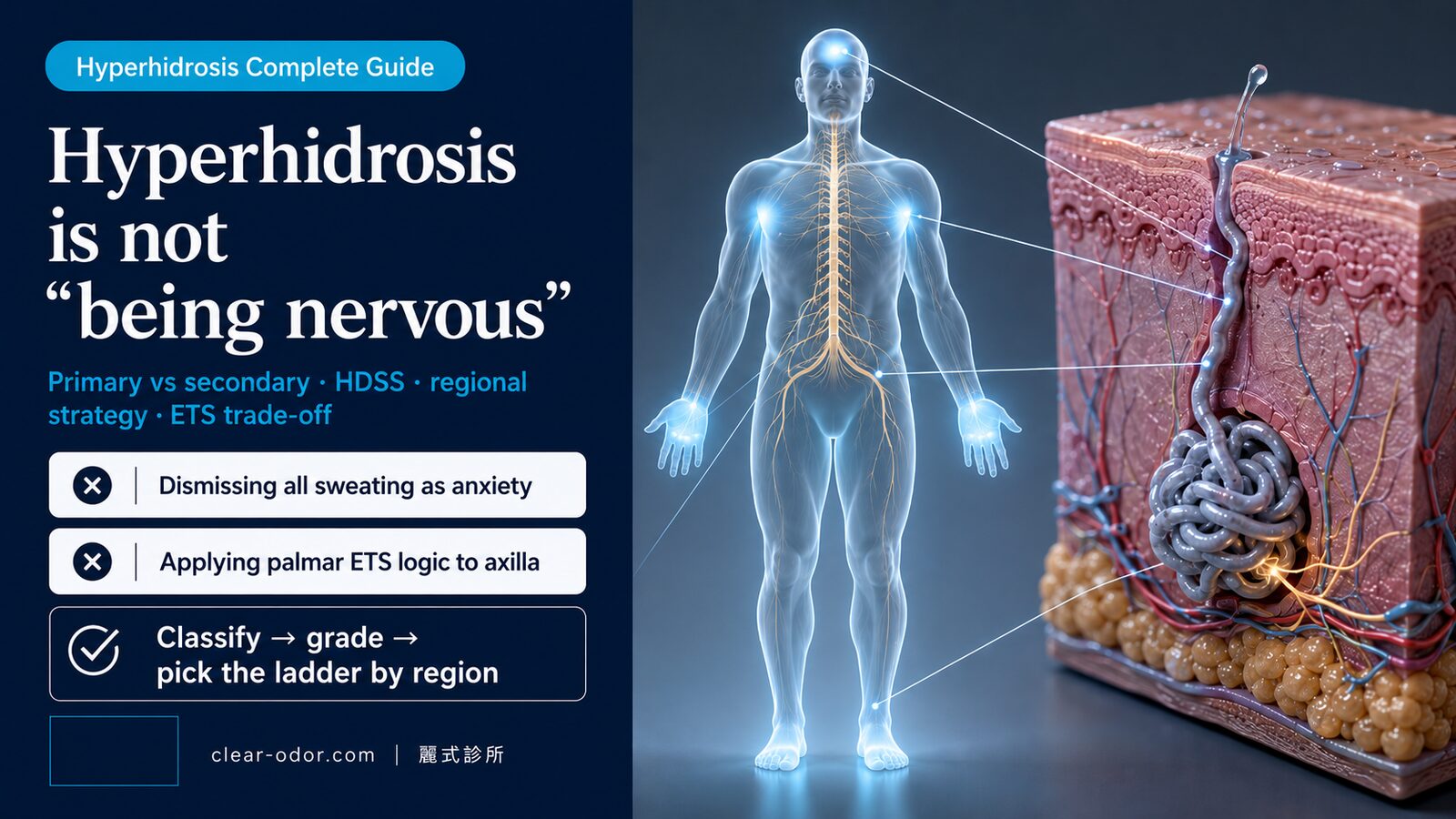
Hyperhidrosis Complete Guide: Primary vs Secondary, HDSS Grading, Treatment Ladder, and the ETS Trade-off (by Dr. Ta-Ju Liu)
Hyperhidrosis is not 'being nervous' — it's a constitutional condition where overactive sympathetic signaling drives sweat glands beyond thermoregulatory need. Dr. Ta-Ju Liu walks through the primary vs secondary distinction, HDSS grading, body-region strategy (palmar, axillary, plantar, craniofacial, generalized), the full antiperspirant→iontophoresis→anticholinergic→Botox→microwave→ETS ladder, the ETS compensatory-sweating trade-off, and a non-nerve-cutting thermolysis pathway for patients already affected by compensatory hyperhidrosis. 12 of the most common decision-making questions.
⚕️ Medical Disclaimer
The medical information provided on this page is for reference only and cannot replace individual face-to-face diagnosis, advice, or treatment from a physician. All medical procedures carry risks. Individual constitution and post-operative recovery vary from person to person. Please discuss any treatment plan with your attending physician before making decisions.