You had bromhidrosis surgery, and after some time you notice the smell again — for many people, the first thought is: "Has it come back?"
That worry is understandable, but don't jump to a conclusion yet. "Odor after surgery" can actually stem from several completely different situations, and each one is handled very differently. Sorting out the cause is the first thing to do before deciding what comes next.
"The Smell Is Back" Doesn't Always Mean "Recurrence"
Let's say this up front: "smelling odor again after surgery" and "bromhidrosis recurrence" are not the same thing. Clinically, post-surgery odor falls roughly into three categories:
- Residual glands: some apocrine glands (the sweat glands responsible for body odor) were never fully cleared, so a portion remained — which means the odor never truly disappeared completely, or became noticeable again once you healed.
- True recurrence: apocrine glands that were cleared don't grow back, so genuine "recurrence" is uncommon; most returning odor is residual.
- Not recurrence at all: the odor comes from another source (a different body region, or a temporary factor) and gets mistaken for underarm bromhidrosis coming back.
Of these three, the first is by far the most common.
Key takeaway: When most people say "recurrence," the more common reality is "residual glands that were never fully cleared," not glands regrowing. Getting this distinction right keeps you from using the wrong approach — and from worrying for nothing.
Most Often, It's "Glands That Were Never Cleared"
The results of apocrine gland clearance surgery are directly tied to how thoroughly the glands were removed. If the clearance was incomplete the first time and a portion of glands was left behind, the odor isn't "reappearing" — it has been there the whole time, and you've simply started noticing it again.
This is also why, even though it's all called "bromhidrosis surgery," some people have almost no odor afterward while others feel "like nothing was done" — the difference often isn't whether surgery happened, but how thoroughly the glands were cleared. I cover "why the same surgery can produce such different results" more fully in a separate article, does bromhidrosis surgery actually work.
For how the techniques compare, including which ones tend to leave glands behind, see Rotational Curettage vs Laser for Odor: Which Lasts Longer?.
The difference between residual glands and true recurrence matters, because the approach for residual glands is to "go back and clear the areas that were missed," which is a different clinical line of thinking from "glands regrowing."
True "Recurrence" Is Actually Uncommon
Apocrine glands that were cleared don't grow back. True recurrence is uncommon, and most odor that returns after surgery is residual. So our aim is to clear the apocrine glands properly in the first operation, though results vary from person to person.
Of course, no surgery can use the word "guarantee," and everyone's constitution and recovery differ. But mechanistically, "glands regenerating in large numbers" is not the norm — which is exactly why, when someone has "odor again after surgery," I look first toward "residual glands" rather than assuming it "grew back."
If surgery is done before puberty, will the glands grow back later?
Apocrine glands that were cleared don't grow back, in children or adults. When odor shows up after surgery done before puberty, it's usually glands that weren't treated at the time becoming active as the child develops, which still counts as residual. For timing in children, and why I'm cautious under age 12, see Child Bromhidrosis: Which Doctor, and When Not to Operate.
What Does a "Recurrence Rate" in the Literature Actually Count?
In published studies, "recurrence" means odor came back after surgery. The studies don't separate regrowth from glands that were never cleared, so what they count likely includes what this article calls residual glands. The figures shift a lot with technique and length of follow-up.
- A single-center retrospective study of 155 patients comparing subcutaneous curettage with microwave treatment found that over 1 to 3 years of follow-up, patient-reported return of odor occurred in 21% of the surgery group and 39% of the microwave group; at 3 years, effective improvement was maintained in 90% of the surgery group and 23% of the microwave group (Dermatol Surg 2022, PMID 34856594).
- A Korean series of 4,322 patients treated with a scrape-and-suction technique, assessed by patient survey at least 6 months after surgery, reported recurrence in 230 patients (5%); most resolved after additional procedures, leaving 36 cases (0.8%) (Kim, Aesthetic Plast Surg 2014, PMID 24474165).
In Kim's series, most people whose odor returned improved after an additional procedure, which fits the view that most returning odor is residual and can be cleared again.
It Might Not Be Recurrence at All
There's one more situation that's easily overlooked: the odor isn't actually coming from where the surgery was done.
- Body odor doesn't only originate in the underarms — the areola, perineum, scalp, and feet can all produce odor too, and sometimes it's another region speaking up.
- Odor that's one-sided, occasional, or only noticeable under certain conditions (stress, diet, heat and humidity) may be temporary rather than a problem in the surgical area.
- Changes in "your own sensitivity to odor" can be mistaken for the smell coming back.
To tell these apart, rather than frightening yourself, it's better to describe the actual situation clearly and let your doctor help locate the source. Clarifying "where the odor is coming from" is often more crucial than "whether it's recurrence."
If what you actually want sorted out is which post-op reactions are normal and which count as complications, go straight to Bromhidrosis Surgery Side Effects: Normal, or Call the Clinic?.
Why do my chest or genital area smell after underarm surgery?
The areola and perineum have apocrine glands of their own, and underarm surgery doesn't touch them. Once the strongest odor in the underarms is gone, you start noticing areas it used to mask, so it can feel as if the smell moved. To work out which applies to you, see Areola Odor vs Underarm Odor: Same Cause? Do They Overlap? and Perineal Odor or Infection? 3 Sources & Which Doctor.
I still sweat and smell sweaty after surgery. Is the bromhidrosis back?
Sweating after surgery is normal. Bromhidrosis surgery targets the apocrine glands; the eccrine glands that regulate body temperature aren't what it removes. Sweat that sits and gets broken down by bacteria smells like ordinary sweat, which is different from the odor you had before surgery. If you can't tell them apart, note when the smell appears and bring that to your consultation.
How Can You Tell on Your Own First? Ask Yourself a Few Questions
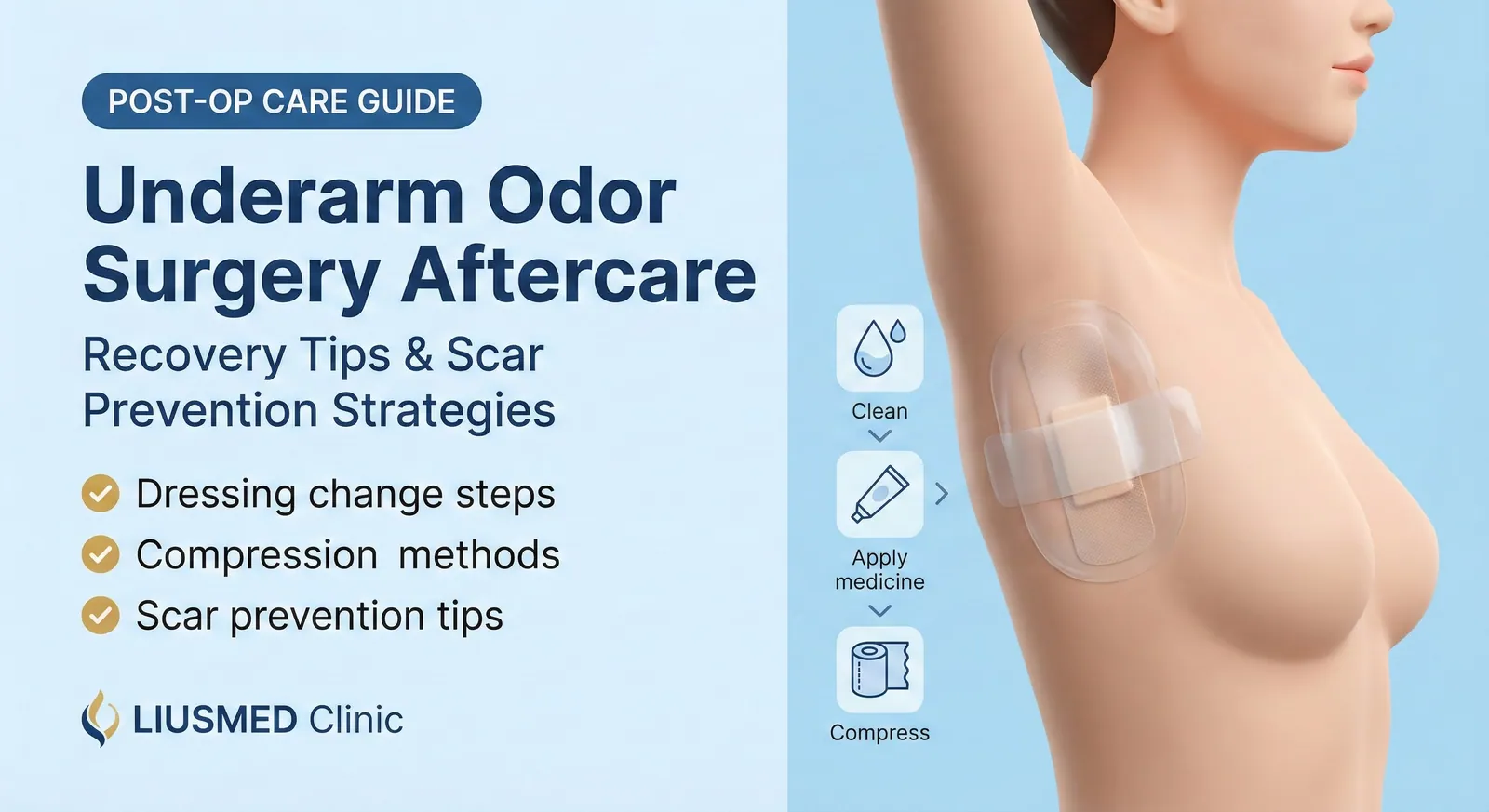
Odor in the first few weeks after surgery often comes from wound fluid, dressings, and swelling, so it can't tell you whether the glands were cleared. Wait until the tissue settles and let your doctor assess it at a follow-up visit. For what each stage looks like, see the stage-by-stage timeline after sweat gland surgery.
If the odor is still there once things have settled, these few questions can help you narrow things down:
| Ask yourself | Leans toward |
|---|---|
| Has the odor "always been there, just varying in degree," or did it "completely disappear and only come back later"? | Always there → leans residual; disappeared then returned → needs clarifying |
| Is the noticeable odor on the same side, or both sides? | One-sided → check for local residual glands or another source |
| Is it present at any time, or only after heat / stress / certain foods? | Only in specific situations → possibly temporary, not a gland problem |
| Besides the underarms, is there odor in other areas too? | Yes → the source may not be the original surgical area |
This table isn't for self-diagnosing and drawing conclusions — it's to help you organize the information. Bringing these observations to a consultation will get you to an answer faster than just saying "I think I smell again."
If It's Confirmed to Be Residual, What's the Next Step?
If the assessment confirms it's "residual glands that were never fully cleared," then the direction is clear: re-treat the areas that were missed. This kind of "touch-up clearance / revision" is a more specialized topic, involving precise clearance again in an underarm that has already been operated on — its difficulty differs from a first-time procedure, and this part falls under surgical technique.
Already operated on elsewhere with disappointing results, and wondering whether it can be re-treated? We have a full explanation of residual apocrine gland re-clearance and how to judge multiple revisions on the Minimal-Cut Surgery dedicated page → Go to the Minimal-Cut Surgery page to learn about revision assessment
Whether to do it again, and when, has no one-size-fits-all answer — it depends on the extent of the residual glands, the condition from the previous surgery, and how much it's currently troubling you. If you're stuck in the uncertainty of "odor after surgery," rather than guessing over and over, bring the situation in for a consultation — you can start with the underarm bromhidrosis surgery page, or book a consultation directly for an assessment by Dr. Ta-Ju Liu. Sort out first whether it's "residual, true recurrence, or not recurrence at all," and every step afterward will stay on the right track.
Frequently Asked Questions
After bromhidrosis surgery, does noticing odor again always mean it has come back?
Not necessarily. Clinically, the most common reason is actually residual glands that were never fully cleared the first time — not glands growing back.
How do you tell "residual glands" apart from "true recurrence"?
With residual glands, the odor was there all along and you've simply started noticing it again. True recurrence means removed glands growing back. Cleared apocrine glands don't grow back, so true recurrence is uncommon and most returning odor is residual.
How long do the results of bromhidrosis surgery last, and will the glands grow back?
Apocrine glands that were cleared don't grow back, and our clinic's long-term follow-up records show no reported recurrence. Results still vary by individual and cannot be guaranteed. Getting the first surgery done thoroughly is more practical to focus on than worrying about recurrence.
Could the odor actually be coming from somewhere other than the underarms?
It's possible. The areola, perineum, scalp, and feet can all produce odor too. Odor that appears only on one side, or only after heat and humidity, stress, or certain foods, may not be coming from the area that was operated on.
How can I do a preliminary self-check to tell whether it's residual glands or another cause?
Start by asking yourself: has the odor always been there, or did it disappear and then return? Is it on one side or both? Does it appear only in specific situations? Is there odor in other areas? Bringing these observations to a consultation helps pinpoint the source faster.
If odor returns after miraDry or Botox, is that recurrence?
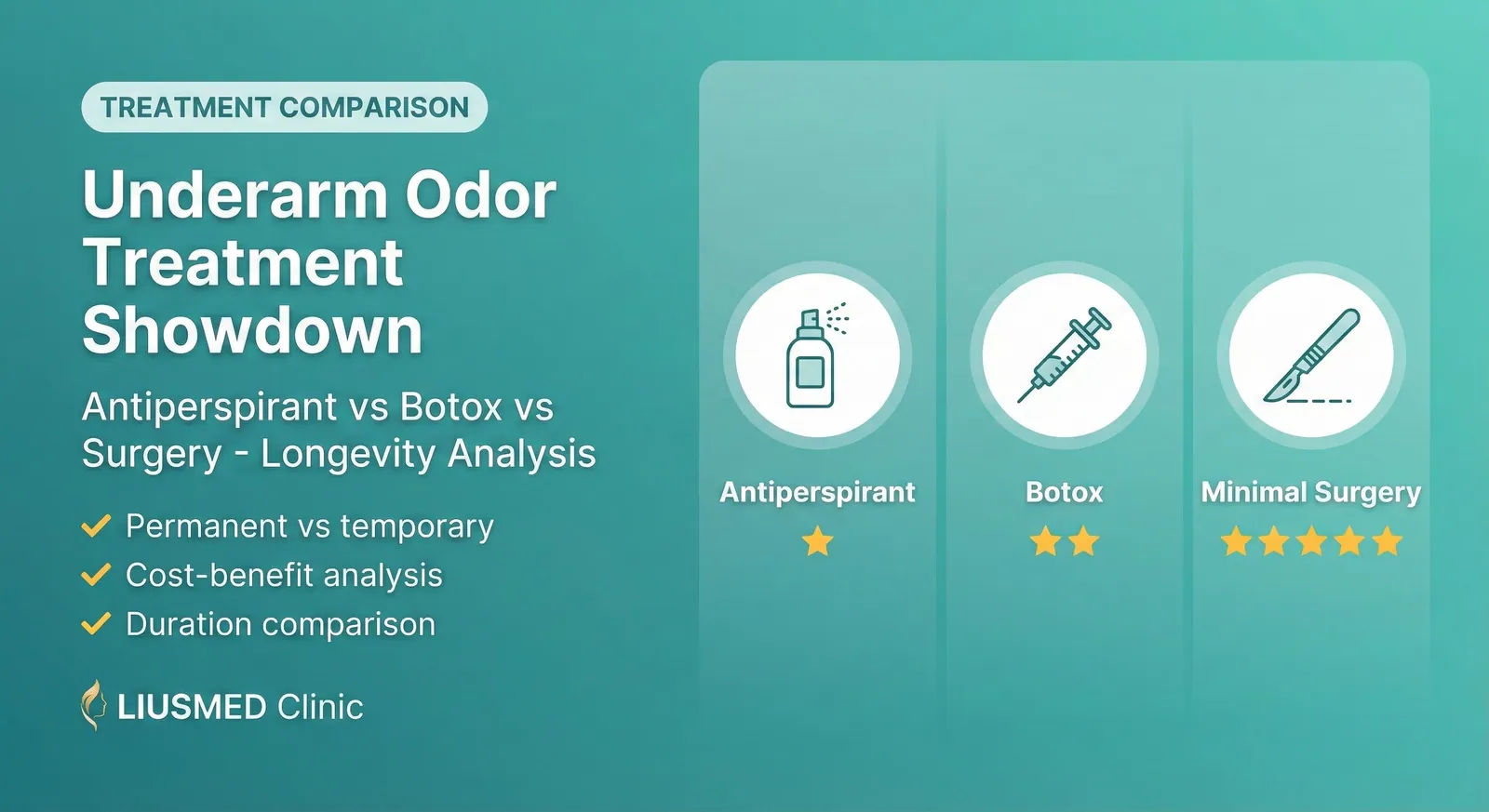
It's a different situation. Botox works temporarily, so odor returning as it wears off is expected. Microwave treatment uses heat to destroy part of the glands, and its effect declines over time. In one comparison study, at 3 years after treatment, effective improvement was maintained in 23% of the microwave group and 90% of the subcutaneous curettage group (Dermatol Surg 2022, PMID 34856594).
If it's confirmed to be residual glands, can it still be treated?
Yes. The approach is to re-assess and re-treat the areas that were missed the first time. Whether to do it, and when, needs to be judged by the doctor at a consultation based on your individual situation. A revision has no flat quote either; for what makes up the cost, see Bromhidrosis Surgery Cost in Taiwan: How to Compare Clinics.