
Compensatory SweatingTreatment Guide
Minimally Invasive Sweat Gland Thermolysisfor Post-ETS Relief
Did you trade palm sweating for full-body soaking? Daily clothes drenched like walking in rain, constant changing, social withdrawal, sleepless nights. With over 10 years of treating it with thermolysis, we no longer see compensatory sweating as "unsolvable."
Table of Contents
What is Compensatory Sweating?
The Most Devastating ETS Side Effect
After ETS cuts the sympathetic nerve, sweat shifts to the chest, back, and abdomen — pooled data put it at about 62% of post-ETS patients.
Compensatory Hyperhidrosis is the most common and devastating side effect after "Endoscopic Thoracic Sympathectomy (ETS)" surgery for palmar hyperhidrosis.
The body's sweating function is controlled by sympathetic nerves for temperature regulation. When ETS surgery cuts or clips the sympathetic nerve chain, blocking signals to hand sweat glands, sweat must find other pathways. The body activates compensatory mechanisms, redirecting sweat to other areas like chest, back, abdomen, buttocks, and thighs.
In a meta-analysis of 10 studies and 3,117 patients, 62% of ETS patients experienced compensatory sweating (95% CI 51-72%), with 23% severe enough to impact daily life (95% CI 12-34%; PMID 40124609) — requiring 3-4+ clothing changes daily - sometimes worse than the original palm sweating.
Compensatory sweating was once considered "irreversible." Treating the sweat glands in the affected areas directly with thermolysis means it is no longer an unsolvable problem.
Not sure which condition applies to you? See the body odor & hyperhidrosis conditions overview to compare each condition — definitions, ICD-10 codes, common symptoms, and when to see a doctor.
What Daily-Life Problems Does Compensatory Sweating Cause?
A Nightmare Worse Than Palm Sweating
Soaked clothing all day, 3–4 outfit changes daily, sweating year-round, social withdrawal, and poor sleep are the most common.

Constantly Soaked
Heavy sweating on chest, back, abdomen - clothes drenched like walking in rain

Endless Changing
Need 3-4+ clothing changes daily, must carry spare clothes everywhere

Sweating Year-Round
Excessive sweating even in winter, temperature regulation completely disrupted

Social Withdrawal
Fear of visible sweat stains leads to avoiding social situations, affecting work

Night Troubles
Severe night sweats, frequently soaking sheets, terrible sleep quality

Emotional Trauma
Many patients only wanted to fix palm sweating and ended up with a bigger problem, leaving deep regret and helplessness
If you're experiencing this suffering, believe: compensatory sweating is no longer unsolvable.

Can Compensatory Sweating Be Treated Without Surgery or Touching Nerves?
Used by Dr. Ta-Ju Liu for Compensatory Sweating for Over 10 Years
Yes. Heat acts precisely on the sweat glands without touching the sympathetic nerve — only anesthetic needle punctures, no stitches, and no new compensation reported in our follow-up records.
This technique uses specific frequency thermal energy to penetrate the epidermis and reach the dermis (depth ~0.4-0.5mm), precisely targeting sweat gland tissue, causing thermal denaturation and atrophy.
Direct Gland Destruction
Thermal energy directly acts on sweat gland cells, causing atrophy and necrosis, reducing sweat at the source
No Nerve Contact
Fundamentally different from ETS - we only treat glands, without touching the sympathetic nervous system
No Open Wounds
Only anesthetic needle punctures, no stitches and no skin incisions; recovery takes about 1–2 weeks
No new compensation reported
Since nerves aren't affected, no new compensatory sweating has been reported in our follow-up records; individual results may vary
Technical Advantages
Thermolysis, Botox, Oral Meds, or ETS — How to Choose?
Why Consider Thermolysis?
Thermolysis does not cut nerves, no new compensation has been reported in our follow-up records, and in our own records a single session cuts sweating by roughly 70%. ETS carries a high compensatory risk (62% in pooled data, PMID 40124609) and is not advised for compensatory sweating. To be honest about it: truncal compensatory sweating has almost no controlled-trial data, and the sweat-reduction percentages that circulate come mostly from axillary studies.
| Treatment | Effect | Duration | New Compensation Risk | Recovery |
|---|---|---|---|---|
| Sweat Gland Thermolysis (pinhole entry) | ~70% (our records) | Long-term | None reported (our follow-up) | 1-2 weeks |
| Botox Injection | Clear improvement | Several months; repeat injections needed (varies) | Very Low | Same day |
| Oral Anticholinergics | ~60% improve ≥1 HDSS grade | During medication | Very Low | None |
| ETS Surgery(Not recommended) | N/A — it is the cause | Long-Lasting | Very High | 1-2 weeks |
※ ETS surgery has good effect on primary site but very high compensation risk - not recommended for treating compensatory sweating
How Is the Treatment Done? Will It Hurt?
Professional, Comfortable, Efficient Experience
Performed under local plus gentle pain-relief anesthesia — not general anesthesia — with greatly reduced discomfort, and the doctor can talk with you throughout.
Professional Assessment
Detailed evaluation of sweating severity and distribution using starch-iodine test
Personalized Plan
Customized treatment plan based on evaluation, explaining expected results
Local + Gentle Pain-Relief Anesthesia
Local anesthesia plus gentle pain-relief anesthesia — you stay relaxed and monitored throughout (not general anesthesia), with discomfort kept very low
Precise Thermolysis
Thermal energy reaches dermal glands causing atrophy, only warmth sensation
Cooling Care
Immediate cooling post-treatment to reduce redness and improve comfort
Follow-up
3-month follow-up to assess results, enhancement treatment if needed


A Common Pattern in Our Clinic
Compensatory sweating years after ETS
A situation we often see: someone had ETS for palm sweating years ago, then began sweating heavily on the chest, back and abdomen, changes clothes 3–4 times a day and avoids light colors in summer; Botox or oral medication helped only for a limited time. For patients like this, Dr. Liu first maps the sweating area with a starch-iodine test, then plans the thermolysis area and number of sessions.
※ This is a composite description of situations commonly seen in clinic, not a specific case. It contains no identifiable personal information and does not represent any individual patient's results.
Recovery Information
Understanding the Recovery Process
Most people return to work after two or three days of rest; local swelling settles over about 1–2 weeks
Treatment Day
- •Mild redness/swelling in treated area
- •Do not drive yourself on the day of gentle pain-relief anesthesia; arrange a ride
- •Some people feel slightly dizzy or weak for about 3 days and may rest at home; most return to work after two or three days
1-2 Weeks
- •Swelling gradually subsides
- •Mild bruising possible, normal
- •Avoid strenuous exercise
2-4 Weeks
- •Swelling fully resolved
- •May feel slight firmness
- •Results becoming visible
1-3 Months
- •Firmness naturally resolves
- •Stable results
- •Follow-up evaluation recommended
Important Notes
- •Avoid hot environments (sauna, hot bath) for 24 hours post-treatment
- •Avoid strenuous exercise for 1 week to reduce sweat stimulation
- •Mild peeling in treatment area is normal metabolic process
- •Contact clinic immediately if any concerns

About the Doctor
Dr. Ta-Ju Liu
Lead Physician, Clear Odor Clinic
"Compensatory sweating was once considered irreversible. For over a decade I have focused on this difficult problem so that patients have an option again. Every follow-up visit is how we review and refine the treatment."
Want to Learn More?
Every patient is different. Dr. Liu will personally evaluate which treatment plan suits you.
Book Online ConsultationFrequently Asked Questions
Q1Can compensatory sweating really be cured? I'm afraid of being disappointed again.
It can be improved. Thermolysis (only anesthetic needle punctures, no stitches) directly destroys sweat glands. In our own records a single session cuts sweating in the compensatory areas by roughly 70%. Truncal compensatory sweating still lacks controlled-trial data, so this figure comes from our records, and individual results vary.
Q2Will sweat transfer to other areas after treatment (causing new compensation)?
No new compensation has been reported in our follow-up records. This technique only destroys sweat glands in specific areas without touching the sympathetic nerves, so it does not work by nerve blockade; individual results may vary.
Q3How long do results last? Do I need repeated treatments?
Results are long-term. Sweat glands destroyed by thermal energy cannot regenerate. There is no long-term follow-up study of truncal compensatory sweating that can give a "how many still hold up after how many years" figure; in our own records most cases hold up well without frequent retreatment, and individual results vary.
Q4Is the treatment painful?
Discomfort is greatly reduced. We use local anesthesia plus gentle pain-relief anesthesia (not general anesthesia); during treatment you mainly feel warmth or slight pressure.
Q5Which body parts can be treated?
Suitable for large sweating areas including chest, back, abdomen, thighs, and buttocks. The doctor will plan treatment areas based on starch test results.
Q6How many sessions are needed?
Usually 1-2 sessions. In our own records a single session cuts sweating by roughly 70%. For severe cases or those seeking maximum dryness, a second enhancement treatment can be done 3 months later.
Q7Can primary hyperhidrosis be treated this way without prior ETS surgery?
Yes, for primary underarm hyperhidrosis. Besides post-ETS compensatory sweating, sweat gland thermolysis can treat primary axillary hyperhidrosis without any prior ETS. In our records primary underarm sweating improves by roughly 80–90%; that is a different figure from the ~70% single-session reduction in compensatory areas, and the two are not interchangeable. Thermolysis does not cut nerves, and no new compensation has been reported in our follow-up records; which option suits you is decided at an in-person evaluation.
Q8How is the appropriate treatment plan determined?
Treatment depth varies based on hyperhidrosis severity (HDSS scale), affected area (unilateral / bilateral / multiple sites), and whether bromhidrosis or compensatory sweating is involved. Dr. Liu will explain the differences between conservative care, Botox, thermolysis, and surgical options after personal evaluation at the initial consultation.
Other Odor & Hyperhidrosis Treatments
Treatment Video
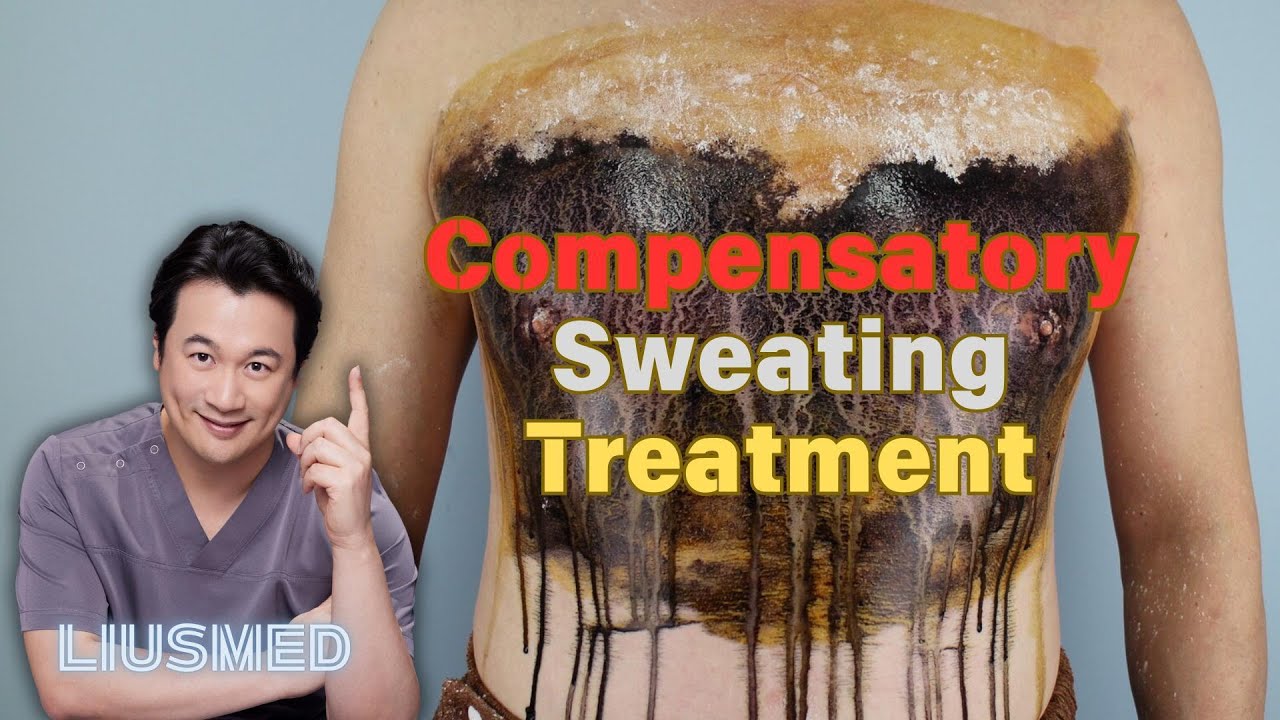
Watch our full explanation of sweat gland thermolysis for compensatory hyperhidrosis
Load YouTube video
Playing this video connects to YouTube, which may set cookies on your device. Clicking below will also enable third-party embeds across this site for the next 13 months.
Learn More About Hyperhidrosis
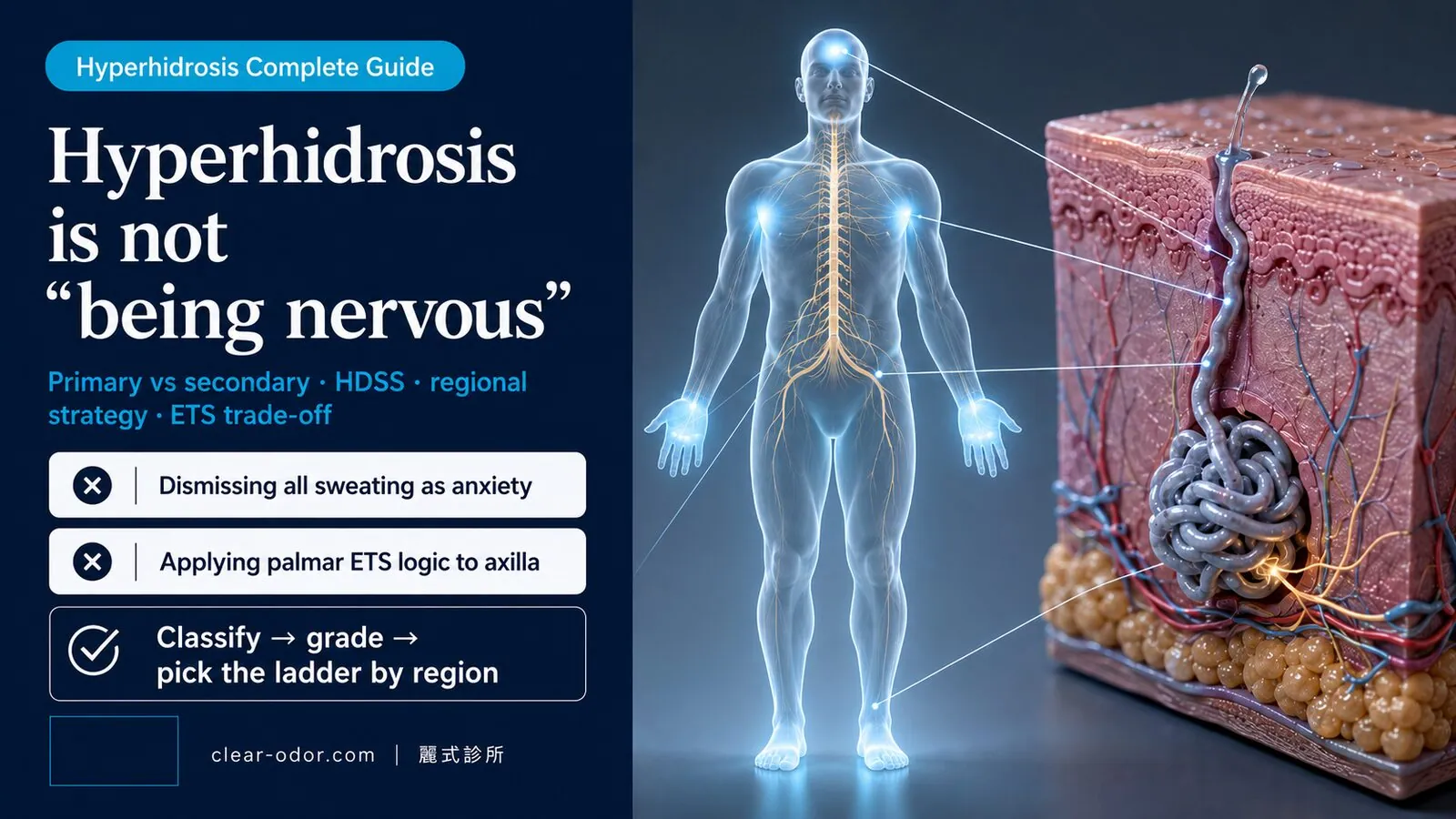
Hyperhidrosis Guide: Types, Severity, Treatments & ETS
Hyperhidrosis is not 'being nervous' — it's a constitutional condition where overactive sympathetic signaling drives sweat glands beyond thermoregulatory need. Dr. Ta-Ju Liu walks through the primary vs secondary distinction, HDSS grading, body-region strategy (palmar, axillary, plantar, craniofacial, generalized), the full antiperspirant→iontophoresis→anticholinergic→Botox→microwave→ETS ladder, the ETS compensatory-sweating trade-off, and a non-nerve-cutting thermolysis pathway for patients already affected by compensatory hyperhidrosis. 12 of the most common decision-making questions.
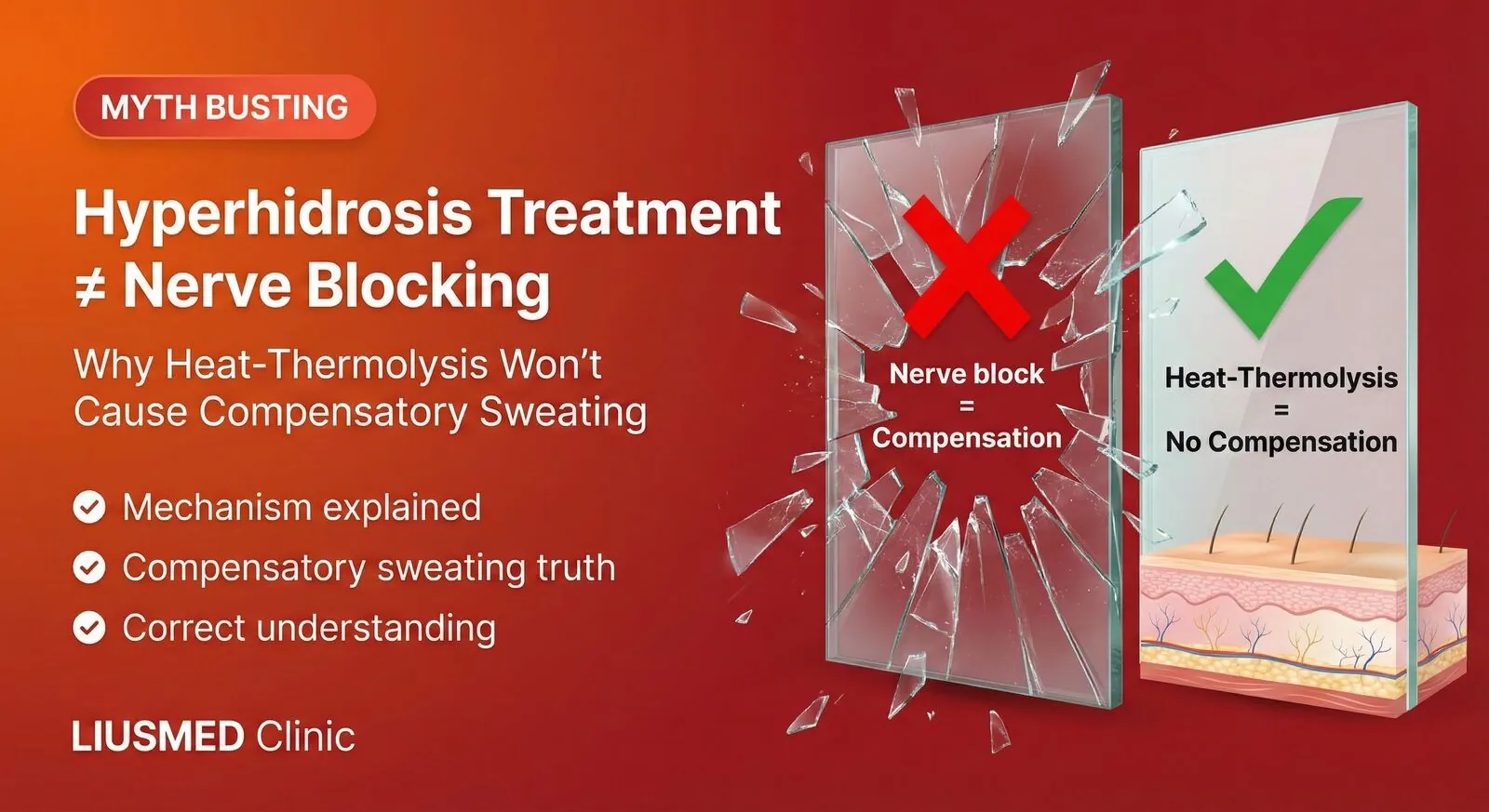
Thermal Sweat Treatment Won't Trigger Compensatory Sweating
Sweat gland thermal ablation works completely differently from nerve blocking surgery and does not cause compensatory sweating.
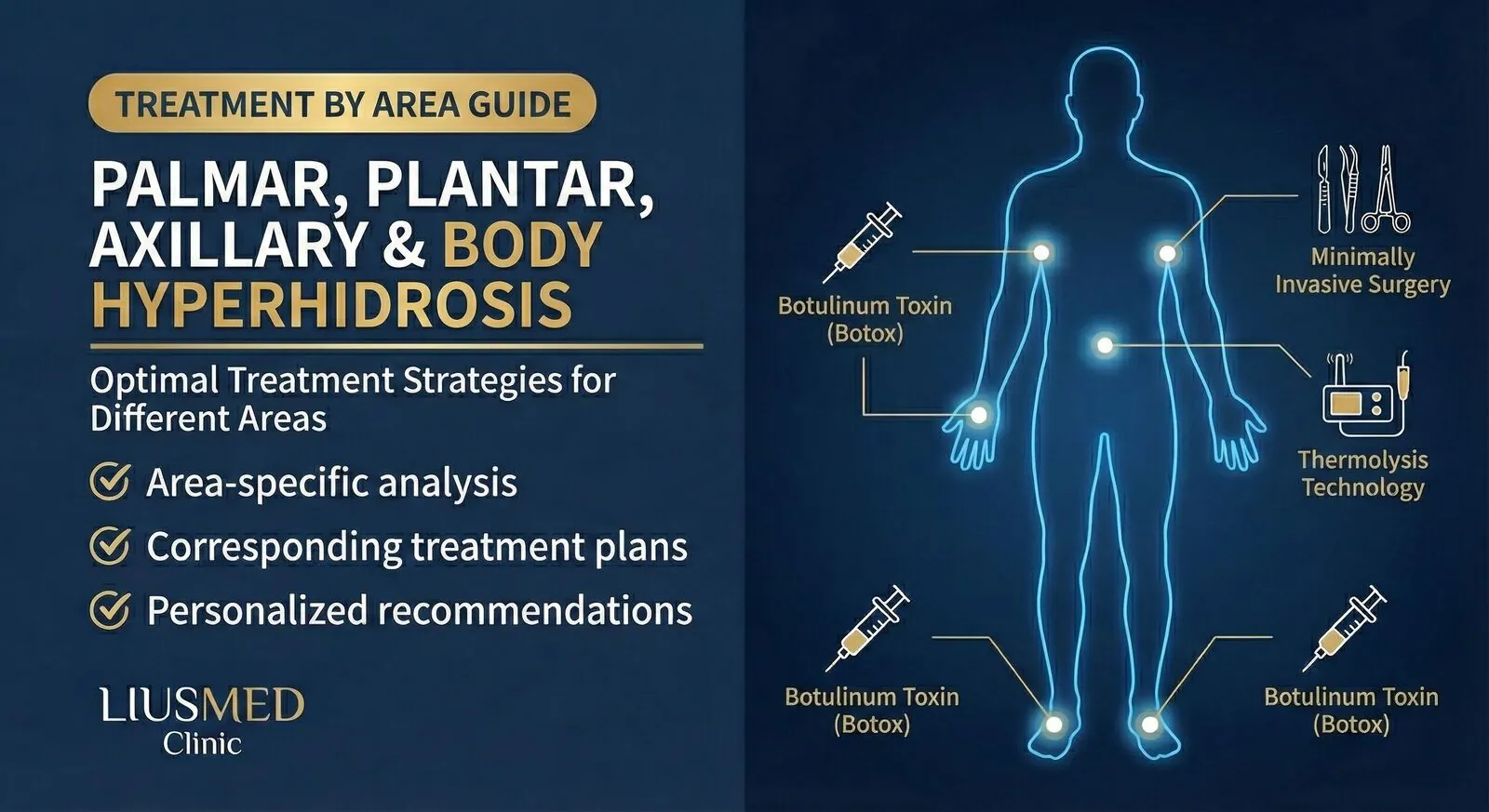
Sweating by Area: Palms, Underarms & Feet Treatment
Different body areas require different hyperhidrosis treatment strategies. Dr. Liu analyzes options for palmar, axillary, and plantar hyperhidrosis—from antiperspirants to surgery.
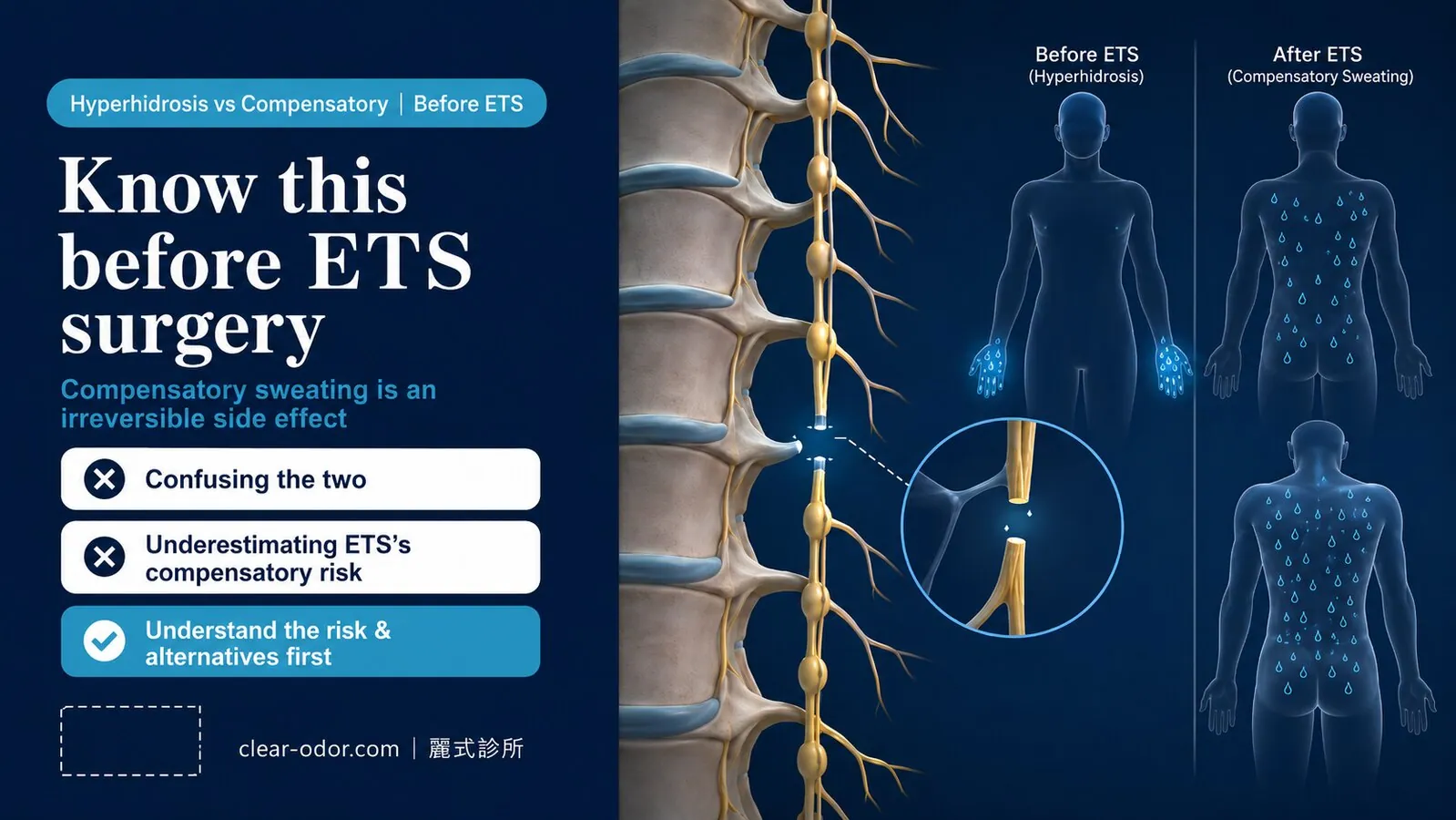
Hyperhidrosis vs Compensatory Sweating: Before ETS Surgery
Hyperhidrosis and compensatory sweating are often confused, but the first is a constitutional overactivity of the sweat glands while the second is a side effect of ETS sympathetic nerve surgery. Dr. Ta-Ju Liu explains how they differ in cause, location, and management, and what to know before considering ETS surgery.
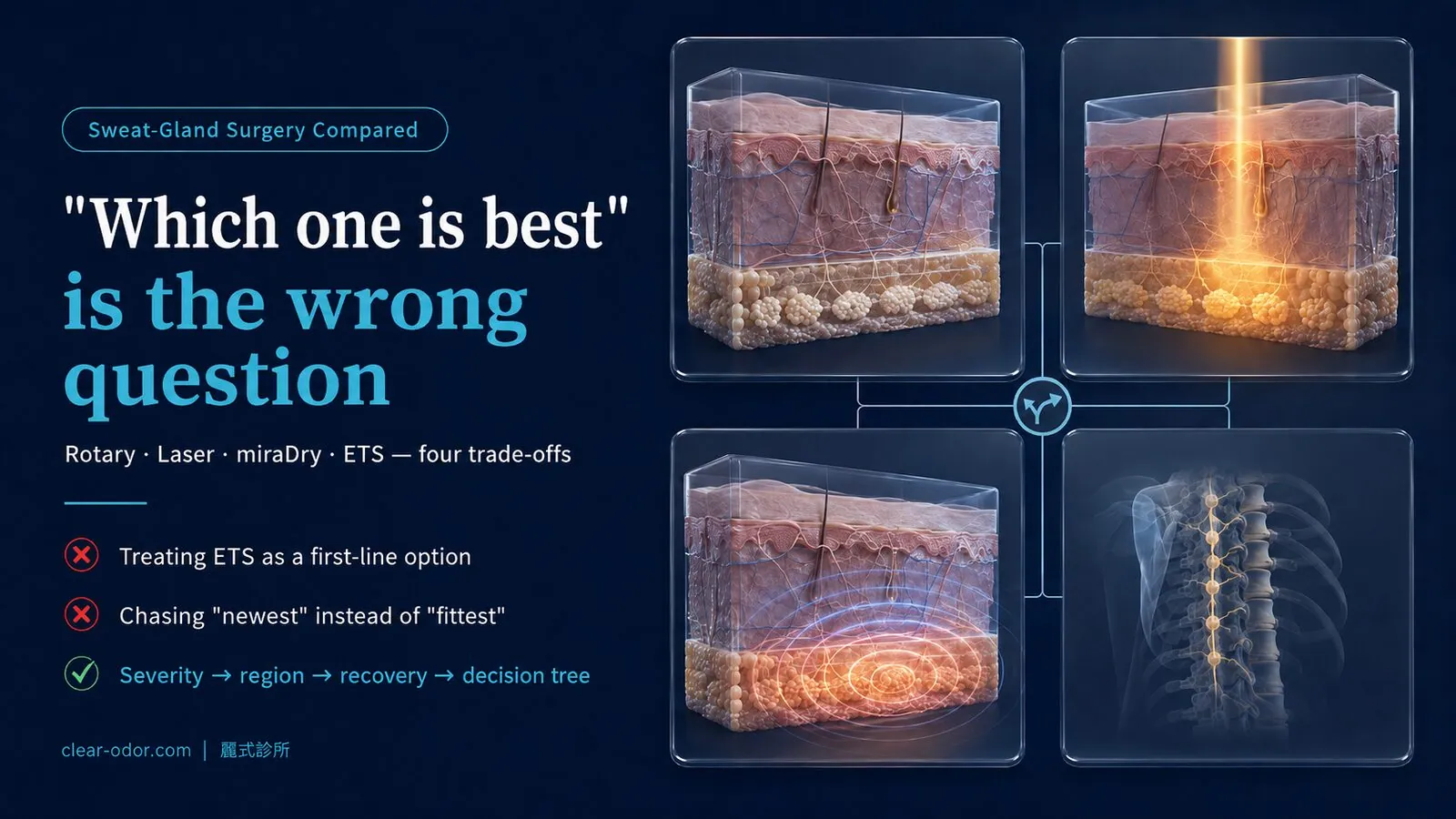
Sweat Gland Surgery: Curettage vs Laser vs miraDry vs ETS
Sweat-gland surgery isn't about which technique is 'best' — it's about which one fits your specific problem. Dr. Ta-Ju Liu compares 4 mainstream approaches — minimally invasive rotational curettage, laser sweat-gland ablation, miraDry microwave thermolysis, and ETS sympathectomy — across mechanism, target gland, recovery, scarring, 3/5/10-year cost, and recurrence. Includes a severity-based decision tree, recovery paths when the first treatment falls short, and 12 frequently asked questions to take into your consultation.
Conservative care not enough?
Heavy sweating beyond conservative care?
If sweating is significant and conservative care is not enough, the surgical page explains sweat-gland procedures, evaluated by Dr. Ta-Ju Liu.
⚕️ Medical Disclaimer
The medical information provided on this page is for reference only and cannot replace individual face-to-face diagnosis, advice, or treatment from a physician. All medical procedures carry risks. Individual constitution and post-operative recovery vary from person to person. Please discuss any treatment plan with your attending physician before making decisions.

Say Goodbye to Soaked Clothes
Compensatory sweating is no longer unsolvable. With over 10 years of treating it with thermolysis, we can help you get back to a drier daily life. Book a consultation for a personal evaluation by the doctor.
Book Consultation NowWhat this treatment delivers
Core procedure
- Sweat gland thermolysis · sympathetic nerves preserved
- Roughly 70% less sweating per session (our records)
- Does not introduce new compensatory sweating (for rescue cases)
- Thermally destroyed sweat glands do not regrow
Clinical track record
- A surgical approach refined by Dr. Liu over years of practice
- 100+ compensatory sweating rescue cases
- A clinic with sustained focus on this technique in Taiwan
Individual results may vary. Clinical data referenced from internal long-term follow-up records.
Included in your treatment
- Suture removal included
- 30-day wound care follow-up
- Post-op visits at day 14, month 1, month 3 — all included
Recovery bonus included
Every patient receives this
- Post-op LED light therapy session ×1 (included)
Liu's Post-Op Recovery Protocol
- Swelling integration program
- Bruising-clearance program
- Tissue-recovery integration program
Individual results may vary. Listed items are included in the treatment package.
Our commitment to you
Personalized treatment plan
Treatment ladder recommendations based on severity and lifestyle · including non-surgical options
30-minute direct evaluation by surgeon
Not a sales pitch · Dr. Liu performs the evaluation in person
Pre-op guide + 90-day LINE follow-up
Reach us via LINE anytime in the first 90 days · replies within 2 hours during business hours
Sutures, follow-ups, recovery protocol all included
Day-14, month-1, month-3 visits + post-op LED therapy + Liu's Post-Op Recovery Protocol — all included
Written informed consent
Procedure scope and recovery timeline confirmed in writing · signed only after Dr. Liu explains in person
Want to talk it through first?
Message our clinic team in your own language — messages are auto-translated.
LIUSMED International Patient Services
Start a consultationReal staff usually reply within 2 hours during business hours. A trained AI assistant answers basic questions right away, and you can ask for a person at any time. Available in 19 languages: just write in your own language and we will reply in it. Your conversation is saved, so you can pick up where you left off.
Telegram
Message us on Telegram
Scan to start
Chat with our clinic team — real staff reply, auto-translated in real time.
Opens in a new tabLINE
Add us on LINE
Scan to add
Our international LINE — real staff reply, messages auto-translated.
Opens in a new tab