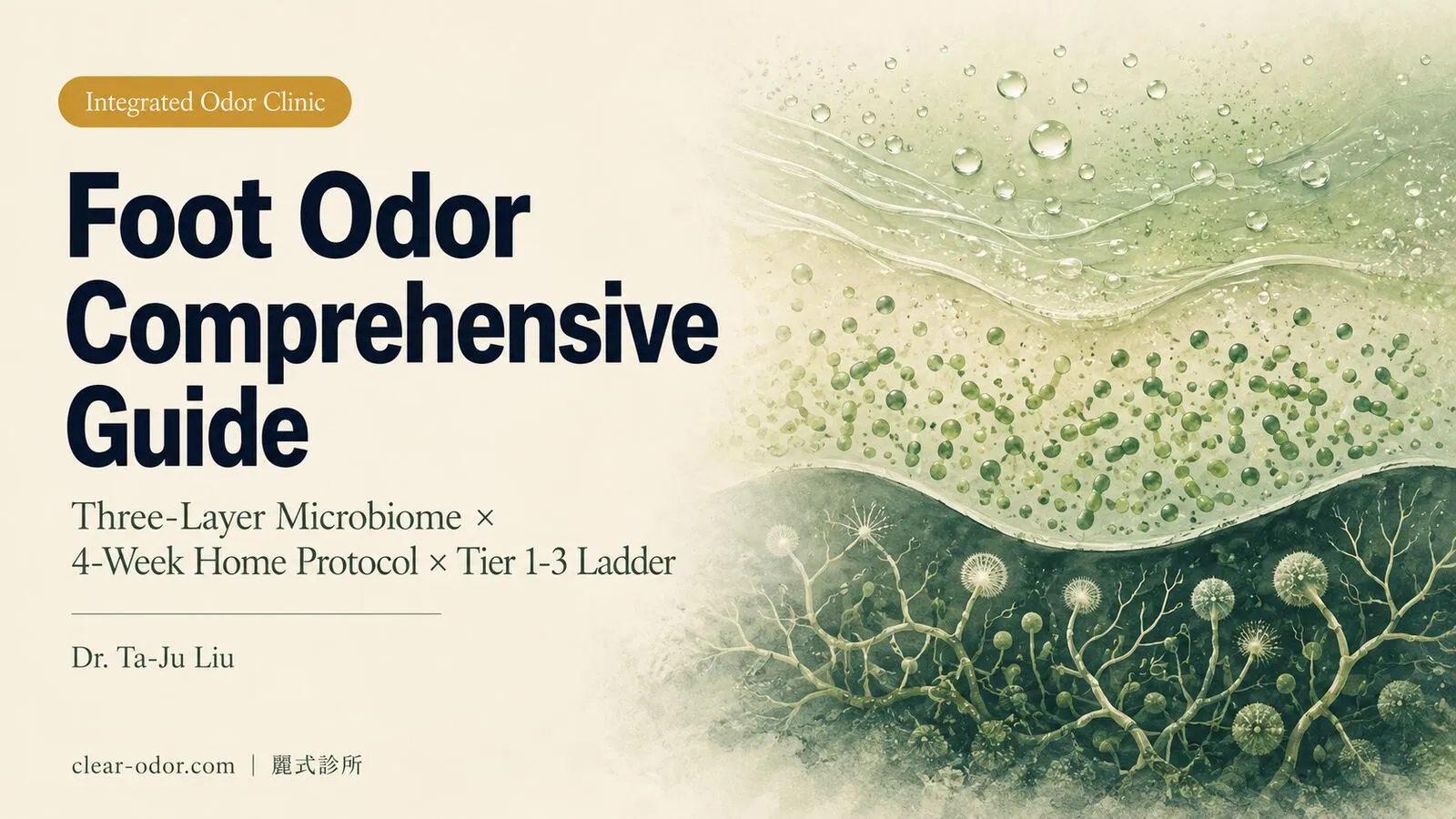
Foot odor is the most underrated yet most systematically treatable site in the integrated odor clinic. The dominant drivers are high-density eccrine glands on the sole (600+ per cm²) + occlusive footwear creating heat/humidity + foot bacteria (Brevibacterium epidermidis et al.) + often-coexisting tinea pedis. Most patients improve significantly with 4 weeks of systematic home management; recurrent cases enter the medical intervention ladder.
Eccrine × Bacteria × Fungi
The Microbiome Mechanism of Foot Odor
The integrated clinic evaluates the foot in three layers — which layer is imbalanced determines the next step: adjust footwear and socks, add antimicrobial spray, or treat tinea pedis.
Layer 1: Eccrine + Environment
Sole eccrine density is extremely high (600+/cm²). Sweat itself is odorless, but occlusive footwear + 80%+ humidity + body heat create a perfect bacterial culture environment.
Layer 2: Bacterial Flora
Brevibacterium epidermidis, Staphylococcus, Bacillus subtilis metabolize amino acids in sweat (especially L-leucine) → produce isovaleric acid — the classic "stinky-cheese" odor.
Layer 3: Tinea Pedis (Fungal)
Trichophyton rubrum, T. mentagrophytes cause athlete's foot, often coexisting with bacterial odor — peeling, fissures, interdigital itch worsen overall odor. 30-40% of recurrent cases have fungal involvement.
* Layer 1 issues improve with home management (footwear rotation + antimicrobial + socks). Layer 2+3 coexistence requires prescription antifungals. Hyperhidrosis sufferers may consider plantar Botox, which is explained and booked on our sister clinic site.
Start with these 5 actions
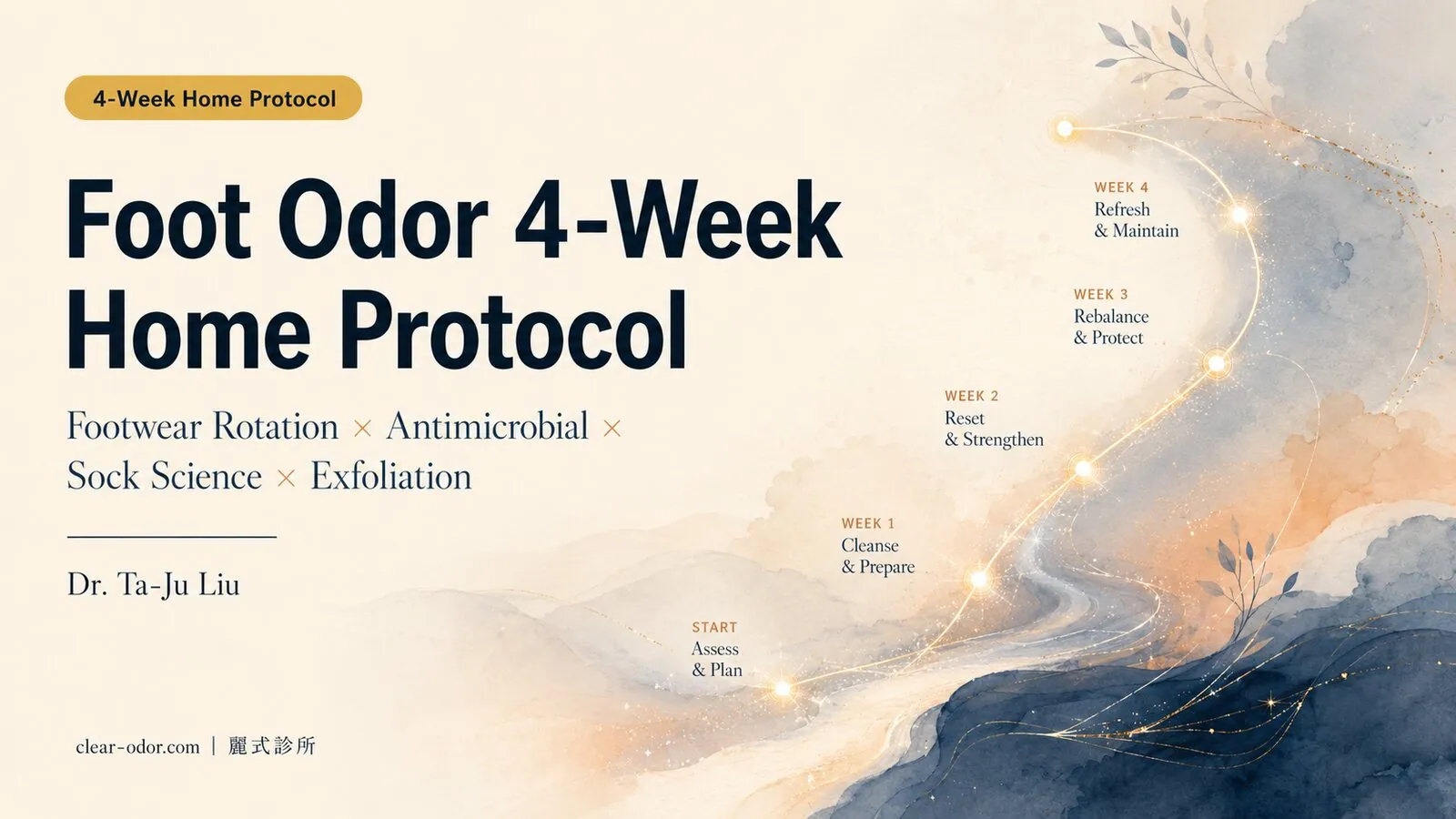
4-Week Home Protocol
Before medical intervention, most foot odor cases benefit from 4 weeks of systematic home care. Track odor intensity (self-rated 0-10) and accompanying symptoms (peeling, fissures, itch) at weeks 0, 2, and 4.
Footwear Rotation + Breathability
Rotate 2-3 pairs of shoes; dry each pair 24-48 hours after wear. Prefer breathable uppers (leather, mesh); avoid prolonged synthetic occlusion.
Antimicrobial Foot Spray / Powder
Apply antimicrobial spray (aluminum chloride / isopropyl alcohol) each morning, or antimicrobial powder. Tea-tree foot soak 2-3 times weekly (10 min / 38°C); avoid over-stripping.
Gentle exfoliation 1-2 times weekly (foot scrub or 5-10% urea cream) reduces dead skin that feeds bacteria. Moisturize dry areas to prevent fissures.
Tinea Pedis Screening
If accompanied by peeling, fissures, or interdigital itch — possibly co-existing athlete's foot. OTC antifungal cream (terbinafine 1% / clotrimazole 1%) for 2 weeks; no improvement → see a doctor.
Tier 1 → Tier 2 → Tier 3
Medical Intervention Ladder (when 4-week home protocol fails)
The integrated clinic intervenes in three tiers based on severity and microbiome assessment. Principle: "lowest necessary intensity, regular reassessment."
Plantar Botox temporarily suppresses eccrine glands, lasting about 4–6 months and varying by person (off-label on the soles); explained and booked on our sister clinic site
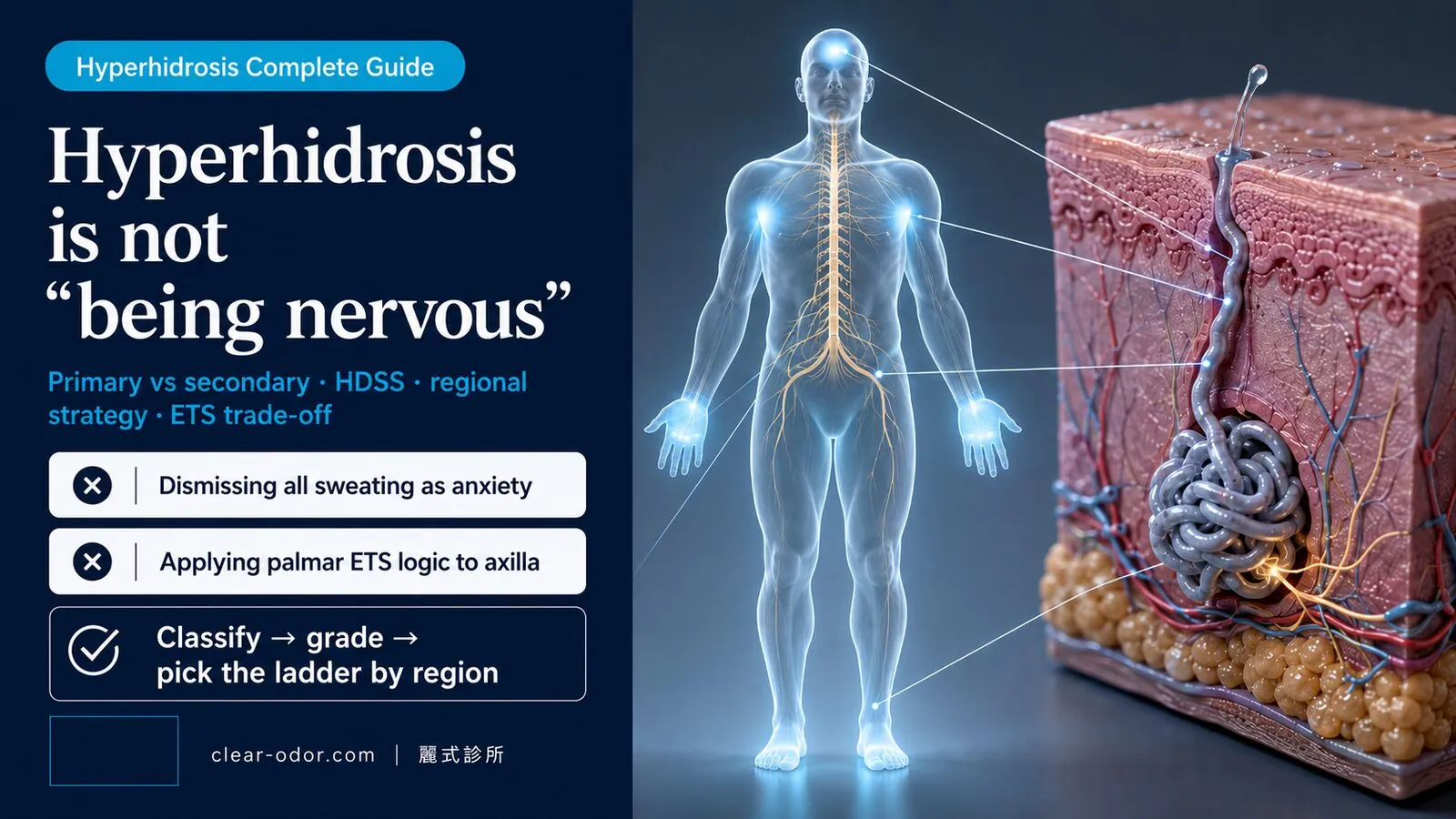
Hyperhidrosis is the dominant amplifier, not fungal or bacterial
Tier 3: Advanced Assessment
Microbiome panel (flora analysis), biofilm management, oral antifungals for refractory tinea pedis (itraconazole / fluconazole, with LFT evaluation)
8 weeks of Tier 1+2 with no improvement, or recurrent relapse
* All medical interventions are individualized; results may vary. The plantar Botox treatment is explained and booked on our sister clinic site, with assessment by Dr. Ta-Ju Liu. Go to minimalcutsurgery.com
When to See the Integrated Odor Clinic
If any of the following apply, book an integrated assessment rather than trying yet another foot spray:
< 30% improvement after 4 weeks of systematic home protocol
Recurrent — relapsing 2+ times per year, needs root-cause clarification
Plantar sweat heavy enough to require 2-3 sock changes daily (Botox candidate)
Concurrent odor at underarm / scalp / other sites needing integrated handling
Foot odor integrated assessment is performed during the in-person Odor Map initial consultation. Book on LINE; fee and duration are individualized based on your described condition.
Frequently Asked Questions
Q1.Can foot odor be "cured"?
We avoid absolute language like "cured." Eccrine glands and microbiome are dynamic — the goal is "reduce odor to a level neither you nor those around you find concerning, and maintain it." Most patients see significant reduction in 4-12 weeks under a systematic plan; maintenance (rotation, antimicrobial, socks) is ongoing.
Q2.I wash my feet daily but odor persists — am I doing it wrong?
Common reasons: (1) No footwear rotation — same pair worn consecutively without drying; (2) 100% cotton socks — absorbs moisture but doesn't release; (3) Undetected coexisting tinea pedis — peeling and interdigital itch are signals; (4) Hyperhidrosis amplifies — home routine may be insufficient. Try the 4-week protocol first, then reassess.
Q3.My feet sweat heavily — is Botox an option?
It can be considered. Botox temporarily suppresses the eccrine glands of the sole; the effect lasts about 4–6 months, varies by person, and gradually wears off, so it needs repeating. Use on the soles is off-label and requires a physician's assessment. The plantar Botox treatment (nerve block + gentle pain-relief anesthesia) is explained and booked on our sister clinic site, minimalcutsurgery.com; the footwear, bacterial, and tinea layers are still handled together at this clinic.
Q4.Tinea pedis keeps coming back — what now?
Common reasons for recurrent athlete's foot: (1) Inadequate course (OTC often used 1-2 weeks; needs 4 weeks); (2) Shoes themselves are contaminated and untreated; (3) Household members have untreated tinea pedis; (4) Immune status (diabetes, HIV, immunosuppression). Integrated assessment screens these and refers to internal medicine as needed.
Q5.Suitable for children / teens?
Suitable for teens (middle-school+ with high activity and plantar sweat). Children's foot odor is usually hygiene + footwear; education and observation come first. Suspected tinea pedis warrants a parent-led visit.
Dr. Ta-Ju Liu
Lead Physician, Clear Odor Integrated Odor Clinic
"Foot odor is usually a 'system-solvable' problem — home management + microbiome assessment + Botox/antifungal when needed. The integrated value is sparing you from trying yet another foot spray."
From shoe closet to consult room — one solution
Not another foot spray problem — a systematic one. Book an integrated assessment to address root causes.
The medical information provided on this page is for reference only and cannot replace individual face-to-face diagnosis, advice, or treatment from a physician. All medical procedures carry risks. Individual constitution and post-operative recovery vary from person to person. Please discuss any treatment plan with your attending physician before making decisions.