
Intimate Odor: Sort Apocrine, Microbiome, Hormonal, and Hygiene Factors
Multi-cause routingApocrine type handled in-house, the rest integrated & referred
Intimate-area odor has diverse causes — apocrine glands (same origin as underarm), vaginal microbiome change, postmenopausal hormonal shifts, and hygiene/clothing factors — often coexisting and each needing entirely different handling. Our role is to sort the source first: apocrine type can be assessed and handled in-house, while microbiome- or hormone-related issues are interpreted then referred to gynecology — so a "needs-gynecology" problem is not repeatedly treated as a mere deodorizing problem.
Why intimate odor needs "sorting the source first"
 Why intimate odor needs "sorting the source first"
- Causes often coexist: one person may have apocrine-type odor + microbiome change + heat/clothing at once — hard to judge the primary cause alone.
- Handling differs completely: apocrine type shares the mechanism of underarm odor and can be assessed here; microbiome and hormonal issues belong to gynecology — the wrong direction just goes in circles.
- Aggressive cleansing or douching can disrupt the normal microbiome and worsen odor and discomfort — "over-cleaning" the intimate area is a common mistake.
- A few fall into the OlRS (olfactory reference) gray zone — strong self-perception but normal objective findings — needing a different path.
Intimate Odor: 4+1 Sources × Routing Path
 Intimate Odor: 4+1 Sources × Routing Path
The initial consultation sorts your primary and secondary sources (most people have primary + one secondary), then decides which part is handled in-house and which is referred to gynecology.
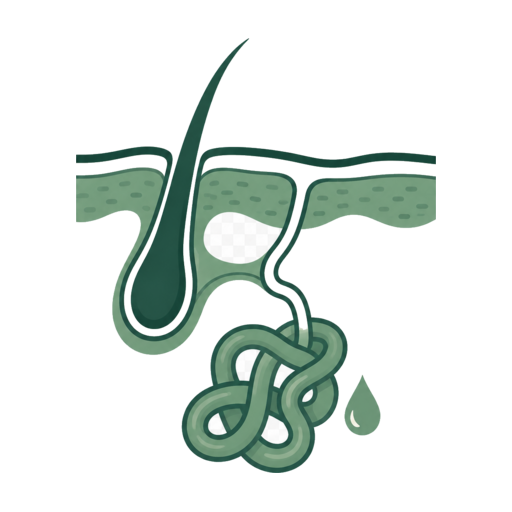
Apocrine-type odor (perineal/groin, same origin as underarm)
→ In-house (perineal page)Mechanism
The perineal and groin areas also have apocrine glands; their secretions, metabolized by surface bacteria, produce odor of the same family as underarm bromhidrosis — a "body-odor" type, not infection.
Our Role / Action
Same mechanism as underarm odor; can be assessed in-house with non-invasive or minimally-invasive approaches such as thermal ablation. See "Perineal Odor Treatment" below.
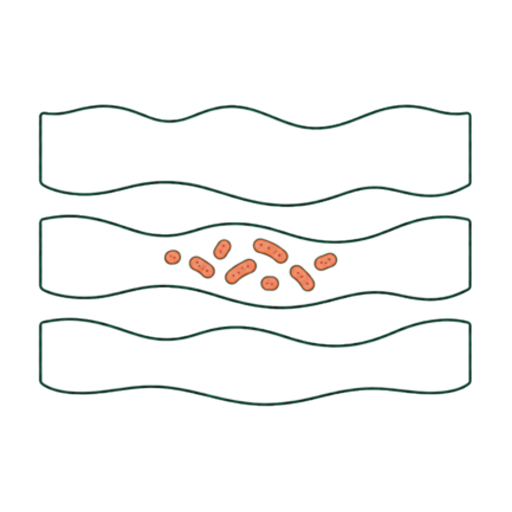
Vaginal microbiome change (e.g., BV-type)
→ GynecologyMechanism
When the normal Lactobacillus-dominant flora is disrupted, odor, discharge, and discomfort may change — a gynecological domain, not something "deodorizing" addresses.
Our Role / Action
If accompanied by discharge change, itching, burning, or discomfort, interpret then refer to gynecology; douching or long-term harsh cleansers are not advised.

Postmenopausal / hormonal change
→ Gynecology / hormonal assessmentMechanism
Falling estrogen changes vaginal epithelium and flora (atrophic change); odor and dryness may shift accordingly — linked to the midlife-odor theme.
Our Role / Action
Assess for accompanying dryness and menopausal change; refer to gynecology or hormonal assessment. We help clarify "body odor vs hormonal change."

Hygiene / clothing / sweat factors
→ Home care (+sweat assessment if needed)Mechanism
Non-breathable clothing, prolonged heat, and groin sweating let sweat and secretions linger and be metabolized by bacteria — reversible but often overlooked.
Our Role / Action
Breathable cotton clothing, avoid over-cleaning, clean promptly after sweating; if groin sweating is marked, sweat management can be assessed together.
OlRS gray zone (strong self-perception, normal findings)
→ Objective assessment (psychosomatic if needed)Mechanism
A large gap between subjective odor intensity and objective findings; a few fall into the olfactory reference syndrome gray zone.
Our Role / Action
Rule out physiological and microbiome factors objectively first; not treated as psychological from the outset. If all measures are normal but anxiety persists, psychosomatic co-assessment is suggested.
* Most people have "primary + one secondary" coexisting. We handle apocrine type directly; microbiome and hormonal issues are interpreted then referred to gynecology. For intimate health, do not douche or use harsh cleansers long-term — it can disrupt the normal microbiome.
What this clinic can assess and handle directly
Perineal Odor Treatment (apocrine type)
Apocrine-type perineal/intimate odor (same mechanism as underarm bromhidrosis) is assessed in-house, consistent with general body-odor care.
When to Get an Intimate Odor Integrated Assessment
 When to Get an Intimate Odor Integrated Assessment
If any of the following apply, an integrated assessment helps sort the source first; with marked discharge abnormality or discomfort, prioritize gynecology:
- Routine cleaning and changing do not help, and you are unsure if it is body-odor type or another source
- Accompanied by discharge change, itching, burning, or pain — prioritize gynecology for these
- Marked odor and dryness change around menopause
- Odor at other sites (underarm, foot) needing integrated interpretation
- Strong self-perception but normal findings and others do not notice (OlRS assessment)
Intimate odor assessment is performed during the in-person Odor Map initial consultation. Book on LINE; fee and duration are individualized based on your described condition.
Frequently Asked Questions
 Frequently Asked Questions
Q1.Is perineal / intimate odor "bromhidrosis"?
Q2.Does intimate odor mean infection?
Q3.Can I douche or use strong cleansers to remove the odor?
Q4.Is becoming odorous after menopause normal?
Q5.Do you provide gynecological treatment?
Q6.Strong self-perceived odor but normal tests and others do not notice — what now?

Dr. Ta-Ju Liu
Lead Physician, Clear Odor Integrated Odor Clinic
"The biggest risk with intimate odor is the wrong direction — deodorizing a problem that needs gynecology, or treating a body-odor type as infection. Sort the source first, and every step after it has meaning."

Sort the source first, then decide how to handle it
Intimate odor is not solved by "washing harder." Book the Odor Map initial consultation on LINE for integrated interpretation and routing.
Book Odor Map ConsultationCan't use LINE? Leave us your contact details
Replies within 1 hour during business hours — we only use this info to respond
Self-check inconclusive?
Let a clinician map it across all six sites
6 sites × mechanism differences × a 4-stage initial-consult flow — the Odor Map framework, where a clinician locates the primary source and plans a personalized path
Learn More About Intimate Odor
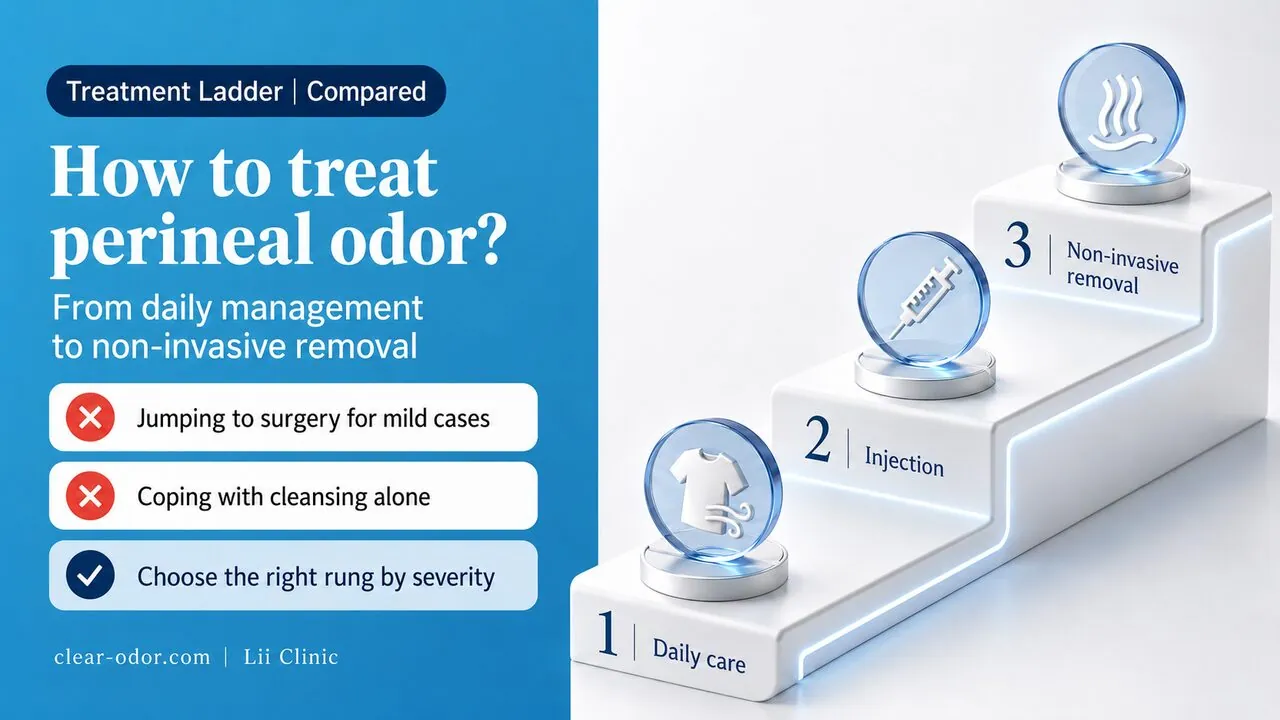
Perineal Bromhidrosis: Treatment Options From Daily Care Up
Once perineal bromhidrosis is confirmed, what are the treatment choices? Dr. Ta-Ju Liu analyses the treatment ladder — daily management, injection, and non-invasive odor removal — their effectiveness, durability and suitable candidates.
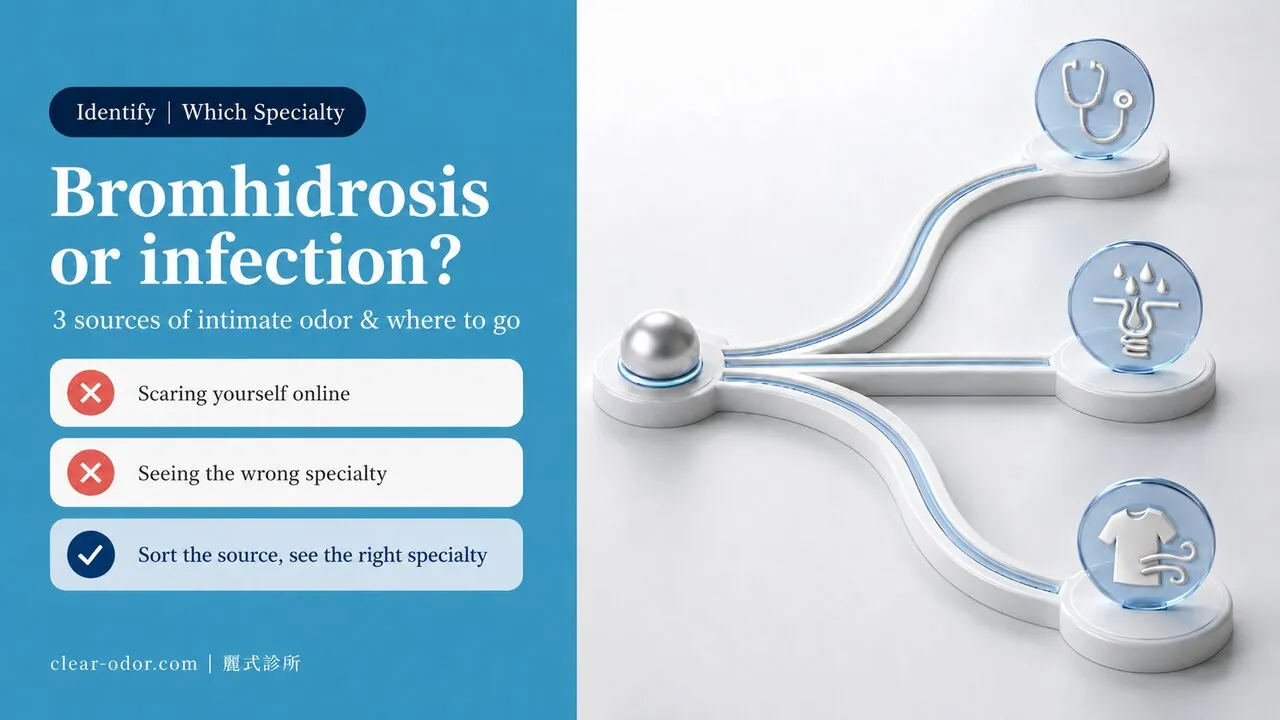
Perineal Odor or Infection? 3 Sources & Which Doctor
An odor in the intimate area is not necessarily bromhidrosis — it can also be infection or a lifestyle factor. Dr. Ta-Ju Liu explains the 3 sources of intimate odor and which signs mean you should see a gynecologist first.
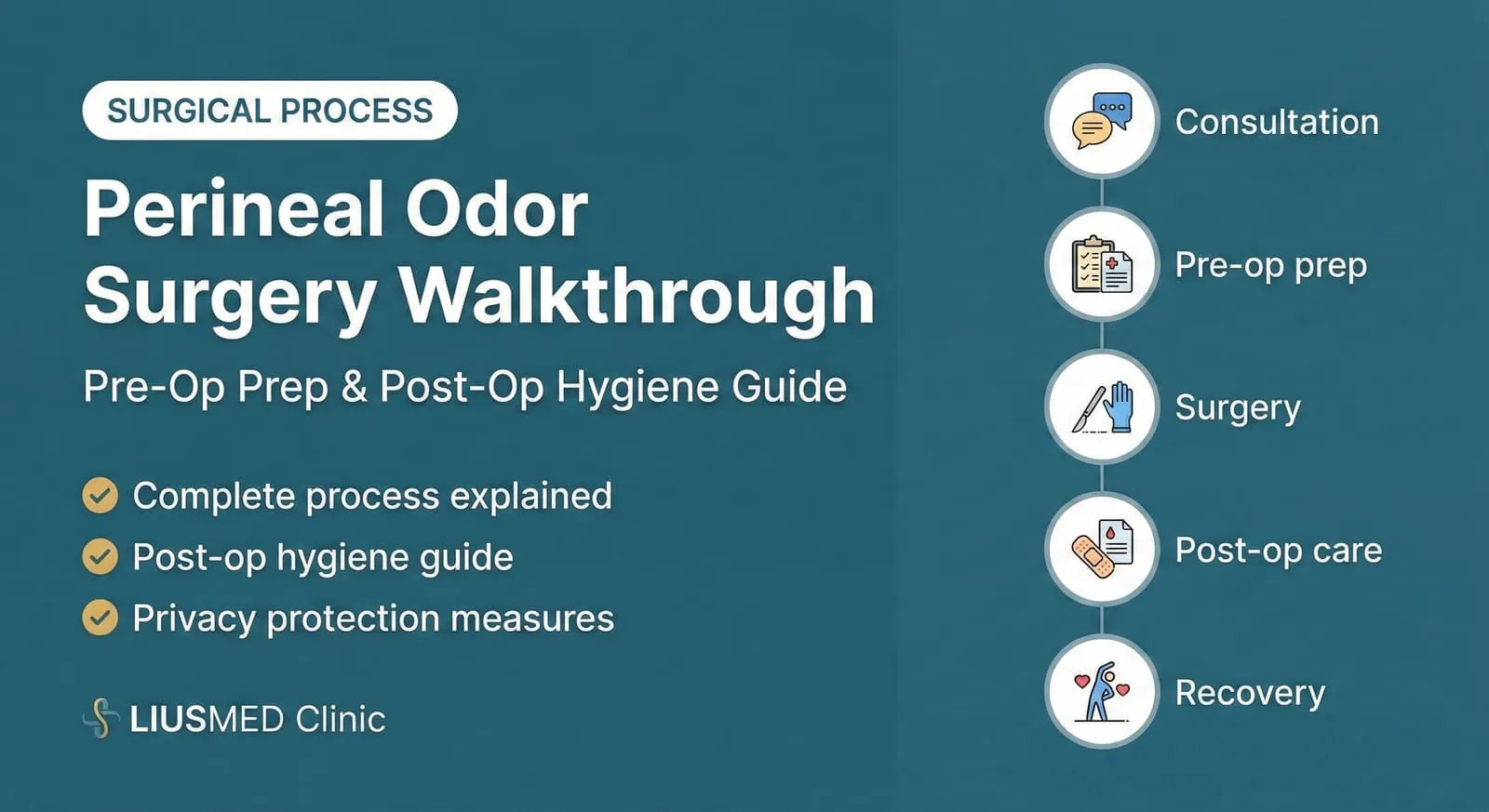
Non-Invasive Perineal Odor Treatment: Steps & Aftercare
Non-invasive thermal ablation for perineal odor: no incision, no stitches, only 2-3 weeks of mild swelling.

Perineal Odor & Confidence: Anonymized Patient Cases
Perineal odor affects more than the body—it deeply impacts confidence and intimate relationships. Three anonymized real cases, from avoiding intimacy to rebuilding confidence.
By age / cause axis
Only started after midlife — and will not wash off?
Aging odor × halitosis × systemic-metabolic — sort the source and the right specialist in the Midlife & Aging Odor guide
⚕️ Medical Disclaimer
The medical information provided on this page is for reference only and cannot replace individual face-to-face diagnosis, advice, or treatment from a physician. All medical procedures carry risks. Individual constitution and post-operative recovery vary from person to person. Please discuss any treatment plan with your attending physician before making decisions.