Oral / Halitosis Integrated Triage: Find the Source First, Then Choose the Specialty
5-Source IdentificationIntegrated Framework for Dental / ENT / GI Referral
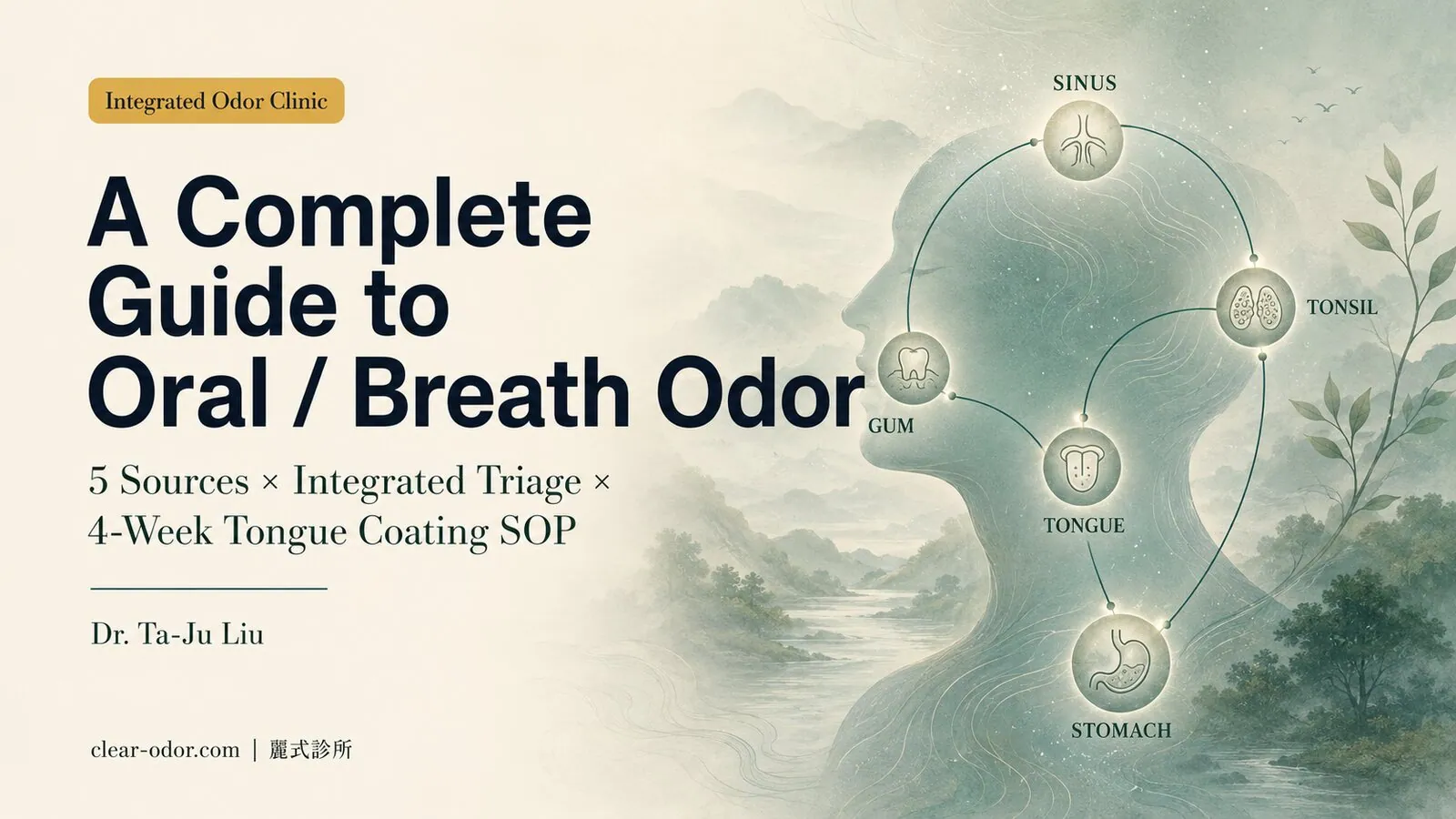
Halitosis is one of the most commonly mistreated odor sites — its sources are at least five (tongue coating / periodontal / tonsil stones / post-nasal drip / GERD), each requiring different specialty management, and they often coexist. The integrated odor clinic's role is not to treat everything itself, but to perform integrated triage first, identify the primary source, then deliver a personalized referral path — sparing you the cycle of switching doctors and repeating surface-level treatments.
Why does halitosis need "integrated triage"?
The large majority of halitosis originates in the oral cavity (tongue coating, periodontal, saliva). But "I feel I smell despite brushing" often signals the minority of cases with multi-source or atypical origins.
A single specialty (pure dental or pure ENT) tends to look only within its own domain — missing cross-specialty causes (e.g., periodontal + post-nasal drip co-existing).
A subset falls into the OlRS gray zone (strong self-perception, normal objective findings) — they need a different management path, not yet another cleaning.
The integrated clinic's value is identification and routing — getting you to the specialty that can actually solve it, avoiding time wasted on wrong paths.
Identify Primary → Refer to Specialty
Halitosis: 5 Sources × Triage Path
During the initial consultation, we evaluate each of these 5 sources and identify your primary and secondary sources (most people have primary + 1-2 secondary). We then decide which station to address first and which specialty leads.
Tongue Coating (VSCs)
→ This Clinic + Dental
Mechanism
Anaerobic bacteria on the posterior 1/3 of the dorsum break down food debris and shed epithelium, producing volatile sulfur compounds (H₂S, methyl mercaptan) — the classic "rotten" smell.
Initial Action
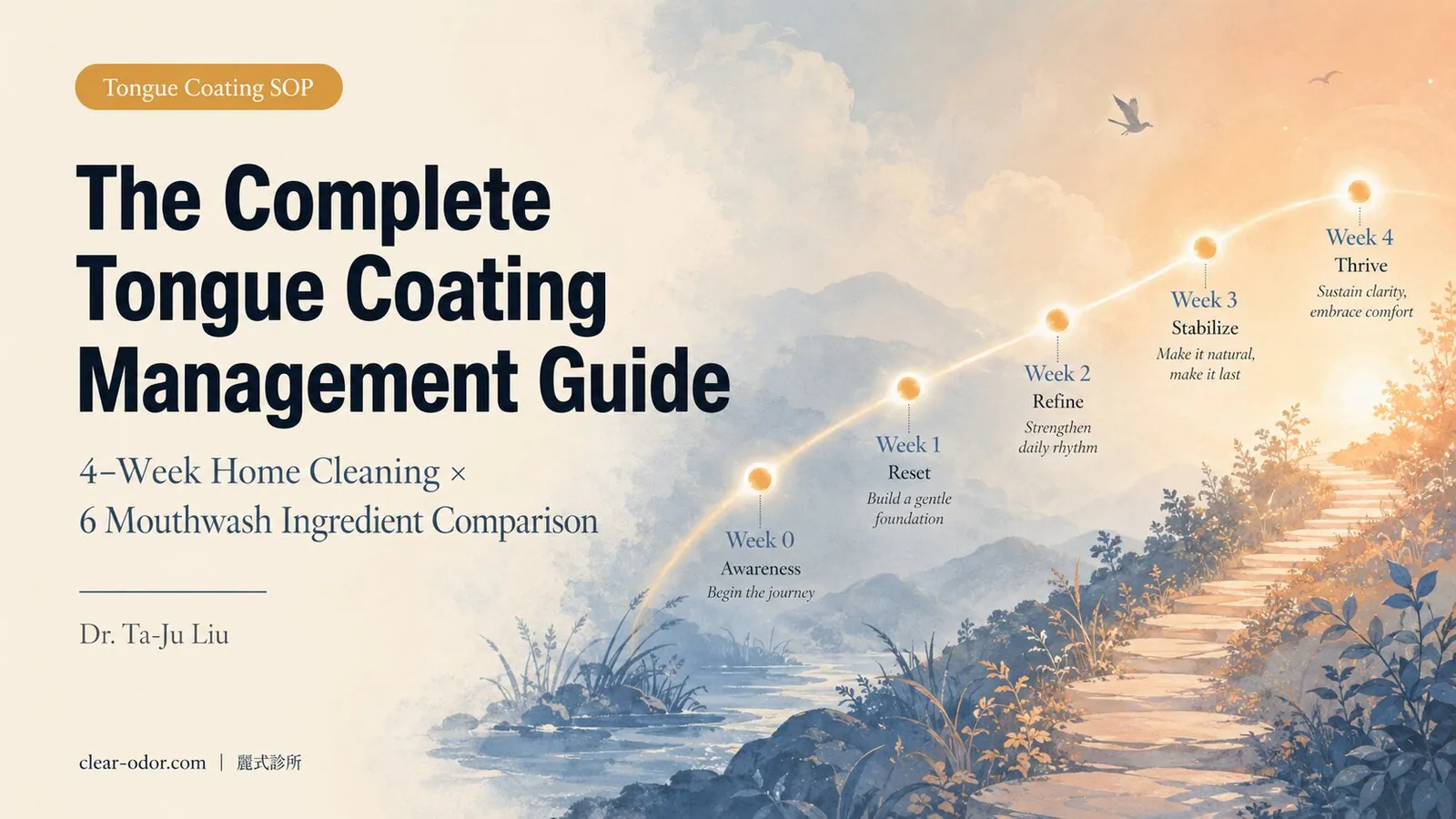
Tongue coating index assessment + tongue brush education + 4-week home protocol; if <50% improvement at 4 weeks, refer to dental.
Periodontal Disease / Caries
→ Dental (Periodontics-first)
Mechanism
Anaerobic bacteria in periodontal pockets, deep caries, and faulty restorations form biofilms — chronic inflammation + protein degradation produce odor.
Initial Action
Initial gingival bleeding index + oral hygiene assessment; immediate referral to trusted periodontics for professional cleaning and deeper management.
Tonsilloliths (Tonsil Stones)
→ ENT
Mechanism
Calcified food debris and shed epithelium accumulated in tonsillar crypts contain high sulfur concentrations — characteristic "putrid" smell.
Initial Action
Clinical inspection of tonsillar crypts; if suspected, refer to ENT for extraction, laser cryptolysis, or tonsillectomy evaluation.
Post-Nasal Drip
→ ENT
Mechanism
Chronic sinusitis or allergic rhinitis causes mucus drainage; protein-rich secretions enter the oropharynx and are metabolized by bacteria.
Initial Action
Evaluate nasal congestion, drip symptoms, allergy history; if needed, refer to ENT for sinus CT or nasal endoscopy.
GERD (Reflux)
→ GI (Gastroenterology)
Mechanism
Acidic gastric content (with partially digested protein) refluxes into the esophagus and oropharynx — accompanied by heartburn, belching, producing sour/acid odor.
Initial Action
Evaluate classic GERD symptoms; refer to GI for endoscopy or 24h pH monitoring as needed, paired with dietary modification.
* Most people have "primary source + 1-2 secondary sources" coexisting. Treat the primary first (4-8 weeks), reassess, then decide on secondary. We provide a triage report and referral letter you can hand to the specialist on visit.
When to See the Integrated Odor Clinic (Oral Triage)?
If any of the following apply, integrated triage first is preferable to directly booking a single specialty:
You've seen dental + had cleanings + tried multiple mouthwashes, but halitosis persists
You have multiple symptoms simultaneously (nasal congestion, drip, acid reflux) and aren't sure which specialty fits
Family or colleagues mention odor, but you don't notice it yourself after brushing
You perceive strong odor but others don't (OlRS gray-zone evaluation)
Odor at multiple body sites (underarm, scalp, foot) needing integrated handling
Oral triage is performed during the in-person Odor Map initial consultation. Book on LINE; fee and duration are individualized based on your described condition.
Frequently Asked Questions
Q1.Will Clear Odor Clinic treat my halitosis directly?
Some, some referrals. Tongue coating management + education + multi-source integration (4-week home protocol) we handle directly. Periodontal disease, tonsil stones, post-nasal drip, and GERD — we evaluate then refer to trusted periodontics, ENT, or GI. The point is to find the source first, sparing you from cycling through wrong specialties.
Q2.Why not go directly to dental or ENT?
You can — but if you fall into "multi-source coexistence" or "unsure which specialty fits," integrated triage saves trial-and-error time. A substantial share of halitosis sufferers have multi-source presentations (e.g., periodontal + post-nasal drip). A single specialty looks only within its domain and may keep missing the primary cause.
Q3.Can halitosis be "cured"?
Depends on the source. Tongue-coating type largely resolves with 4-week home management. Periodontal type improves substantially with professional treatment + maintenance. Tonsil stones / GERD need regular treatment + lifestyle adjustment. OlRS gray zone needs a different path. We avoid absolute language; the goal is "reduce odor to a level neither you nor those around you find concerning."
Q4.I've had tonsil stones extracted but they keep coming back — what now?
Common reasons for recurrent tonsilloliths: (1) deep crypts prone to accumulation; (2) chronic tonsillitis; (3) insufficient saliva; (4) ongoing post-nasal drip supplying protein. We evaluate and discuss with ENT whether cryptolysis or tonsillectomy is appropriate — not our decision alone; ENT leads.
Q5.Is this suitable for children / teens?
Suitable for teens (middle-school+). Elementary-age halitosis is mostly hygiene-driven (incomplete brushing, tongue coating); education and observation come first. Teens with adolescent sebum increase may have concurrent scalp/facial microbiome issues — integrable in the Odor Map.
Q6.Strong self-perception, others don't notice — what do I do?
This may fall into the OlRS gray zone. We first use objective testing (VSC test + tongue coating index + periodontal assessment) to rule out physiological causes. If all objective measures are normal but subjective concern persists, we suggest psychosomatic co-assessment. Please mention this when booking on LINE so we allow sufficient consultation time.
Dr. Ta-Ju Liu
Lead Physician, Clear Odor Integrated Odor Clinic
"The key to halitosis isn't 'how well you brush' — it's 'where you brush.' Integrated triage routes you to the specialty that can actually solve it. That's the clinic's core value."
Do integrated triage first, then decide the next step
Don't keep cycling through wrong specialties. Book the Odor Map initial consultation on LINE — start with oral triage.
The medical information provided on this page is for reference only and cannot replace individual face-to-face diagnosis, advice, or treatment from a physician. All medical procedures carry risks. Individual constitution and post-operative recovery vary from person to person. Please discuss any treatment plan with your attending physician before making decisions.