Intimate Area Odor (Perineal Osmidrosis)Non-Invasive Thermolysis Treatment
Zero Incisions, Home the Same Day — an Intimate Deodorizing Solution Refined Over Years
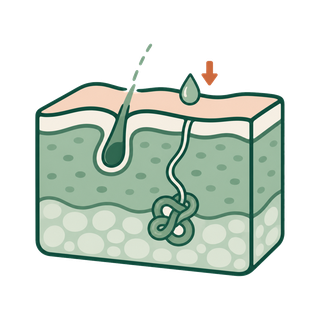
Intimate area odor originates from apocrine glands beneath the pubic hair zone. Because the perineum is uniquely challenging to heal post-operatively, Clear Odor Clinic has developed and refined non-invasive thermolysis over years as a primary approach. It needs no open wound and acts directly on the apocrine glands that produce the odor; sweating and hair in the treated area usually decrease as well, to an extent that varies by individual. Aftercare is lighter than with surgery, but it is not risk-free — the specific risks and warning signs are explained before treatment.
Privacy Priority
15+
Years Experience
50–70%
Odor Reduction
2–3 wks
Swelling Period
0
Open Wounds
Table of Contents
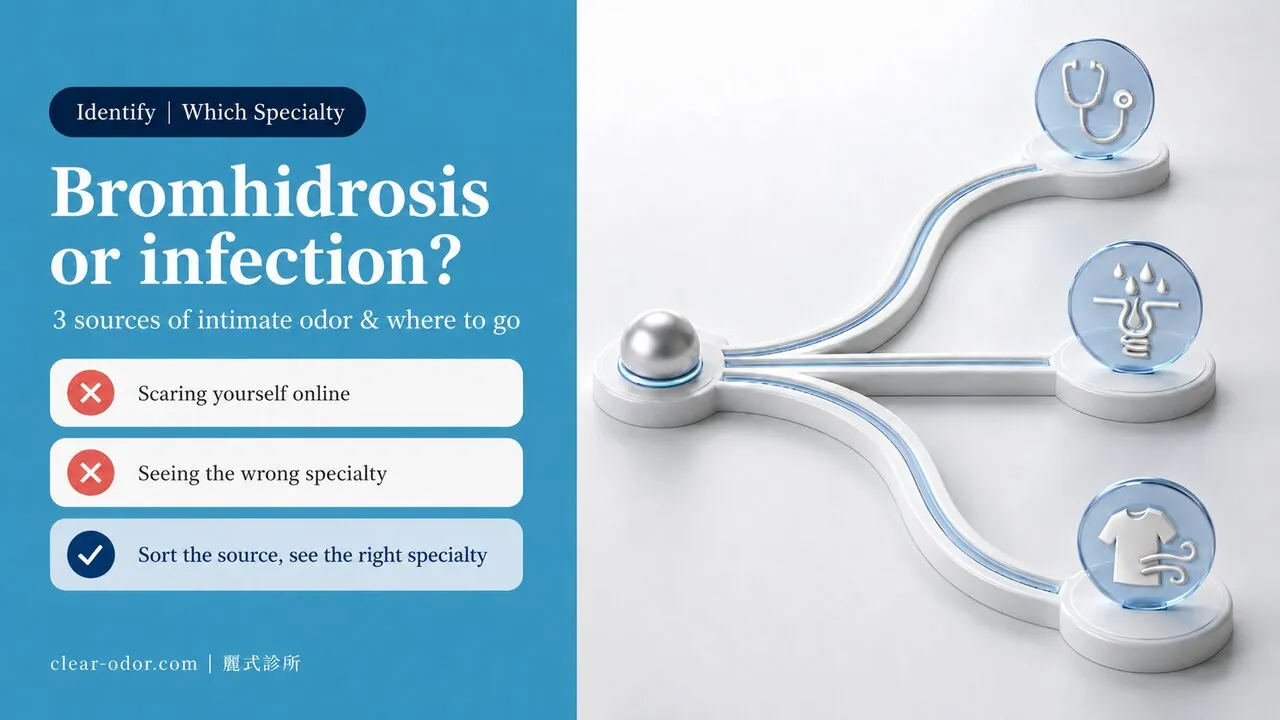
Intimate Area Odor: Is It an Infection or Osmidrosis?
Perineal odor may be apocrine body odor (treatable here) or an infection (needs gynecology) — identify the source first.
Intimate area odor is a concern many find difficult to discuss, even affecting intimate relationships. Before treatment, we must first identify the source of the odor.
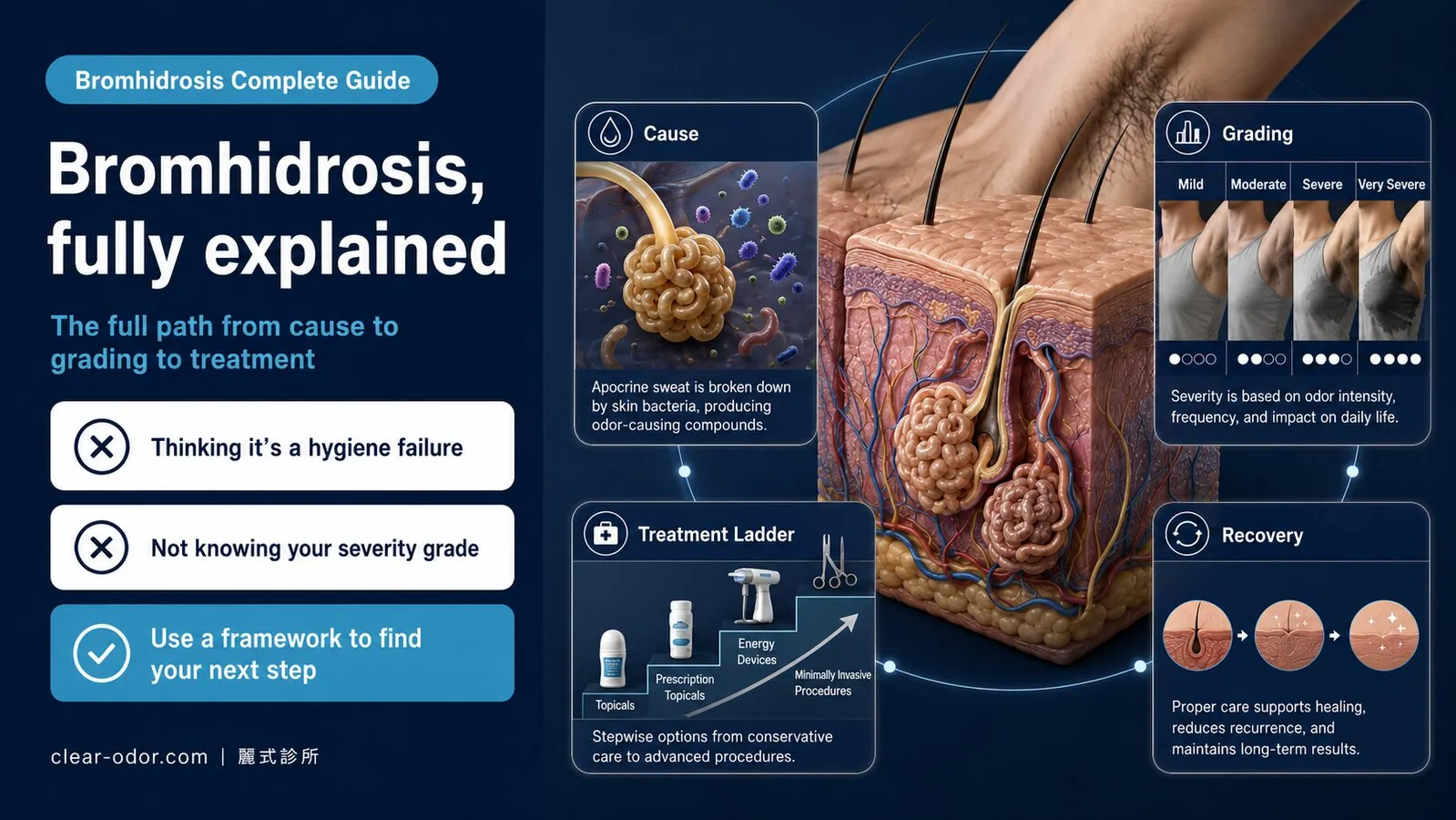
Not sure which condition applies to you? See the body odor & hyperhidrosis conditions overview to compare each condition — definitions, ICD-10 codes, common symptoms, and when to see a doctor.
Perineal Osmidrosis (Treatment Focus)
Originates from "apocrine glands" in the perineal area (pubic hair region). When secretions are broken down by bacteria, they produce a distinctive odor similar to underarm body odor (spicy or cumin-like). The smell intensifies during intercourse or exercise, with yellow stains commonly found on underwear.
Vaginal Infection (Requires Gynecological Care)
Caused by bacterial, fungal, or trichomonal infection. Discharge appears white cottage cheese-like or grayish-green, often accompanied by noticeable itching, burning, and pain, with a fishy odor. If you experience itching or burning, please seek gynecological help first.
When to Consider Treatment?
Odor from intimate area during intimate moments
Yellow discharge frequently on underwear
Worse odor during exercise or stress
Impact on intimate relationships and confidence
Limited results from various hygiene products
Zero Incisions × High Efficacy × High Safety
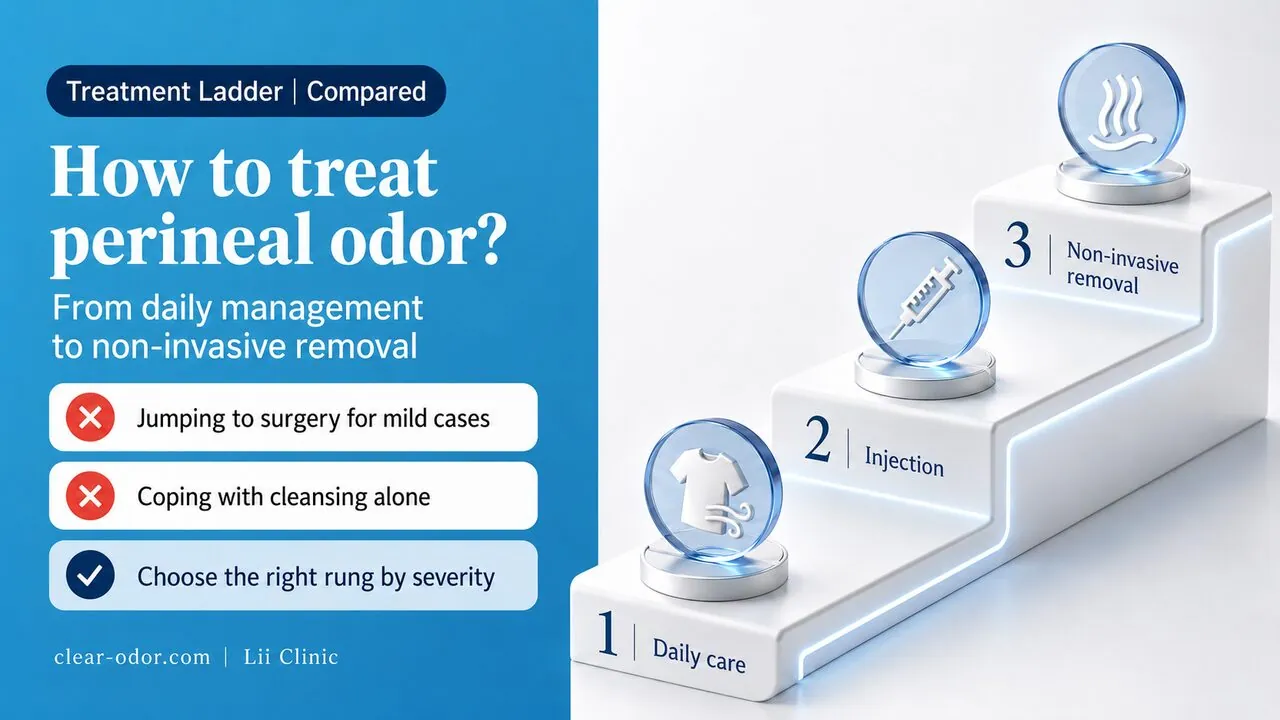
Can Intimate Area Odor Be Treated Without Surgery?
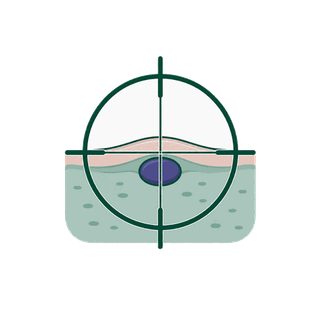
Apocrine-type perineal odor can be evaluated and treated with thermolysis through a pinhole entry (no open incision).
For this extremely sensitive and private area, Dr. Liu has developed and refined "Non-invasive Thermolysis" over years as a primary treatment approach, drawing on 20 years of clinical experience. Using high-tech non-invasive thermal technology, energy is precisely delivered through tiny insulated punctures to destroy the subcutaneous apocrine gland layer, with no epidermal wounds.
Zero Open Wounds
Only pinhole-sized entry points, no sutures needed
Targets the Odor Source
Acts on the apocrine glands that produce the odor rather than masking it
Sweat + Hair Reduction
Sweating and hair in the treated area usually decrease as well
High Safety
Designed to avoid nerve damage; physiological function well preserved in most patients
Additional Benefits: Sweat & Hair Reduction
Besides odor, sweating and hair volume in the treated area usually decrease as well, helping the area stay drier and less stuffy. The extent varies by individual.
Why No Longer Routinely Performed?
Doctor's Perspective: Risk Assessment of Micro-invasive Surgery
Many patients ask: "Why not do micro-invasive surgery like for underarm odor for more thorough removal?" Dr. Ta-Ju Liu honestly explains the change in medical decision-making:
In the past, we did perform micro-invasive excision surgery on the perineal area, but through long-term clinical follow-up, we found three major challenges with perineal surgery:
1. Extremely Difficult Wound Care
The perineal area is adjacent to the urethra and anus, one of the highest bacterial load areas of the body. Combined with toileting needs, it's extremely difficult to keep wounds sterile and dry.
2. High Healing Risks
This area is constantly moist and experiences friction during walking, making surgical wounds prone to dehiscence or infection.
3. Scarring and Adhesions
If infection occurs during healing, it can leave uneven scars or adhesions, causing future discomfort.
Conclusion
Considering patient safety and quality of life, non-invasive thermolysis offers a better balance in most cases: no open wound, and a much lighter aftercare burden. One thing has to be said plainly, though — any energy-based treatment briefly disrupts the skin barrier, so the infection risk is not zero. Follow the aftercare instructions, and come back immediately if you develop persistent fever, severe pain, or bleeding at the treated area. That is why we no longer routinely recommend open or micro-invasive surgery for the perineal area — but we will not describe any approach as risk-free either.
We understand the privacy of this area. All medical staff strictly uphold privacy principles to provide a reassuring treatment environment.
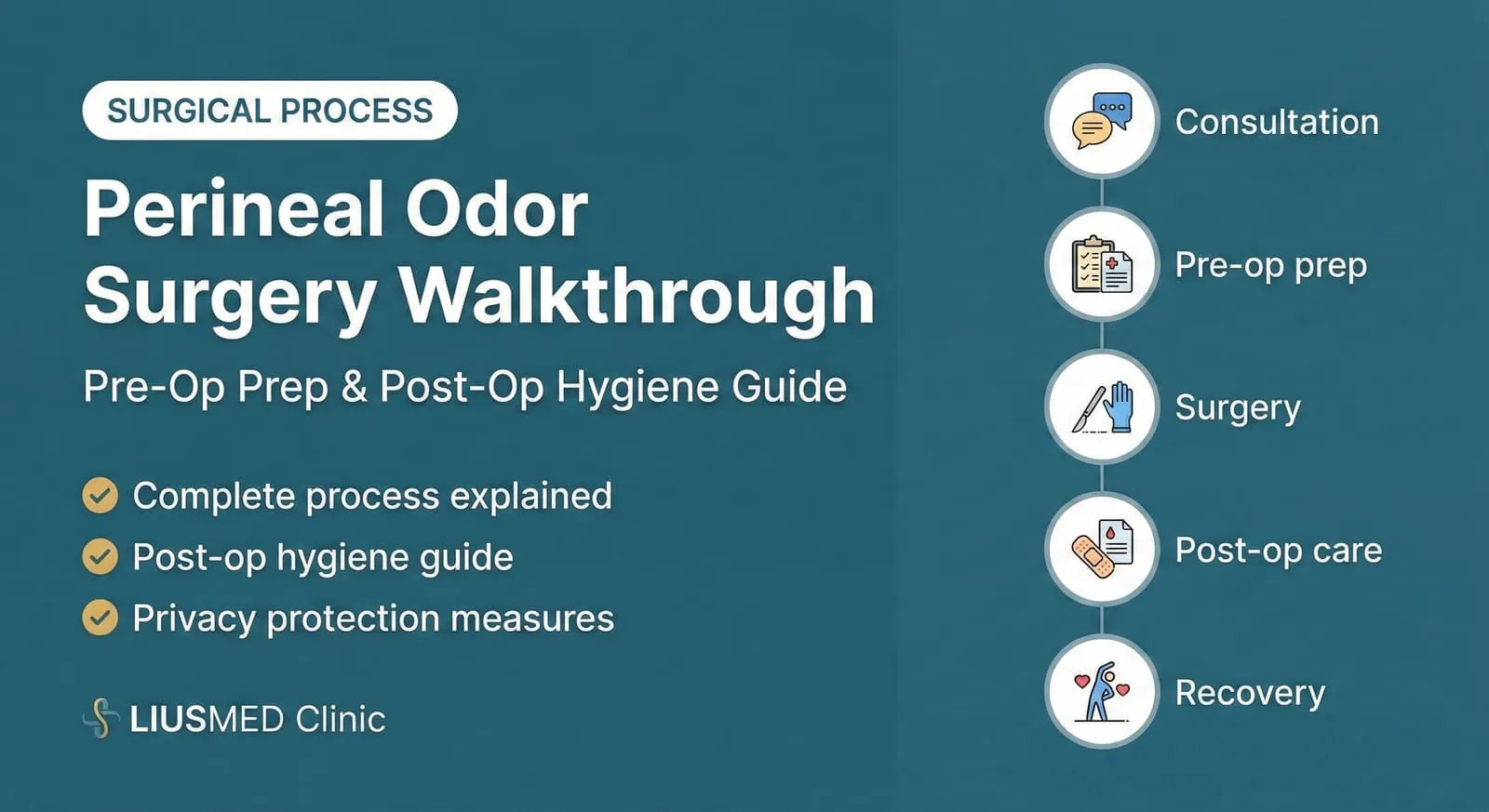
How Is the Treatment Done? Will It Hurt?
Privacy and Comfort Combined
Performed under local plus gentle pain-relief anesthesia — not general anesthesia — with greatly reduced discomfort, and the doctor can talk with you throughout.
Professional Assessment
Confirm odor source (distinguish between underarm transmission, infection, or native osmidrosis). Combined treatment available if you also have underarm concerns.
Local + Gentle Pain-Relief Anesthesia
Gentle local anesthesia at the perineal area plus gentle pain-relief anesthesia — monitored throughout, with discomfort during the procedure kept to a minimum; no general anesthesia.
Non-invasive Thermolysis
About 2-hour procedure, precisely destroying glands with no epidermal wounds.
Post-Treatment Recovery
You go home the same day and can do light daily activities. The treated area stays swollen for about 2-3 weeks; avoid long walks and strenuous activity for the first 1–2 weeks.
About the Author
Dr. Ta-Ju Liu
Lead Physician, Clear Odor Clinic
20+ years treating bromhidrosis; 15+ years treating hyperhidrosis
Specialist in high-tech non-invasive thermolysis
Over 10,000 treatment procedures
Expert in non-invasive intimate area (perineal) odor treatment
Expert in micro-invasive areola and axillary odor surgery
"Before pursuing results, safety is a fundamental baseline. For intimate areas, we choose a high-safety, non-invasive approach to help you resolve concerns that are difficult to discuss."
Want to Learn More?
Every patient is unique. Dr. Liu will personally evaluate the best treatment plan for you.
Why is micro-invasive surgery for intimate areas less common now?
This is based on safety considerations. The perineal area is special in location, close to urinary and anal openings, with high bacterial load and difficulty maintaining dryness. Surgical wounds are highly prone to infection or dehiscence. By comparison, non-invasive thermolysis needs no open wound and the aftercare burden is much lighter, which makes it the more suitable option for most patients. It is not risk-free, though — energy treatment still briefly disrupts the skin barrier, so aftercare and recognising warning signs matter just as much.
Will hair volume be affected after non-invasive treatment?
Yes, and this is usually considered a benefit. Since apocrine glands and hair follicles are close together, thermal treatment destroys some follicles while treating glands. Pubic hair volume typically decreases, though the extent varies by individual, making intimate areas fresher and reducing odor retention.
Is non-invasive treatment enough to control the odor?
For most patients, yes. The goal is for odor to stop being a concern at social distance and even at intimate distance. Very severe cases may need additional treatment, and the doctor will set out what to expect during the assessment.
Is the treatment painful?
We use "local anesthesia plus gentle pain-relief anesthesia": besides local anesthesia, gentle pain-relief anesthesia is added to keep you relaxed and monitored throughout (no general anesthesia), so discomfort during the procedure is kept very low. You may experience some swelling afterward, but strong painkillers are usually unnecessary.
How long is recovery? When can I resume intimate activities?
Non-invasive treatment leaves only a pinhole entry with no stitches, so you go home the same day and can do light daily activities. However, the treated area stays swollen for about 2-3 weeks (up to 3-4 weeks for some), so avoid long walks and strenuous activity for the first 1–2 weeks, and we recommend waiting until swelling subsides before resuming intimate activities.
How can I tell if I have vaginal infection or perineal osmidrosis?
Osmidrosis: Odor similar to underarm (spicy/cumin-like), yellow stains on underwear, usually no itching. Infection: Fishy or foul odor, cottage cheese-like or yellow-green discharge, usually with noticeable itching or burning. If you have itching, consult a gynecologist first.
How is the appropriate treatment plan determined?
Treatment depth varies based on the distribution and severity of perineal apocrine glands and whether infection or microbiome issues are involved. Dr. Liu will explain the appropriate plan in detail after personal evaluation in a fully private setting at the initial consultation.
How long after surgery before resuming intimate activities?
We generally recommend waiting 2-3 weeks, until the swelling has subsided, before resuming intimate activities.
The medical information provided on this page is for reference only and cannot replace individual face-to-face diagnosis, advice, or treatment from a physician. All medical procedures carry risks. Individual constitution and post-operative recovery vary from person to person. Please discuss any treatment plan with your attending physician before making decisions.
Take the First Step — Book a Confidential Consultation
We understand your struggle. Book a one-on-one confidential consultation where our specialist will design a personalized treatment plan. Take the first step toward change with complete peace of mind.