Why do some people consider plantar Botox injection?
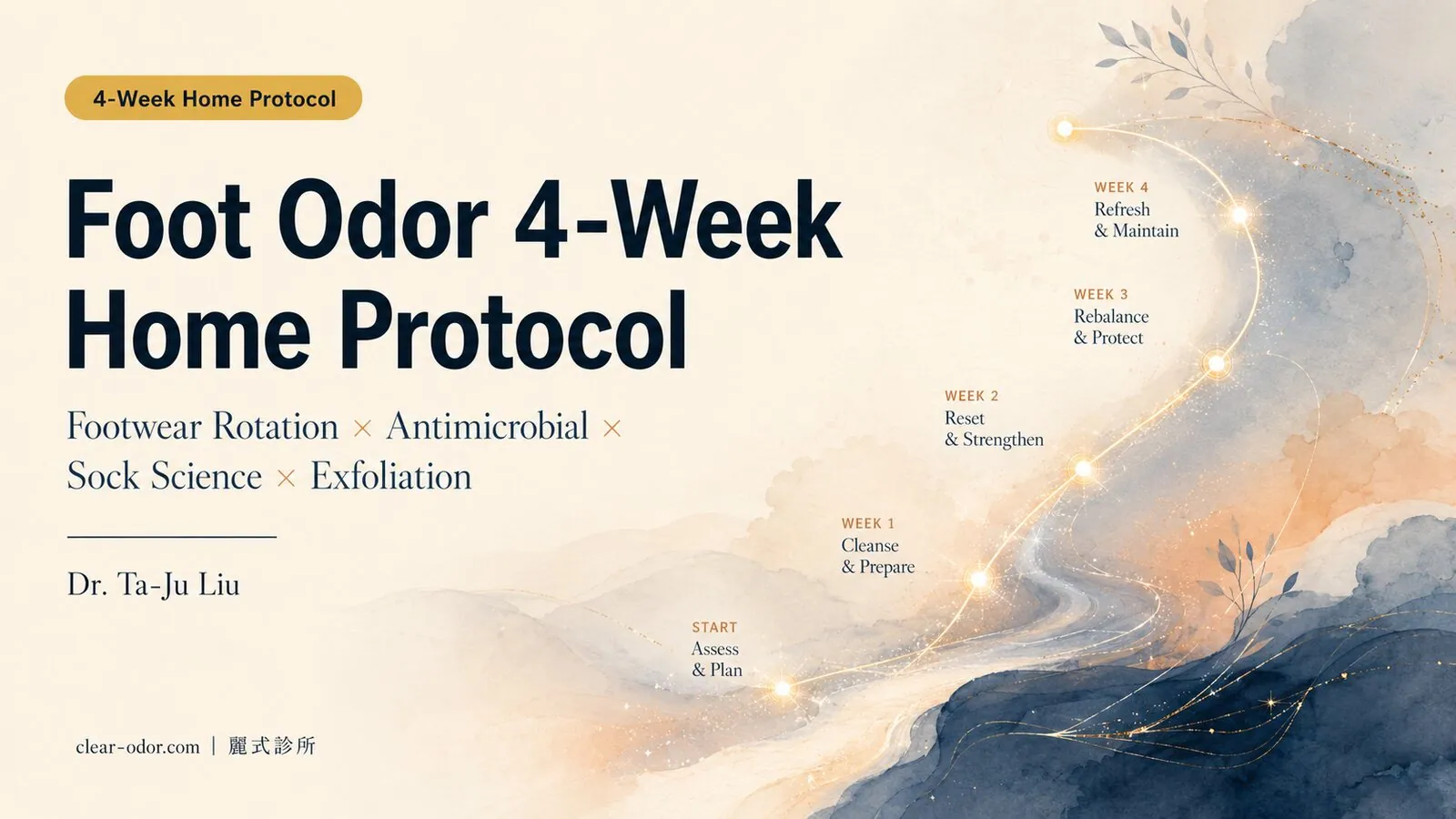
Management of foot odor usually begins with a home protocol (footwear rotation + antimicrobial spray + sock adjustment + exfoliation). For some patients, however, the dominant driver is hyperhidrosis amplification — sweat output is high enough that a 4-week systematic home protocol yields less than 30% improvement. At that point, Botox injection becomes a mid-tier intervention worth evaluating.
Typical indications:
- Needing to change socks 2-3 times a day to keep them from soaking through
- Even moisture-wicking socks leave shoes noticeably damp inside
- Hyperhidrosis combined with recurrent tinea pedis — sweat output stays high, and antifungal courses give limited results
- Foot presentation of generalized hyperhidrosis (coexisting with palmar or axillary hyperhidrosis)
- Not a surgical candidate or preferring not to undergo surgery (e.g., older age, anesthesia risk)
It is not that "the worst-smelling feet must get Botox" — Botox is appropriate when the primary driver is hyperhidrosis, not infection and not tinea-dominant.
This article distills the past 20 years of clinical experience across hundreds of plantar, palmar, and axillary Botox cases — the goal is to help you understand the mechanism, judge whether you are a suitable candidate, and know what to combine it with afterward, before you come in for consultation. Fee, duration, and individual suitability are discussed in person during consultation.
How does Botox in the sole actually reduce sweat?
Botox blocks the nerve-to-gland "sweat" signal — it interrupts the acetylcholine message from the sympathetic nerves to the eccrine glands, so the glands get fewer instructions and local sweating drops sharply; with less sweat, the odor that bacteria make from it falls too.
Botox (botulinum toxin type A) is a signal blocker at the neuromuscular junction — but it blocks not only signals to skeletal muscle; it also blocks the autonomic signals to sweat glands.
Mechanism in detail
Normal state:
Sympathetic nerve → releases acetylcholine → binds to eccrine gland receptor → eccrine gland secretes sweat
After Botox injection:
Botox cleaves SNAP-25 protein → prevents acetylcholine release → eccrine gland receives no signal → sweat output drops markedly
Why not 100%
- The injection field and depth have limits — peripheral nerve branches may not be fully covered
- Individual variation — nerve density and depth differ
- New nerve branches gradually grow (nerve regeneration) — this is why the effect tapers off after roughly 4–6 months
Why roughly 4–6 months
- Botox's nerve blockade is reversible
- New nerve terminals begin to form around month 3
- Most function returns by around months 4–6
- Individual variation is wide: some people keep the effect longer, others notice it fading earlier
How is plantar Botox actually done — area, dose, and does it hurt?
The injection covers the whole sweating sole in a grid of many intradermal micro-injections; the sole is nerve-dense, so it hurts more than palmar or underarm injections, which is why local pain-relief measures are usually used — overall it's an in-clinic procedure.
Injection area
Standard area: the entire sole (from heel to base of toes, including the arch)
Extended area (case-by-case):
- Top of the toes (for those with noticeable toe sweat)
- Lateral edges of the foot (for those with visible sweat beads even in sandals)
- Around the heel (for those especially prone to skin flaking)
Injection density
One needle per 1 cm, totaling roughly 30-40 needles per foot — adjusted to foot size and sweat distribution.
Injection depth
Deep dermis / superficial subcutaneous — this depth maximizes coverage of the eccrine glands while minimizing the risk of entering the muscle layer.
Dosage
Determined case by case. In general, the sole requires a higher total dose than the axilla (higher eccrine gland density), but slightly less than the palm. The actual dose is decided during consultation based on the surface area of your sole, sweat output, and the level of improvement targeted.
Injection technique
- Fine needles (30-32G) to reduce pain
- An ankle nerve block (developed by Dr. Liu over many years, shared with the palmar and axillary protocols), combined with gentle pain-relief anesthesia (not general anesthesia) — two layers that together reduce injection discomfort, with no numbing cream needed beforehand
Want to know how the nerve block and gentle pain-relief anesthesia actually work? The anesthesia workflow for palm and sole Botox is explained in full on the Minimal-Cut Surgery page → Visit the surgical page: palm & sole Botox treatment
Who is a good candidate for plantar Botox, and who isn't?
Good candidates: people whose odor is driven by hyperhidrosis, who improved little on the home protocol, and who want to avoid surgery. Not suitable: pregnancy/breastfeeding, neuromuscular disease, infection at the site, or odor that actually comes from fungus or thick skin rather than sweat — so the primary cause must be sorted out first.
Situations where Botox is worth considering
- 4-week systematic home protocol yields less than 30% improvement
- The primary driver is hyperhidrosis amplification (not tinea-dominant)
- Poor response to 20% aluminum chloride solution, or irritation intolerable
- Not a surgical candidate, or preferring not to undergo surgery (surgery primarily targets the axilla; it does not apply to the sole)
- Coexisting with palmar or axillary hyperhidrosis, with a wish for integrated management
Situations where Botox is not suitable
- Active tinea pedis flare: treat the tinea for 4 weeks first, then reassess (injection may aggravate inflammation)
- Open wound or infection on the foot: address first
- Pregnancy or breastfeeding: not recommended per current clinical guidance
- Myasthenia gravis or Lambert-Eaton syndrome: contraindicated
- History of allergy to botulinum toxin: contraindicated
- Currently taking certain antibiotics (such as aminoglycosides): discuss with the prescribing physician
Gray-zone situations
- ORS / OlRS gray zone: self-perceived strong odor with normal objective findings — integrated evaluation is needed first to rule out a psychogenic component; Botox is not given directly
- Children: under 18, case-by-case evaluation and parental consent are needed; the home protocol is usually prioritized
- Diabetes: neuropathy-related sensory changes and wound healing need to be assessed
How does plantar Botox compare with palmar and underarm Botox?
The mechanism is the same across all three sites, but the experience differs: the sole hurts the most and needs a higher dose per unit area, with a similar duration of about 4–6 months (varies by individual); underarm injections are the least painful and most visibly effective, and palms sit in between.
This clinic manages hyperhidrosis at all three major sites — the following comparison is what patients most often want to see:
| Item | Sole | Palm | Axilla |
|---|---|---|---|
| Eccrine gland density | 600+/cm² | 500+/cm² | 300+/cm² |
| Needles per side | 30-40 | 25-35 | 15-20 |
| Pain (0-10 scale) | 7-8 | 7-8 | 4-5 |
| Duration | ~4–6 months (varies by individual) | ~4–6 months (varies by individual) | median 197–205 days (PMID 17306417) |
| Improvement | marked improvement in most patients | marked improvement in most patients | 75% improved 2 HDSS grades |
| Impact on work | If both feet are done together, the feet feel weak and walking is harder for about 4–6 h after the nerve block (one foot at a time is an option) | Hands clearly numb for about 4–6 h after the nerve block; fine movements not possible | Almost no impact |
| Suitable for | Odor + sweat + damp shoes | Slippery writing / handling | Damp-stained clothing + odor |
Why the sole and palm hurt more
The sole and palm have the highest density of sensory nerve endings in the body — this is the evolutionary protective wiring that makes shoe friction painful and gripping dirty objects unpleasant. Fine-needle puncture and the spread of Botox both elicit a stronger sensory response in these areas.
Pain management options (case by case):
- Ankle nerve block with gentle pain-relief anesthesia (a focus of Dr. Liu; not general anesthesia) — two layers, with no numbing cream needed beforehand
- Vibration distraction (applying vibration next to the injection needle)
- Oral analgesic if needed (very rare)
The combination of pain management options will be discussed during consultation based on your individual situation.
What do you need to do yourself, before and after the injection?
For 1–2 weeks before, avoid factors that increase bleeding or blunt the effect and keep the site clean; afterward, briefly avoid vigorous friction and long foot soaks, and keep up footwear rotation and antibacterial care so the effect lasts.
1-2 weeks before injection
- Stop anticoagulants per the prescribing physician's advice (do not self-discontinue)
- Stop antiperspirants 3-5 days before to allow sweat gland assessment
- If there has been a tinea pedis flare within 4 weeks, treat it first
- Wear loose, breathable shoes on the day of injection
Day of injection
- Avoid vigorous exercise for 24 hours after injection — to prevent Botox from spreading from the injection site to non-target muscles
- Avoid rubbing the injection site
- Avoid hot foot soaks (heat accelerates spread)
- Rest briefly for observation before leaving; do not drive yourself that day, and arrange a ride
- For about 4–6 hours after the ankle nerve block the feet feel weak and walking is harder (more noticeable when both feet are done together), so you can also choose to treat one foot at a time
1-2 weeks after injection
- Peak effect at days 7-14
- Noticeable reduction in sweat output starts to be felt
- This is also a good time to initiate tinea pedis screening (if there were prior concerns)
- Pair with the home protocol (footwear rotation + antimicrobial spray + socks) for lasting results
2 weeks to about 4–6 months after injection
- Effect remains stable
- A good time to reassess shoe and sock material choices (with lower sweat, closed shoes that were previously off-limits may become feasible)
- When the effect starts to fade (around 4–6 months, varies by individual), evaluate whether re-treatment is needed
What side effects can plantar Botox have, and how are they managed?
It's relatively safe overall; the more common effects are soreness at the site, temporary weakness, or compensatory sweating shifting elsewhere — usually mild and self-resolving over time. Serious adverse reactions are rare, so knowing them in advance and monitoring after injection is enough.
Botox injection is a relatively safe procedure, but there are still some possible reactions you should know about in advance:
Common (most people will experience)
- Injection-site pain: brief (from the moment of injection up to 24 hours)
- Bruising: resolves in 1-7 days
- Weak feet, harder walking: from the ankle nerve block; recovers after about 4–6 hours (more noticeable when both feet are done together)
- Transient swelling: resolves in 1-3 days
Uncommon
- Skin dryness from over-reduction of sweat: addressed with moisturizer, improves in 4-8 weeks
- Transient changes in muscle sensation: if dose spreads into the plantar muscles (plantar flexors), a brief sensation of "stepping on weaker ground" may occur — usually resolves in 1-2 weeks
- Compensatory sweating elsewhere: a small number of patients feel sweat increase at other sites, usually mild
Rare
- Allergic reaction
- Injection-site infection (very rare under sterile technique)
- Persistent muscle effect (very rare per the literature)
The likelihood and management of side effects will be reviewed in person during consultation, and the risk profile will be assessed based on your individual situation.
Once the effect (about 4–6 months) wears off, do you have to keep injecting forever?
Not necessarily — three typical strategies: lean on the home protocol during low-odor seasons, return for a top-up when symptoms climb back, or evaluate switching to a longer-lasting option; it can be arranged case by case around your needs, not on a forced fixed cycle.
Botox lasts about 4–6 months, varying by individual — what next? Three typical strategies:
Strategy 1: Regular re-treatment
Return for injection when the effect fades (roughly every 4–6 months). Suitable for:
- Hyperhidrosis is the long-term primary driver
- The home protocol alone cannot sustain the result
- Work or lifestyle has a high requirement for dry feet (sales, teaching, formal-shoe-wearing roles)
Strategy 2: Step-down model
After the first 1-2 sessions, evaluate room to step down — lengthen the interval depending on how quickly sweating returns, eventually moving toward "inject only when needed" (e.g., summer, ahead of special occasions).
Strategy 3: Stop injections + intensify the home protocol
A subset of patients, after 1-2 Botox sessions plus a 4-8 week home protocol, see their microbial flora and microbiome settle into a new equilibrium — afterward, home management alone is enough to maintain. This is more often seen when:
- The real driver was tinea pedis, which was treated in parallel
- Footwear and sock materials were upgraded
- Lifestyle adjustments were made (weight, diet, activity level)
Which strategy fits you will be discussed at the 3- and 6-month follow-up based on actual improvement.
FAQ — 8 questions most often asked in clinic
Q1. Will I see results from the first Botox session?
Yes. Most people feel reduced sweat output and noticeably drier shoe interiors within 7-14 days. A full effect assessment is best done at weeks 4-6 (the stable phase).
Q2. Can I have plantar + palmar + axillary done in one session?
It can be done in separate sessions or in one — depending on your schedule, pain tolerance, and individual situation. When multiple sites are injected in one session, the total dose distribution is adjusted to maintain safety. The details are discussed during consultation.
Q3. After repeated injections, will I develop resistance?
Uncommon. After many repeat injections, a very small number of people may develop neutralizing antibodies that reduce effectiveness — but at the dose level used for plantar Botox, the probability is low. Most people maintain stable results across years of regular treatment.
Q4. Is Botox cheaper or more expensive than axillary surgery?
Botox has a duration of about 4–6 months and requires repeats; surgery offers longer-term stability in a one-time intervention (for the axilla; surgery does not apply to the sole). A long-term cost comparison depends on your injection frequency and expected maintenance horizon, and is reviewed in person during consultation.
Q5. Why do some people get only 3-4 months out of Botox?
Possible reasons: (1) faster individual metabolism; (2) faster nerve regeneration; (3) under-dosing; (4) incomplete coverage of the injection field. The second session can adjust dose and area to extend duration.
Q6. Do I still need the home protocol after Botox?
Yes. Botox reduces sweat output but does not change the microbial flora, the shoe-internal environment, or treat tinea pedis — these still require the home protocol. An integrated strategy is what produces lasting results.
Q7. Will too many Botox sessions atrophy the sweat glands or cause permanent loss of function?
Per current literature, no. Botox blockade is reversible — after injections stop, nerves regenerate and sweat gland function gradually returns.
Q8. Can I have Botox if I have diabetes?
Case-by-case evaluation is needed. Diabetic feet involve: (1) neuropathy-related sensory changes; (2) wound healing risk; (3) higher likelihood of coexisting tinea pedis and infection — these issues need detailed assessment during consultation before a decision is made. It is not an absolute contraindication, but the risk-benefit ratio is evaluated more carefully.
Related Reading
- Foot Odor Won't Wash Off? Causes & a 4-Week Home Protocol
- Foot Odor: A 4-Week Home Protocol for Shoes, Socks & Skin
- Hyperhidrosis Guide: Types, Severity, Treatments & ETS
- Sweaty Palms Without Surgery: Iontophoresis, Topicals, or Botox?
- Foot Odor Integrated Assessment
- Hyperhidrosis & Compensatory Sweating
- Palmar Hyperhidrosis
A Closing Note
Plantar Botox injection is not a "cure-all for foot odor" — it is a precise tool for cases where the primary driver is hyperhidrosis amplification. Lasting results come from combining it with footwear management, antimicrobial measures, and antifungal treatment when needed.
If you would like to evaluate whether you are a suitable candidate, please book an Odor Map initial consultation via LINE — during the visit we will walk through the mechanism, pain management options, expected improvement, and fee details based on your individual situation. The value of integration lies in "using the right tool for the right problem", which is also why we do not advocate Botox in situations where it does not fit.