Why "hyperhidrosis" and "compensatory sweating" get confused
Both terms involve sweating, and the names look alike (compensatory sweating is even called "compensatory hyperhidrosis"), so many people assume they are two ways of saying the same thing.
They are very different. Hyperhidrosis is a tendency your constitution carries to begin with; compensatory sweating is a side effect that appears only after one specific operation, ETS. Mixing them up has a real cost: you can make a decision you can't take back before you understand the risk. This article is for anyone considering ETS.
See the core difference at a glance
| Comparison point | Hyperhidrosis (primary) | Compensatory sweating |
|---|---|---|
| Nature | A constitutional condition (a tendency you are born with) | A side effect caused by surgery (an iatrogenic outcome) |
| Cause | Sweat glands are overactive under sympathetic-nerve regulation, with no defined disease | After ETS cuts the sympathetic nerve, the body "compensates" by sweating elsewhere |
| Typical location | Palms, underarms, soles (focal) | Trunk, back, abdomen, thighs (widespread) |
| When it appears | Usually starts around puberty | Only after ETS surgery |
| Character | A state that "was already there" | The cut nerve cannot recover, but the sweat glands in compensatory areas can be treated |
| Direction of management | Treatment aimed at the sweat glands or local measures | Treat the sweat glands in compensatory areas; the best move is still thinking it through before ETS |
What hyperhidrosis is — a constitutional overactivity of the sweat glands
Hyperhidrosis means sweating beyond what the body needs to regulate temperature. The most common form is primary focal hyperhidrosis. No underlying disease can be found and the sweat glands themselves are normal; they are simply "overactive" under sympathetic-nerve signalling.
It has several typical features:
- It tends to occur in focal areas: the palms (palmar hyperhidrosis), underarms, and soles
- It usually starts around puberty
- It often runs in families
- It interferes with writing, shaking hands, holding objects, and social life, but is not in itself a dangerous disease
Key point: In hyperhidrosis the nerve is fine; the sweat glands are simply getting too strong a signal. So treatment can go straight for the sweat glands without touching the nerves. For non-surgical options for palmar sweating, see Sweaty Palms Without Surgery: Iontophoresis, Topicals, or Botox?.
What compensatory sweating is — a side effect after ETS surgery
ETS (endoscopic thoracic sympathectomy) is an operation for sweaty hands: through a thoracoscope, the sympathetic ganglion that drives sweating in the hands is cut or removed. Sweating of the hands does indeed stop, with a fast and obvious effect.
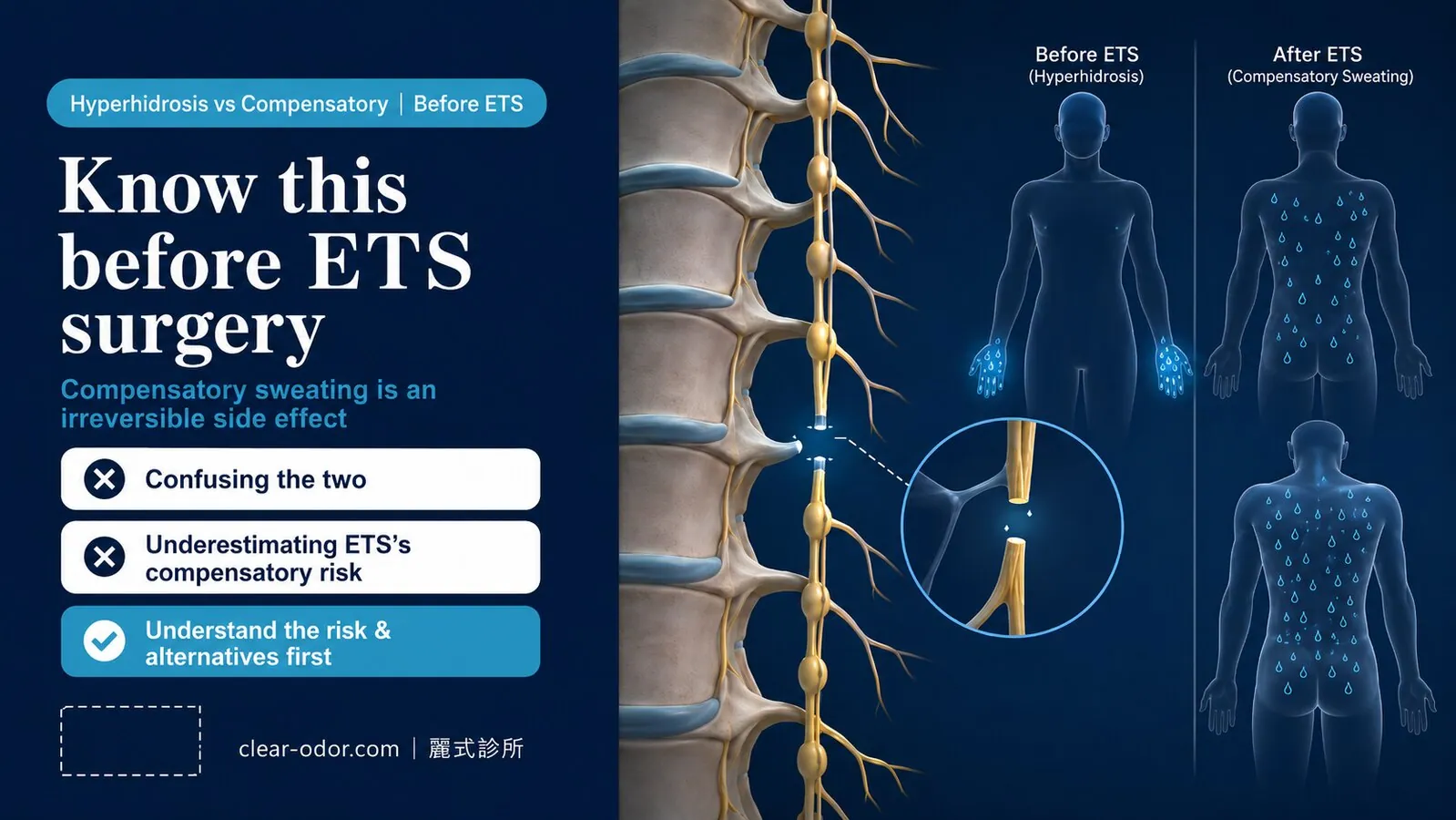
The catch is that the sympathetic nerve also takes part in the body's overall heat-regulating sweating, not just hand sweating. Cut the nerve to one segment, and the body makes up for it by sweating more in the areas that were not cut. The trunk, back, abdomen, and thighs, which used to sweat little, start sweating heavily. That is compensatory sweating.
Key point: Compensatory sweating is a known and common side effect of ETS. It ranges from mild to marked, and for some people the area and volume of compensation are considerable. The cut nerve cannot recover; what can be treated is the sweat glands in the compensatory areas.
The most important difference: one is a "cause," the other a "consequence"
- Hyperhidrosis is the reason you walk into the clinic, a difficulty you were born with.
- Compensatory sweating is the consequence of a treatment (ETS), a new difficulty traded for that treatment.
There is a real trade-off here. Some people start with only moderately sweaty hands. After ETS their hands are dry, but they are left with severe compensatory sweating of the trunk, and their overall quality of life goes down.
Key point: This amounts to exchanging a "focal, controllable" problem for a "widespread" one in which the nerve cannot recover. ETS can still be the right call, as long as you fully understand the cost first.
What you must know before ETS surgery
If you are considering ETS, please be clear on the following first:
- ETS really does work for sweaty hands. It is fast and marked; no need to doubt that.
- Compensatory sweating is a common side effect. Don't decide on "my hands will be dry" alone; put this risk on the scales too.
- The cut nerve cannot recover. Sweating in compensatory areas can be treated, but that is damage control afterwards, and the nerve does not come back.
- It is an informed trade-off. Some people feel it was worth it and some regret it, and the difference often comes down to whether they were fully informed beforehand.
- Learn the nerve-sparing options before deciding. Whether ETS or another approach suits you should be assessed by a doctor.
If you would rather not have ETS — what are the options
If you want to avoid this particular risk of compensatory sweating, it helps to know the treatments that work on the sweat glands themselves, without cutting the sympathetic nerve. Because the nerves are not touched, the mechanism of "the body compensating by sweating elsewhere" does not arise (though each method differs in durability and suitability, which still requires individual assessment by a doctor):
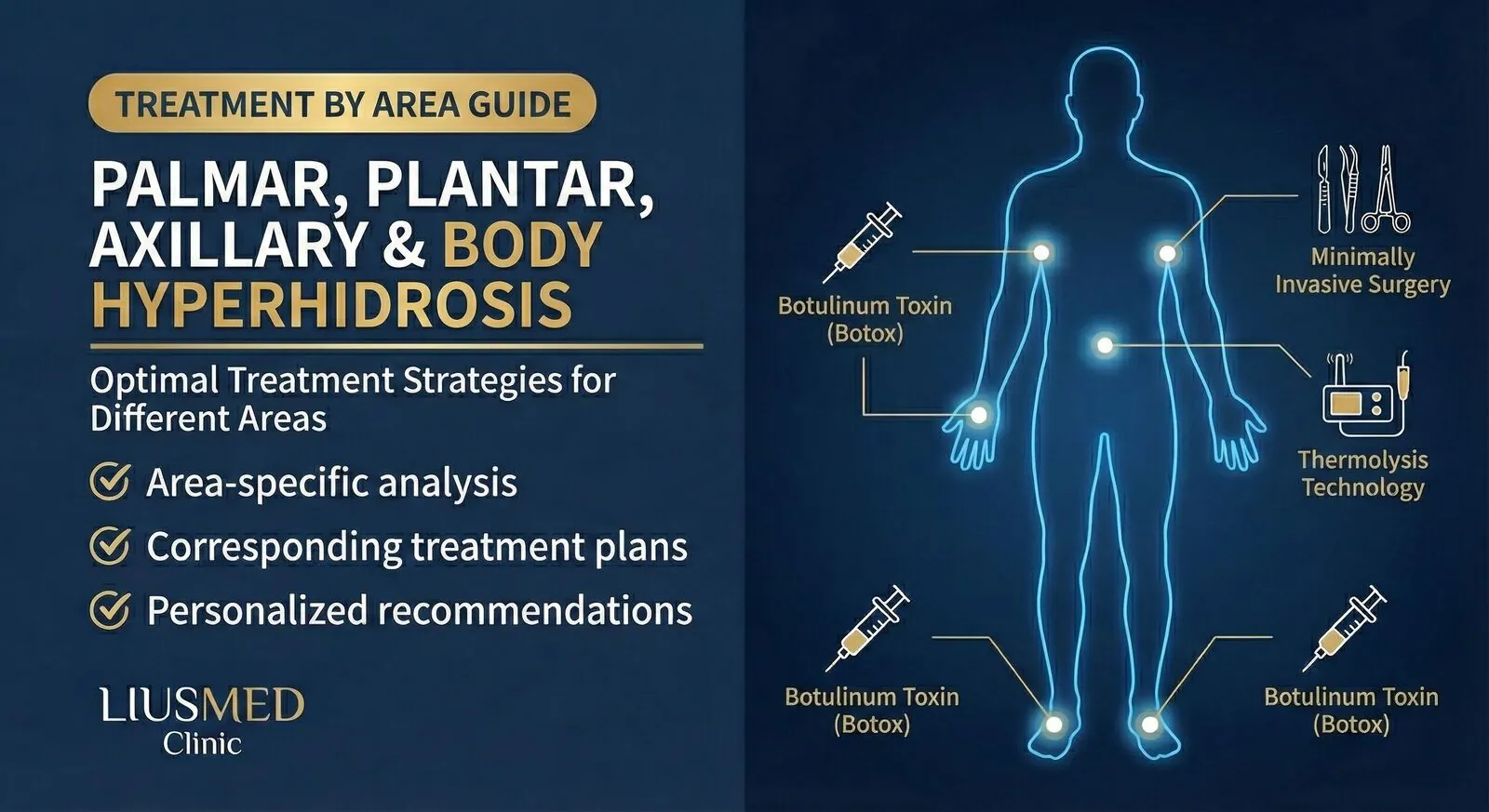
- Palmar sweating: botulinum toxin injection, with a local nerve block plus gentle pain-relief anesthesia to ease injection discomfort; the treatment and anesthesia workflow are covered on the Minimal-Cut Surgery page: palm sweating Botox treatment.
- Underarm sweating: botulinum toxin injection, MiraDry microwave thermolysis, rotational curettage surgery, and others; for a comparison of these underarm options, see Bromhidrosis Surgery vs miraDry: A 6-Point Comparison.
- Conservative measures: antiperspirants and iontophoresis, suited to mild cases or to those who want to try a non-invasive route first.
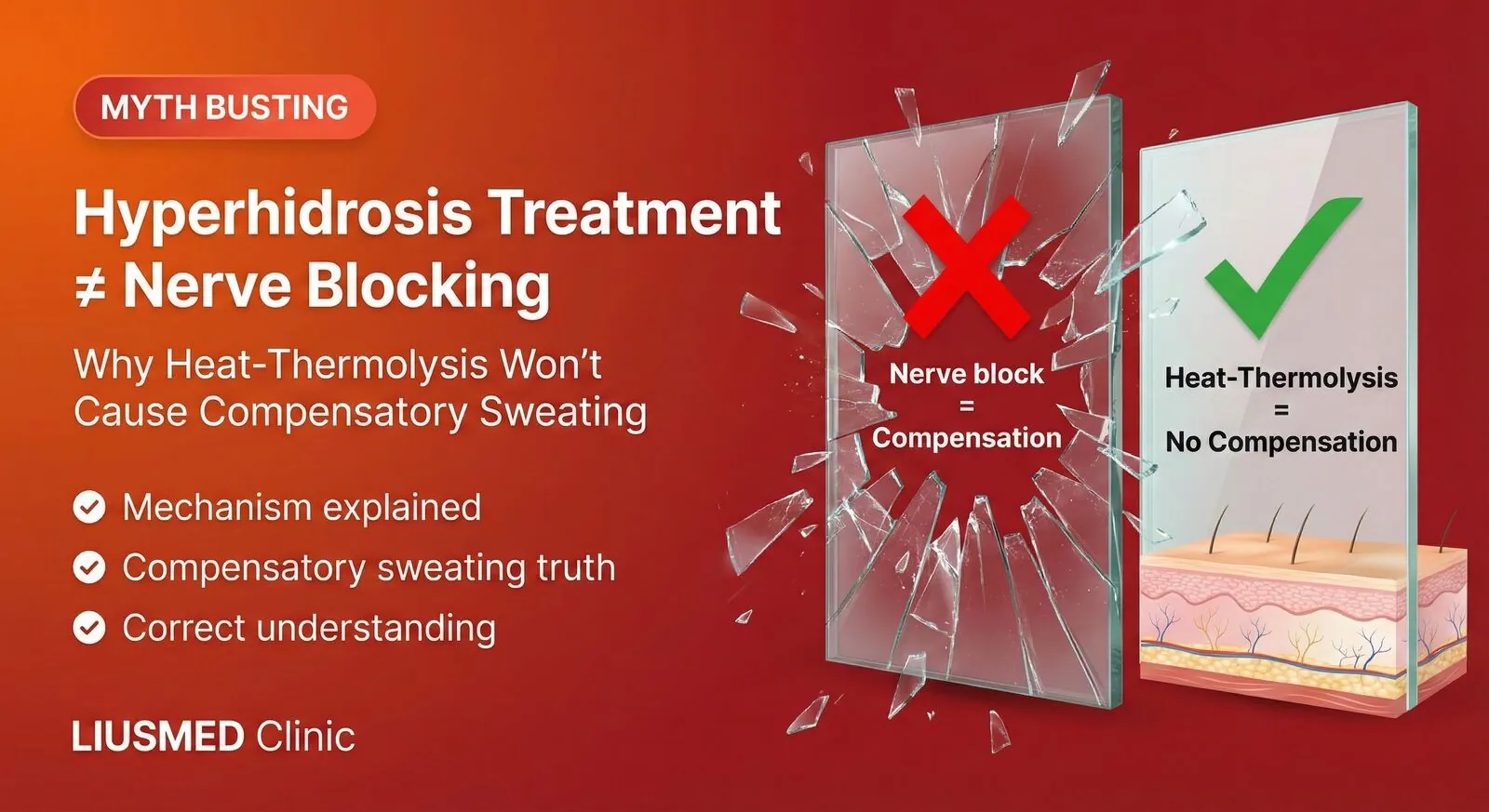
For common misconceptions about hyperhidrosis treatment (including the myth that "treating sweating must cause compensatory sweating"), see Thermal Sweat Treatment Won't Trigger Compensatory Sweating.
Frequently Asked Questions (FAQ)
Are "compensatory hyperhidrosis" and "compensatory sweating" the same thing?
Yes, they refer to the same thing. Compensatory sweating and compensatory hyperhidrosis both describe the abnormal sweating that appears elsewhere on the body after ETS or other sympathetic-nerve surgery. Just don't confuse it with "primary hyperhidrosis," which is a constitutional condition that existed before any surgery.
I have sweaty hands — will ETS definitely cause compensatory sweating?
Not in 100% of cases, but the incidence is not low, and the degree is hard to predict accurately in advance. Compensatory sweating is a known and common side effect of ETS: a meta-analysis of 10 studies and 3,117 patients put the pooled incidence at 62% (95% CI 51–72%), with severe cases at 23% (95% CI 12–34%) (PMID 40124609). The interval is wide because studies define and follow it differently. Since no one can promise in advance that "you won't get it," it is all the more important to understand this risk before surgery and to have a doctor assess your individual situation.
Can compensatory sweating be cured?
The cut sympathetic nerve cannot be reconnected, but in the compensatory areas the sweat comes from glands in the skin, and those glands can be treated directly. Based on our clinic records, sweat gland thermolysis in compensatory areas reduces sweating by about 70% per session without creating new compensation. So compensatory sweating is no longer a dead end. The nerve itself still cannot be restored, though, so "prevention over treatment" still applies. The key is still the decision made before ETS surgery. How compensatory areas are assessed and treated with sweat gland thermolysis is explained on the Minimal-Cut Surgery page: hyperhidrosis and compensatory sweating.
I've already had ETS and now have compensatory sweating — what can be done?
The sweat glands in the compensatory areas can be treated directly. Based on our clinic records, sweat gland thermolysis reduces sweating by about 70% per session, and botulinum toxin and oral medication are also options. It is advisable to have a doctor assess the location, extent, and degree of the compensation before deciding. If you are troubled by compensatory sweating, you can start with the hyperhidrosis and compensatory sweating clinic for a doctor's assessment.
I don't want surgery — are there other ways to manage hyperhidrosis?
Yes. Managing hyperhidrosis does not have to mean surgery, and certainly not cutting nerves. Mild cases can start with antiperspirants and iontophoresis; moderate cases can consider botulinum toxin injection; different areas have different suitable approaches. It is best to have a doctor assess the location, severity, and lifestyle impact of your sweating, then choose a treatment.
Related Reading
- Sweat Gland Surgery: Curettage vs Laser vs miraDry vs ETS
- Hyperhidrosis Guide: Types, Severity, Treatments & ETS
- Thermal Sweat Treatment Won't Trigger Compensatory Sweating
- Sweaty Palms Without Surgery: Iontophoresis, Topicals, or Botox?
- Hyperhidrosis & Compensatory Sweating
- Palmar Hyperhidrosis
Conclusion
Hyperhidrosis is the cause you bring to the clinic; compensatory sweating is a consequence traded for a particular operation.
- Hyperhidrosis: constitutional, focal, starts around puberty, can be addressed at the sweat glands themselves.
- Compensatory sweating: a side effect after ETS, widespread, the nerve cannot recover (the sweat glands in compensatory areas can be treated).
If you are troubled by sweaty hands or excessive sweating and are considering ETS, the most important step is to fully understand, before deciding, the risk of compensatory sweating and learn about the nerve-sparing alternatives. Which treatment suits you should be assessed by a doctor on an individual basis. Dr. Ta-Ju Liu has focused on odor and sweat treatment for 20 years and can help you work out which direction fits. You are welcome to book a consultation.
Related Reading
- Sweat Gland Surgery: Curettage vs Laser vs miraDry vs ETS
- Hyperhidrosis Guide: Types, Severity, Treatments & ETS
- Thermal Sweat Treatment Won't Trigger Compensatory Sweating
- Sweaty Palms Without Surgery: Iontophoresis, Topicals, or Botox?
- Hyperhidrosis & Compensatory Sweating
- Palmar Hyperhidrosis
This article is health education; individual results may vary. The actual treatment and its suitability require an in-person assessment by Dr. Ta-Ju Liu. This article explains the relationship between ETS and compensatory sweating for educational purposes and does not constitute a safety claim about any particular procedure.