"Side effects" bundles two different questions together
When a patient asks whether bromhidrosis surgery has side effects, they are usually asking two things at once:
- Will something be permanently wrong with my body afterwards?
- My underarm is swollen, numb and bruised right now — is that normal?
The second question accounts for nine out of ten calls to the clinic, and it is usually not a side effect at all. It is recovery. Meanwhile the small number of things that genuinely need attention often get filed under "it'll probably settle in a few days" — and get delayed.
So this article doesn't open with a list of complications. It opens with a more useful question: the change you're looking at right now — which tier is it?
Three tiers: where are you?
| Tier | Meaning | What to do |
|---|---|---|
| Tier 1: expected | Part of any recovery | Carry on with the aftercare plan. No call needed |
| Tier 2: book a visit | Not urgent, but a doctor should look | Contact the clinic and arrange a follow-up |
| Tier 3: be seen today | Delay makes it worse | Deal with it the same day; don't wait for the next appointment |
Tier 1: expected — not side effects
Bruising and swelling
Peaks around days 3-7, then subsides. Underarm skin is thin, so bruising looks worse than it is.
Numbness, dulled sensation
Clearing the apocrine glands disturbs the fine sensory nerves in the skin. Almost everyone gets this, to varying extents, and most of it recovers over weeks to months. A few people keep a small patch that stays less sensitive — whether that counts as a "side effect" is a matter of definition, but it doesn't affect function and it doesn't hurt.
Thinner underarm hair
This is not a complication. It is an expected outcome. Apocrine glands sit around the hair follicles, so clearing the glands affects the follicles too. Underarm hair becomes noticeably sparser. This should be explained before surgery — if you only found out afterwards, that is a consent problem, not a surgical one.
Tightness; limited arm elevation
Compression dressing makes the area tight by design. If tightness persists after the dressing comes off, it is usually scar tissue in its forming phase, and it generally softens with time.
A little wound drainage
A small amount of pale yellow fluid in the first few days is normal. Heavy, thick, foul-smelling or bloody discharge belongs to Tier 2 or 3.
Tier 2: have someone look at it
| Sign | Why it matters |
|---|---|
| One side clearly more swollen than the other, and still growing | Possibly a hematoma (collected blood). Far simpler to deal with early than late |
| Redness, heat, tenderness getting worse — not better | A healing wound should hurt less each day. Moving the other way needs review |
| Wound still not closed after two to three weeks | Delayed healing needs assessment |
| Scar thickening, hardening, raising | Early intervention in scar hypertrophy beats late salvage |
| Marked pigmentation | Most fades, but the cause should be confirmed |
| A lump you can feel under the arm | Usually scar tissue or fat induration — but it should be confirmed |
| The odor is still there | This needs separating into "true recurrence" vs "glands never fully cleared" — completely different management. See Odor after surgery: recurrence, or residual glands? |
What Tier 2 has in common: it won't fix itself, but it also won't deteriorate within hours. Book a visit; you don't need the emergency room.
Tier 3: same day
Don't wait for a scheduled follow-up, and don't go looking for answers online:
- Fever (with a red, hot, painful wound)
- Sudden rapid swelling and rising pain in the underarm — possibly active bleeding forming a hematoma
- Skin turning dusky, dark or losing its texture — possible compromise of the skin's blood supply
- Heavy bleeding, or discharge turning thick or foul
- Weakness or marked numbness in the arm
All of these are uncommon. All of them are time-sensitive. Early and late management produce very different outcomes.
What actually lasts
Work through the three tiers and what may genuinely persist is a short list:
1. A scar. There will be one. It sits in a concealed fold and usually matures and fades over six to twelve months. Constitutional hypertrophic scarring (keloid tendency) is uncommon but real — it cannot be predicted with certainty beforehand, only managed early afterwards.
2. Sparser underarm hair. As above, an inherent consequence of clearing the glands.
3. A patch of duller sensation. Mostly recovers; occasionally a small area persists.
4. Skin surface not perfectly even. There is a trade-off between how thoroughly the glands are cleared and how much skin thickness remains; push clearance further and the risk to the skin surface rises. How that trade-off is judged is a surgical question (see Residual skin thickness: the trade-off). What you should know as a patient is simply that the trade-off is real, and anyone telling you there is no cost at all is not being straight with you.
Two myths worth killing
"Bromhidrosis surgery causes compensatory sweating" — it doesn't
Compensatory sweating comes from cutting the sympathetic nerve (ETS surgery). Underarm bromhidrosis surgery works on the sweat glands themselves in the superficial skin and does not touch the nerve trunk. Different mechanism entirely. See Thermal sweat treatment is not nerve blocking.
"It damages the lymphatic system / immunity" — it doesn't
The surgery works in the superficial subcutaneous plane and does not enter the deep axillary nodal region. The rumour travels widely; it has no basis.
FAQ
Q1: What is the most common side effect of bromhidrosis surgery?
A1: If you count recovery changes, the most common are bruising, swelling and temporary numbness — all of which resolve. If you count only true complications, the most common is hematoma (collected blood), which is also the one most worth catching early.
Q2: How long is recovery after bromhidrosis surgery?
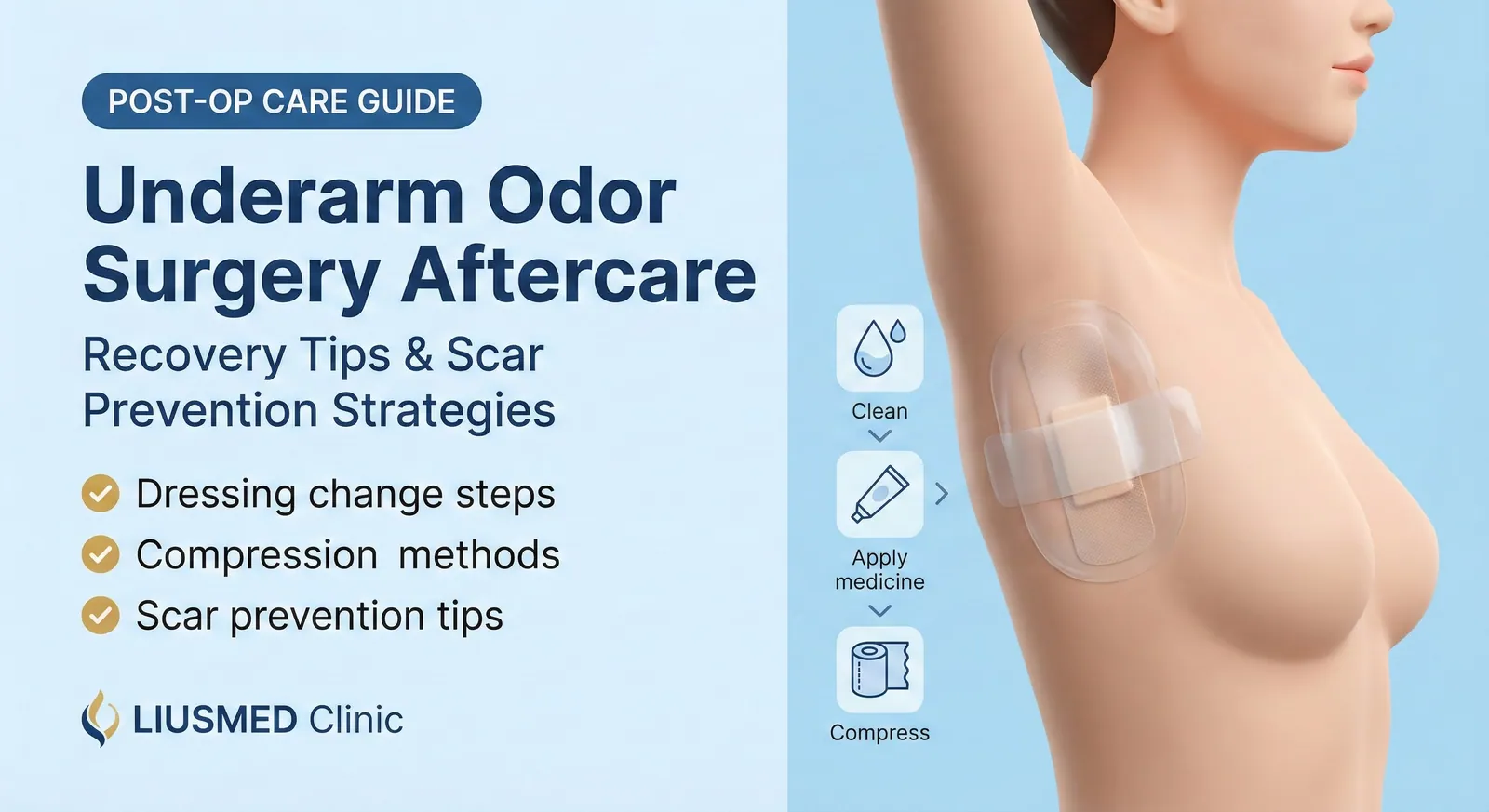
A2: Compression dressing for about a week; ordinary activity at roughly 1-2 weeks; strenuous exercise and weight training after about 4 weeks. Scar maturation takes six to twelve months. Full timeline and aftercare steps: Bromhidrosis surgery aftercare guide.
Q3: My underarm is numb. Will it stay like this?
A3: For most people it recovers over weeks to months. A few keep a small patch of duller sensation, which doesn't affect function and doesn't hurt. If numbness is spreading, or the arm feels weak, that is Tier 3 — same day.
Q4: Is thinner underarm hair a sign the surgery failed?
A4: No — it is an expected outcome. Apocrine glands and hair follicles are anatomically adjacent; clearing one inevitably affects the other. This should have been explained before surgery.
Q5: Will the scar be obvious?
A5: It sits in the axillary fold and is not obvious for most people. But scar tendency cannot be fully predicted beforehand — if you notice the scar thickening and hardening at two or three weeks, come back early. That works far better than salvaging a mature scar later.
Q6: I still smell after surgery. Is that a side effect?
A6: It isn't a side effect; it's a separate question. First separate "true recurrence" from "glands that were never fully cleared." Clinically the latter is far more common, and the two are managed completely differently. See Odor after surgery: recurrence, or residual glands?
Two plain sentences for anyone about to have this done
- No surgery has zero cost. There will be a scar, less hair, and altered sensation. If you accept those in exchange for losing the odor, then there is something to discuss.
- The overwhelming majority of "complication panics" are normal recovery. But a handful genuinely are time-critical — memorize the five items in Tier 3. Everything else can wait for a follow-up.
Further reading
- How Long Is Underarm Odor Surgery Recovery? Aftercare Guide
- Odor After Bromhidrosis Surgery: Recurrence or Glands Never Cleared?
- Thermal Sweat Treatment Won't Trigger Compensatory Sweating
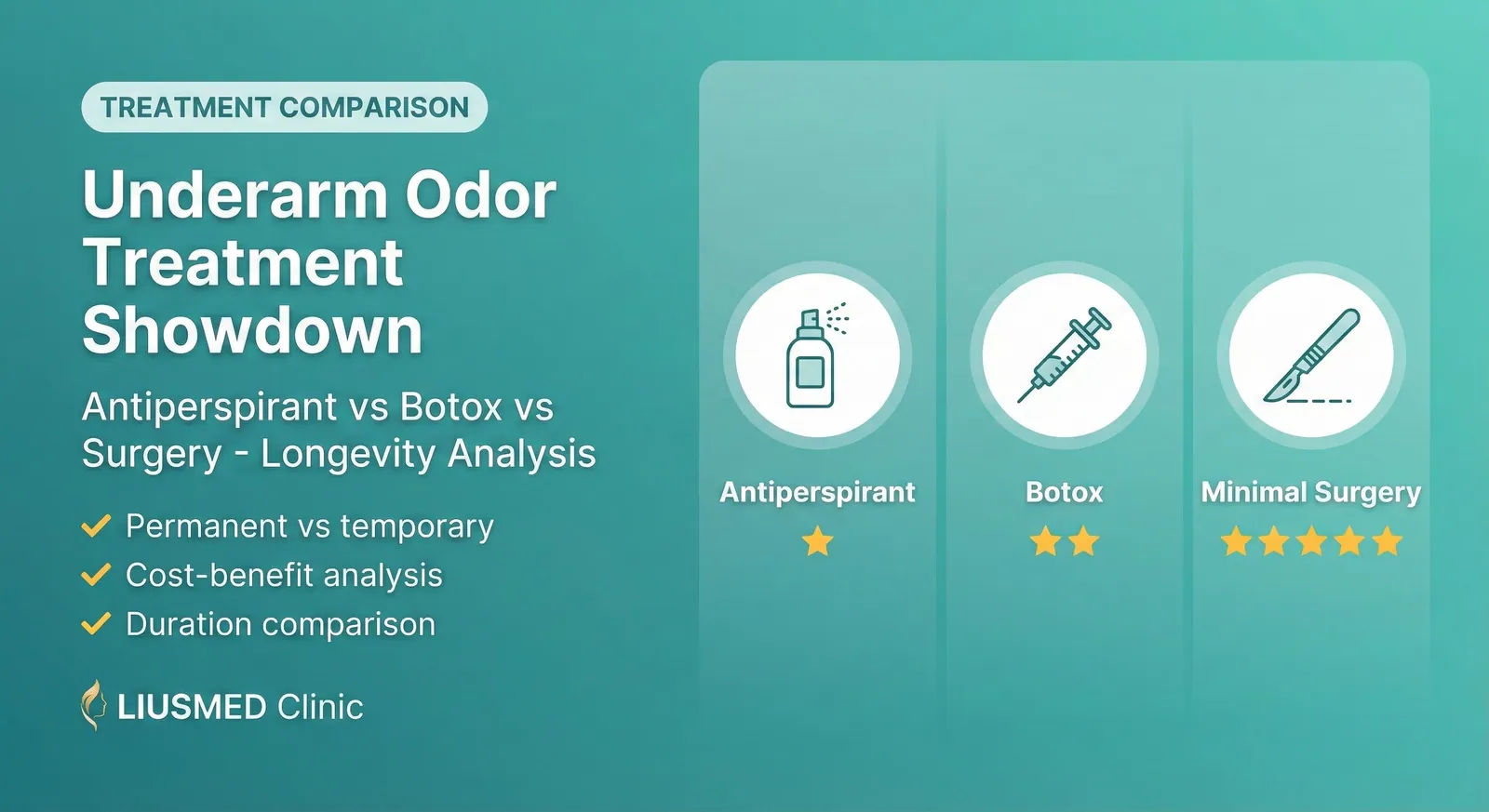
- Underarm Odor: Antiperspirant vs Botox vs Surgery
About Clear Odor Clinic
Dr. Ta-Ju Liu
- Position: Director, Clear Odor Clinic
- Focus: Minimally invasive odor and sweat surgery (underarm, areolar, perineal), hyperhidrosis
- Credentials:
- 20+ years dedicated to odor treatment
- 10,000+ cases; no recurrence reported in clinical follow-up
- Board-certified dermatologist (Taiwan)
- Philosophy: "Nine out of ten patients who call asking 'is this normal?' are fine. I would still rather they called — because for the tenth, a day makes a real difference."