Safety Assurance: Areola Odor Surgery Does Not Affect Breastfeeding
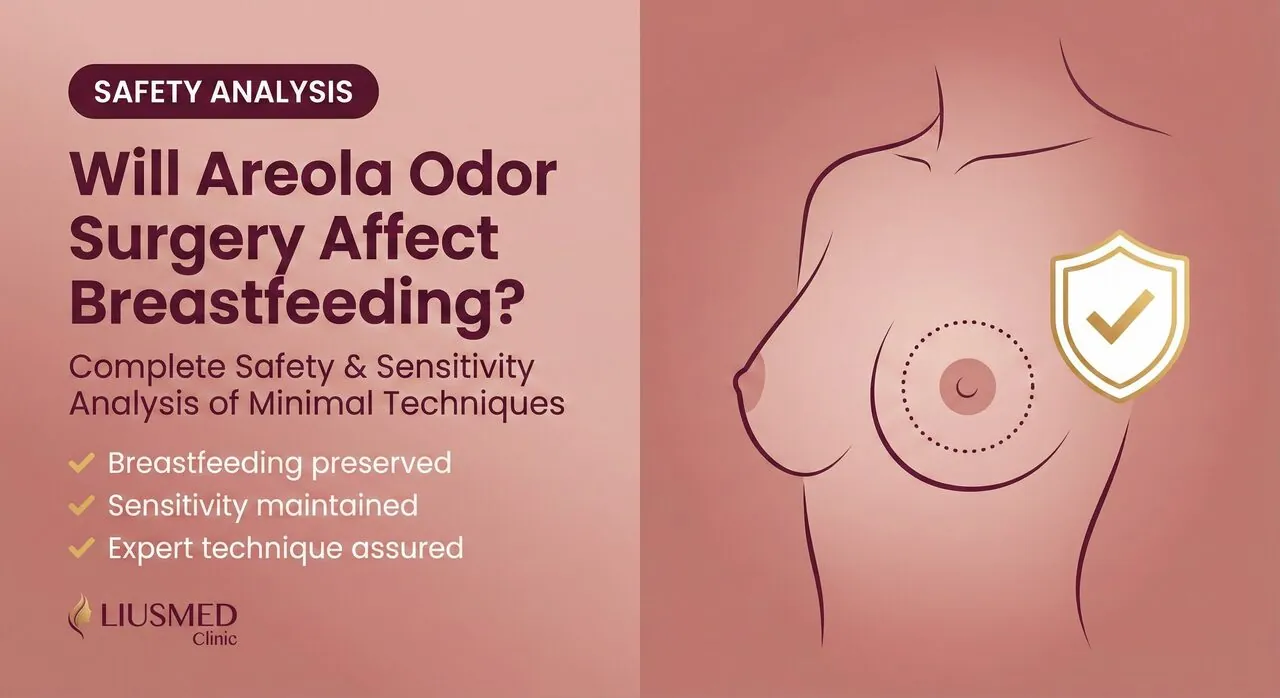
The safety of areola odor surgery is the primary concern for many female patients. The answer is: properly performed minimally invasive surgery does not affect breastfeeding function, and sensitivity changes are temporary. This article explains from anatomical and surgical technique perspectives why this procedure is safe.
Areola Anatomy and Odor Source
Anatomical Layers of the Areola Region
The areola region contains the following structures from outer to inner:
| Layer | Structure | Function |
|---|---|---|
| Layer 1 | Epidermis | Skin protection |
| Layer 2 | Superficial Dermis | Contains apocrine glands (odor source) |
| Layer 3 | Deep Dermis | Contains sensory nerve endings |
| Layer 4 | Subcutaneous Fat | Cushioning protection |
| Layer 5 | Mammary Gland Tissue | Produces breast milk |
| Deepest Layer | Milk Duct System | Transports breast milk |
Location of Apocrine Glands
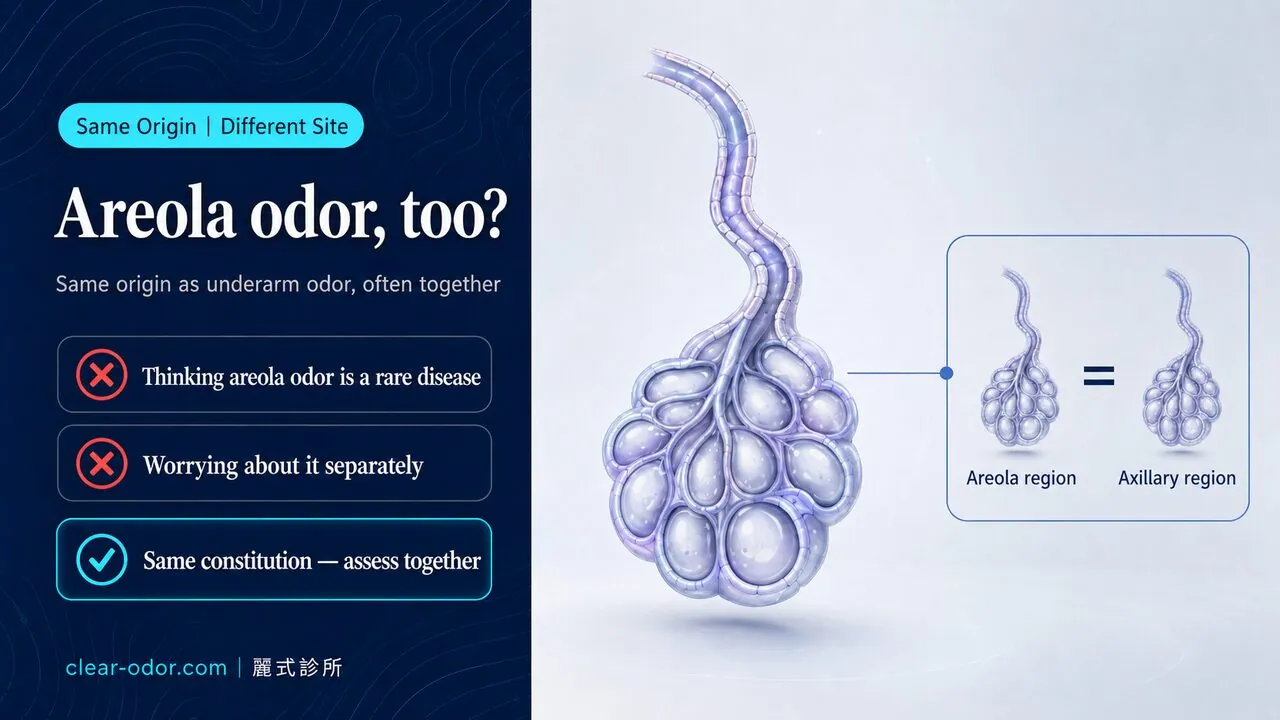
Apocrine glands (the glands causing odor) are located in the superficial dermis, at a depth of approximately 2-4mm. Mammary gland tissue and milk duct systems are located in the deeper subcutaneous tissue. This anatomical "safety distance" is the foundation of surgical safety.
💡 Dr. Liu explains: "There's a clear layer separation between apocrine glands and mammary tissue. Minimally invasive curettage only addresses the superficial apocrine gland layer, reducing the deep mammary tissue."
Why Doesn't Minimally Invasive Surgery Affect Breastfeeding?
Surgical Depth Control
| Item | Measurement |
|---|---|
| Apocrine gland depth | 2-4 mm |
| Minimally invasive curettage depth | 3-5 mm |
| Mammary gland tissue depth | 10-15 mm or deeper |
| Safety distance | > 5 mm |
Minimally invasive surgery operates only within the dermal layer of the skin, with sufficient safety distance from mammary tissue.
Protection of the Milk Duct System
Milk ducts (channels that transport breast milk) converge from the mammary glands to the nipple, mainly concentrated in the area directly beneath the nipple. Areola odor surgery incisions are designed at the areola edge, with the surgical area in the surrounding skin layer, never touching the milk duct convergence zone beneath the nipple.
Clinical Evidence
Based on domestic and international literature and clinical experience:
- Post-operative breastfeeding function impact rate: < 1%
- Successful breastfeeding cases: Numerous patients who later gave birth report normal breastfeeding
- Milk production: Not affected
Will Sensitivity Change?
Short-Term Changes (Normal)
Possible sensory changes in the early post-operative period:
| Symptom | Duration | Cause |
|---|---|---|
| Localized numbness | 2-4 weeks | Surgical area swelling |
| Decreased sensation | 1-3 months | Superficial nerve recovery period |
| Mild tingling | 1-2 months | Nerve regeneration |
Long-Term Recovery
- 95%+ of patients: Sensitivity fully recovers within 3-6 months
- Few patients: May have slight differences, but doesn't affect daily life
- Lasting changes: Extremely rare (< 1%)
Why Does Sensitivity Recover?
Areola sensation mainly comes from deep nerve branches, located between the subcutaneous fat layer and mammary tissue. Minimally invasive surgery only addresses the superficial dermal layer, leaving deep nerves unaffected, so sensitivity can recover.
💡 Dr. Liu's Experience: "The vast majority of patients have normal sensation restored by about 3 months post-op. Occasionally patients report 'it seems even more sensitive than before'—this results from nerve redistribution after surgery."
Minimally Invasive vs Traditional Surgery: Safety Comparison
| Comparison | Traditional Surgery | Minimally Invasive |
|---|---|---|
| Incision Size | 3-5 cm | < 1 cm |
| Operating Depth | Deeper | Precisely controlled in dermis |
| Impact on Mammary Glands | Higher risk | Almost no impact |
| Impact on Sensitivity | Slower recovery | Faster recovery |
| Scar Location | May be on areola | Hidden at areola edge |
| Safety | Standard | Higher |
Who Needs Special Evaluation?
Situations Requiring Detailed Pre-Op Discussion
| Situation | Evaluation Focus |
|---|---|
| Planning pregnancy soon | Recommend surgery after pregnancy and breastfeeding |
| Currently breastfeeding | Need to stop breastfeeding 3-6 months before surgery |
| Previous breast surgery | Assess existing scars and tissue condition |
| History of breast tumors | Rule out related concerns |
| Keloid tendency | Assess scar hyperplasia risk |
Required Pre-Op Evaluations
- Detailed medical history: Including breastfeeding history, breast surgery history, family history
- Physical examination: Assess areola size, odor severity, skin condition
- If needed: Breast ultrasound
Common Concerns Q&A
Q1: I haven't had children yet. Will surgery now affect future breastfeeding?
A1: No. Minimally invasive surgery only addresses superficial skin apocrine glands, never touching mammary tissue or milk duct systems. Many patients have successfully conceived and breastfed after surgery.
Q2: Will the nipple lose sensation after surgery?
A2: Not on a long-lasting basis. There may be temporary sensory changes early post-op, but normal sensation returns within 3-6 months. The main sensory nerves of the nipple are not in the surgical area.
Q3: Can I have areola odor surgery if I've had breast augmentation?
A3: Yes. Areola odor surgery operates in the skin layer, completely different from breast implants (which are beneath the pectoralis major muscle or mammary gland). The two don't affect each other.
Q4: Will surgery change the shape of my areola?
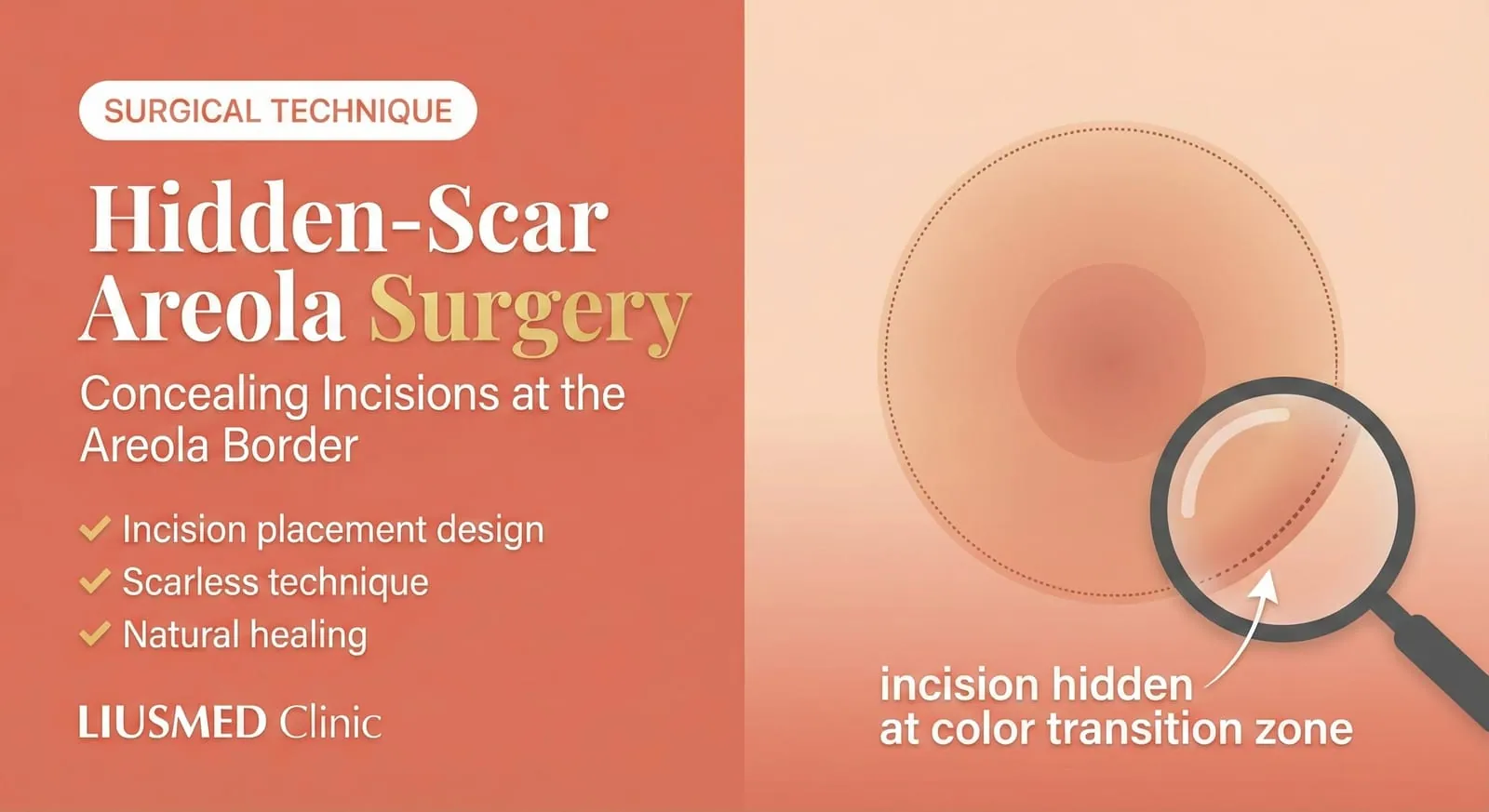
A4: No. Minimally invasive surgery incisions are designed at the areola edge, following natural lines. After healing, the incision is hidden at the color boundary, not changing the areola's shape or size.
Q5: If I need breast reconstruction in the future, will this surgery affect it?
A5: Very minimal impact. Areola odor surgery only addresses the skin surface layer, not affecting deep mammary tissue or chest wall structure, with no significant impact on any future breast surgery that might be needed.
Q6: When can I wear a bra after surgery?
A6: About 3-5 days post-op, you can wear loose wireless bras. After one week, normal bras can be worn. Avoid very tight bras for one month to avoid compressing the surgical area.
Importance of Choosing the Right Doctor
The safety of areola odor surgery largely depends on the doctor's technique and experience:
Criteria for Choosing a Professional
| Criterion | Explanation |
|---|---|
| Specialty Background | Board-certified dermatologist or plastic surgeon |
| Minimally Invasive Experience | Extensive minimally invasive surgery case history |
| Anatomical Knowledge | Precise understanding of areola area anatomy |
| Pre-Op Communication | Detailed explanation of risks and expected outcomes |
| Post-Op Follow-Up | Complete post-operative care system |
⚠️ Important Reminder: The areola is a sensitive and important area—surgery must be performed by an experienced specialist. Thorough pre-op communication and proper post-op care ensure both safety and results.
Post-Op Care Notes
Protecting the Areola Area
| Period | Recommendations |
|---|---|
| Week 1 | Avoid impact, wear loose clothing |
| Weeks 2-4 | Avoid strenuous exercise, be careful during intimacy |
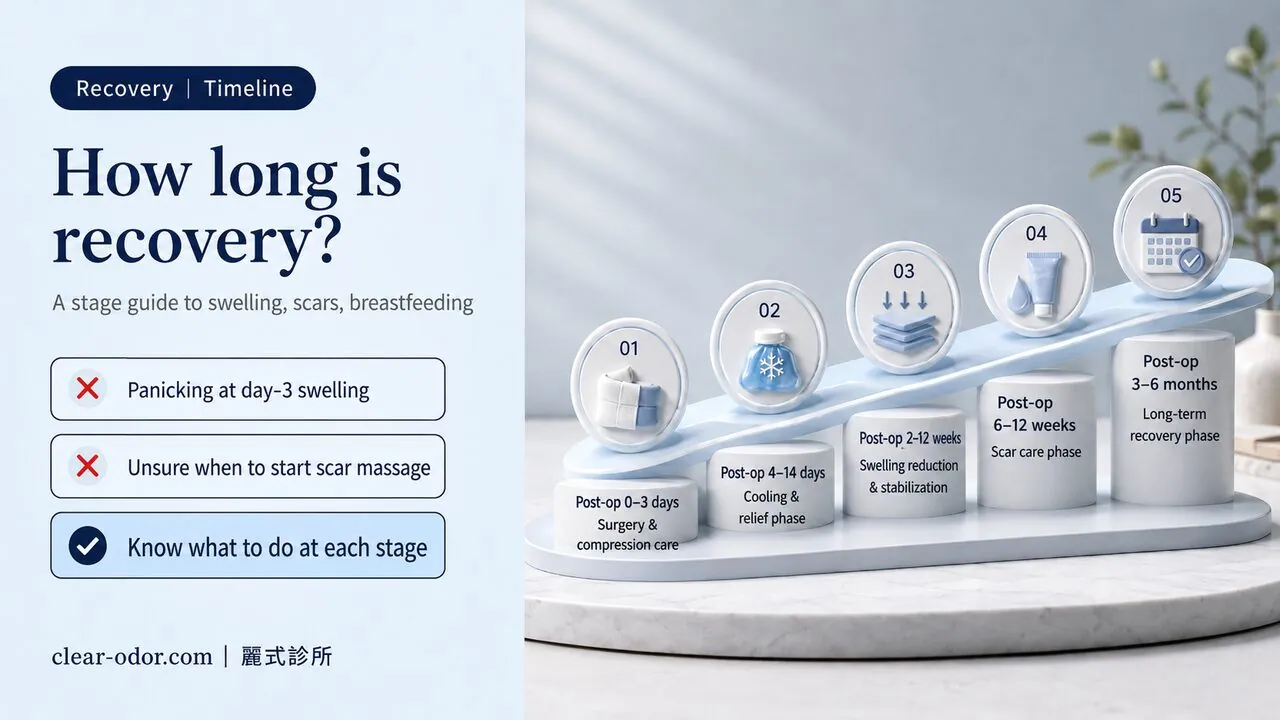
| Months 1-3 | Avoid direct sun exposure, use scar care products |
Monitoring Sensitivity Recovery
- One month post-op: Light touch test
- Three months post-op: Sensitivity assessment
- If concerns: Return for consultation
Conclusion
| Question | Answer |
|---|---|
| Will it affect breastfeeding? | ❌ No |
| Will it lose sensitivity on a long-term basis? | ❌ No (95%+ fully recover) |
| Will it change areola appearance? | ❌ No |
| Will it affect future breast surgery? | ❌ Almost no impact |
| Is the surgery safe? | ✅ Very safe when performed by a professional |
Clear Odor Specialist Perspective
Clear Odor Clinic is dedicated exclusively to body-odor and hyperhidrosis treatment, and areolar bromhidrosis is one of the more technically demanding categories we see. Every patient receives an individual assessment of areolar anatomy, breastfeeding history, and family-planning context — and Dr. Ta-Ju Liu personally plans the incision rather than applying a standardised axillary protocol.
Years of dedicated focus on areolar cases have let us refine a tighter safety margin: the mammary and ductal systems are strictly preserved, only the superficial-dermis apocrine layer is addressed, and post-operative high-tension movement is restricted for 6 months to protect the areolar scar. These are details only an odor-focused clinic has the case volume to polish.
Full Treatment Information → · Book a Specialist Consultation →
Related Reading
- Hidden-Scar Areola Odor Surgery: Concealing the Incision
- Areola Odor Surgery Recovery: Swelling, Scars & Nursing
- Areola Odor vs Underarm Odor: Same Cause? Do They Overlap?
- Areola Bromhidrosis
- Intimate-Area Odor (Areola & Perineal)
About the Author
Dr. Ta-Ju Liu
- Current Position: Director, Clear Odor Clinic
- Specialties: Odor and hyperhidrosis minimal-incision surgery (underarm, areola, perineal bromhidrosis), hyperhidrosis treatment
- Experience:
- 20+ years of specialist experience in odor treatment
- Over 10,000 cases performed, with no recurrence reported on clinical follow-up
- Board-certified dermatologist (Taiwan)
- Philosophy: "Every patient's concern deserves to be taken seriously. I explain all possible risks and expected outcomes in detail before surgery, so patients can make informed decisions."