How Long Does Recovery Take After Areola Odor Surgery?
For patients who have decided to undergo areola odor surgery, the most frequent question is not "will it hurt," but "how soon can I return to normal life."
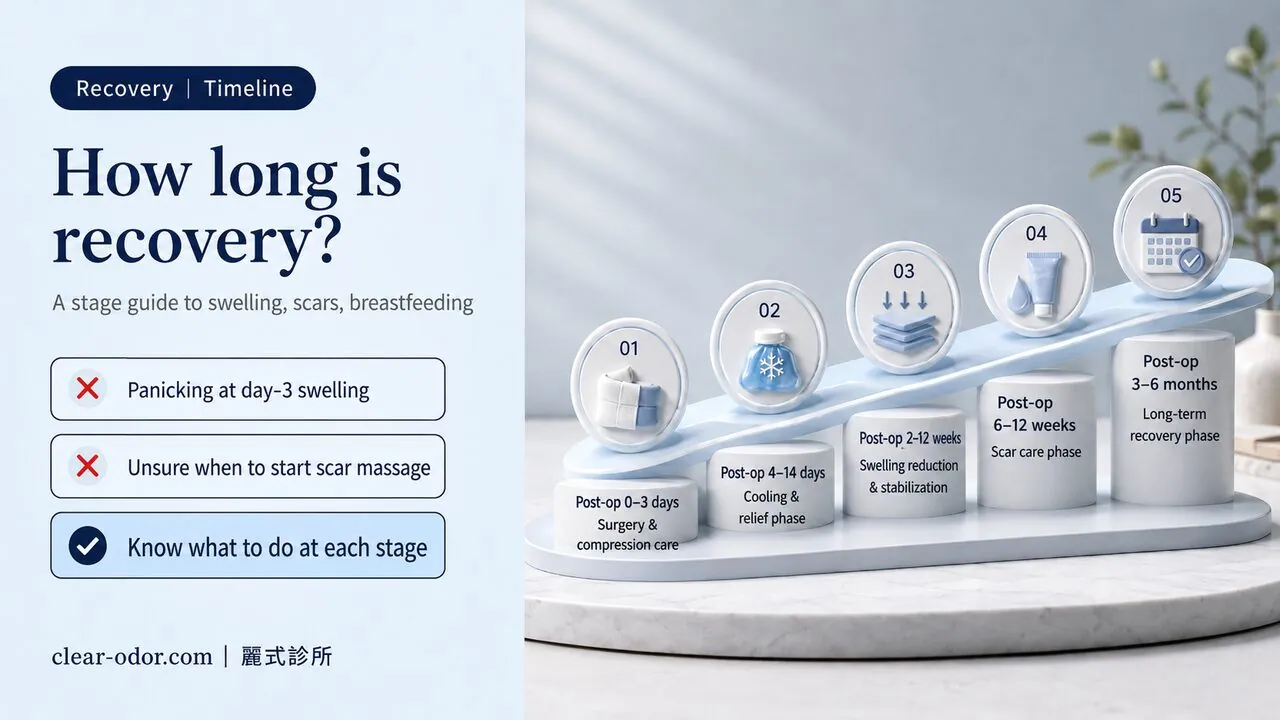
The short answer is: the main recovery period is about 5–7 days, swelling and bruising subside gradually within 1–2 weeks, while scar maturation and softening take 3–6 months. But "recovery" is not a single point in time — it is a timeline with stages, and what you should and should not do differs at each one. Seeing the timeline clearly keeps you from overdoing it when you should rest, or forgetting to massage when you should.
This article lays that timeline out clearly. For the principle behind the incision design itself, see Hidden-Scar Areola Odor Surgery: Concealing the Incision; for the safety of breastfeeding and sensitivity, Areola Odor Surgery: Will It Affect Breastfeeding? has a full explanation.
Recovery Timeline: From Surgery Day to 6 Months
| Period | State | Key tasks |
|---|---|---|
| Days 0–3 | Wound swollen, possible bruising, compression dressing on | Keep the dressing on, apply ice, avoid bumping, minimise arm raising |
| Days 3–4 | Swelling is often most pronounced now | No need to panic — this is a normal peak; it subsides afterwards |
| Days 5–7 | Main recovery period, swelling begins to subside | Most people can resume light daily activities |
| Days 7–14 | Suture removal depending on the technique used | Scar care begins after suture removal |
| Weeks 2–4 | Swelling largely resolved | Still avoid vigorous exercise and chest compression |
| Months 1–3 | Scar enters its proliferative and maturing phase | Continue scar massage and care, use sun protection |
| Months 3–6 | Scar gradually softens and fades, sensitivity returns | For most, feel and appearance stabilise by now |
Key point: "Swelling peaks at post-op day 3–4" is the point that startles many patients. Remember: that is a normal swelling peak, not a deterioration. What truly warrants alarm is signs of infection — one-sided swelling and pain that keeps worsening, redness and heat — not symmetric, predictable post-op swelling.
The Rhythm of Swelling: When It Peaks and When It Subsides
Post-op swelling follows a predictable curve:
- Surgery day to day 3: swelling gradually rises. During this time, compression dressing reduces swelling and supports the tissue, and ice can be applied to the surgical area as directed.
- Days 3–4: swelling often reaches its peak. This is a normal tissue response to surgery.
- After day 4: swelling begins to subside gradually. After a week, some patients may, as directed, switch to warm compresses to promote circulation and speed resolution.
- Weeks 2–4: swelling is largely resolved, though a minority retain a mild tightness, which is normal.
The timing of ice and warm compresses must not be reversed — ice early, warmth later; getting the order wrong is counterproductive. The actual number of days for ice/warm compresses and for the compression dressing follows the doctor's instructions according to your individual situation.
Stages of Scar Care: Different Things at Different Times
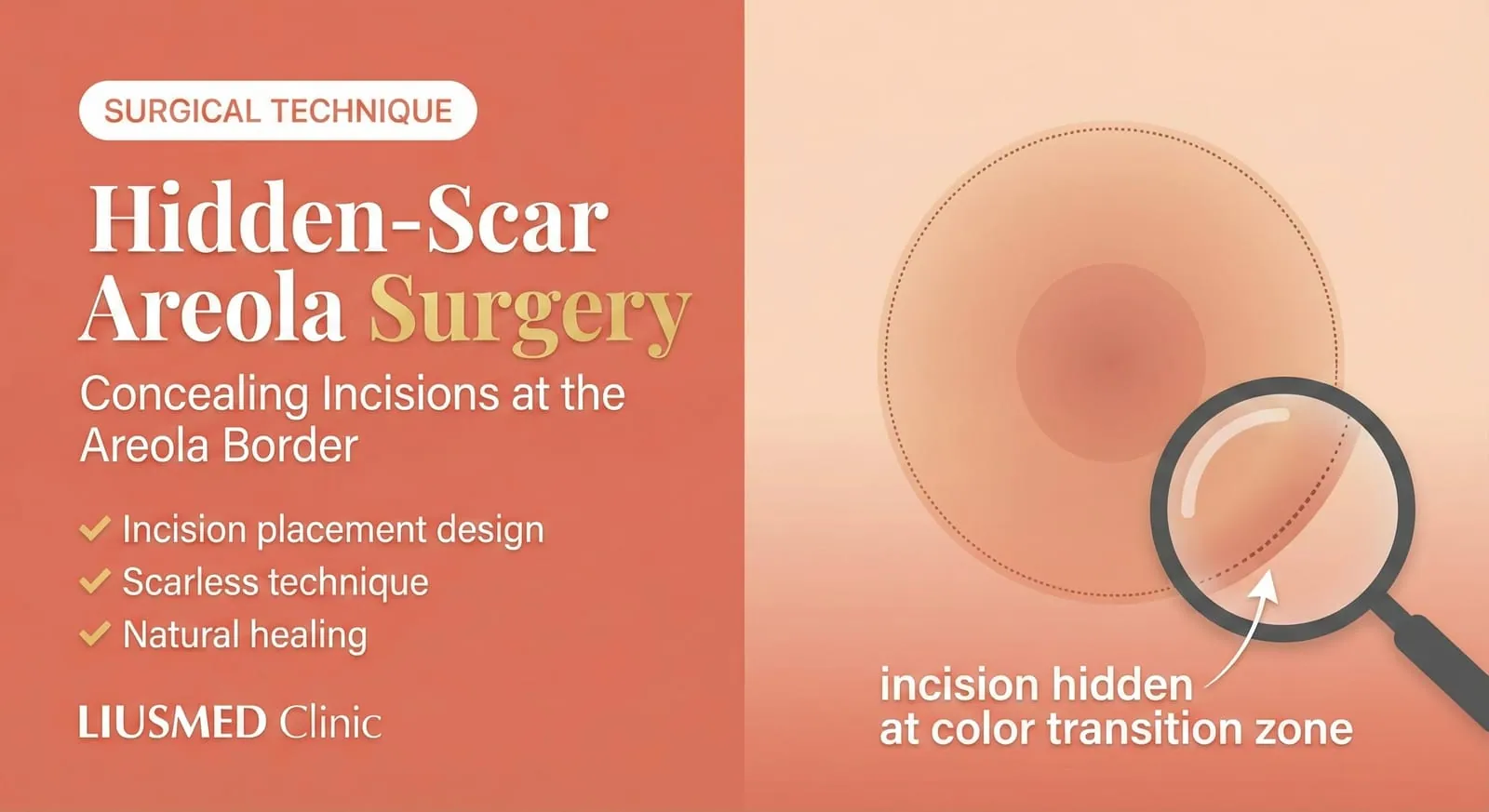
The incision for areola odor surgery is hidden at the colour border of the areola edge, which gives it an inherent hidden-scar advantage; but how good the scar finally looks depends heavily on post-op care.
| Stage | Time | What to do |
|---|---|---|
| Wound healing phase | Before suture removal | Keep the wound clean and dry, change dressings as directed, do not pick scabs yourself |
| Scar massage phase | After suture removal to 3–6 months | Continue massaging the scar to reduce proliferation and tightness |
| Sun protection phase | Months 3–6 post-op | Avoid direct sun on the scar area to prevent pigmentation |
| Scar product support | As advised by the doctor | Use silicone-based scar care products if needed |
Scar massage is especially important after suture removal, continuing for about 3–6 months, helping the scar soften and reducing tightness. Those with a keloid tendency have a higher risk of scar proliferation and should proactively inform the doctor before surgery, so post-op care can be more careful.
Special Considerations for Breastfeeding Women
This is the part of the areola odor surgery timeline that most needs to be individualised.
- Currently breastfeeding: surgery during the breastfeeding period is not advised. It is generally recommended to wait about 3–6 months after stopping breastfeeding, once the mammary state has settled, before assessing surgery.
- Planning pregnancy soon: if pregnancy and breastfeeding are planned in the near term, it is usually advised to have surgery after the pregnancy and breastfeeding phase is complete, to avoid the recovery period overlapping with the pregnancy/postpartum period.
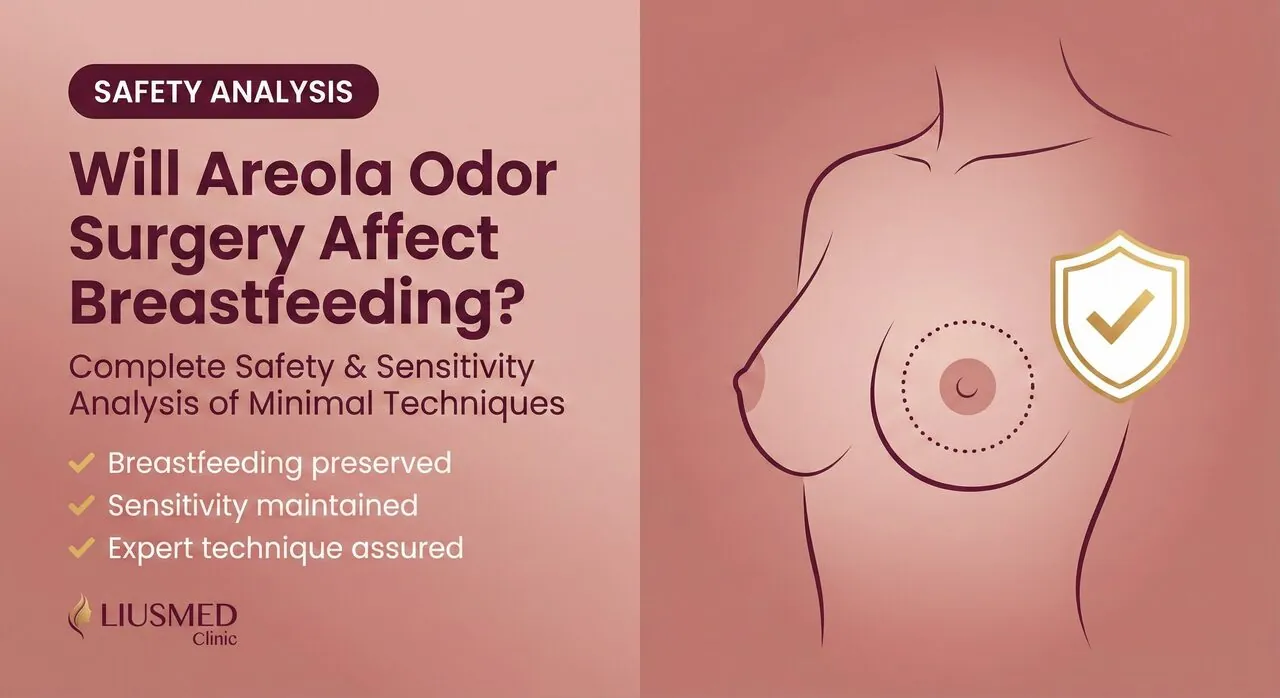
- No pregnancy plans for now: surgery can be planned normally. Minimally invasive surgery only addresses the superficial apocrine layer and does not touch the deep mammary gland and ducts, so the rate of impact on future breastfeeding is extremely low — for the anatomical explanation, see Areola Odor Surgery: Will It Affect Breastfeeding?.
Key point: Breastfeeding women are not "unable to have" areola odor surgery — it is about "choosing the right timing." The surgery itself does not affect breastfeeding function; the real consideration is keeping the mammary gland in a stable state and not letting the recovery period overlap with pregnancy. Always proactively tell the doctor your pregnancy and breastfeeding plans before surgery — this directly determines the recommendation on surgical timing.
Post-op Daily Life and Activity Restrictions
The activity principle during recovery centres on "avoiding compression and pulling of the surgical area":
- Bras: in the early post-op period, wear a loose, wireless, soft bra, avoiding underwire or overly tight bras that press on the areola area; resume a regular bra after about a month depending on recovery.
- Exercise: avoid vigorous exercise within 4 weeks post-op, especially exercise that strongly moves the chest and arms.
- Arm movements: in the early post-op period, reduce raising the arms high and lifting heavy objects.
- Bathing: the doctor decides when the wound may get wet; keep it dry before it has healed.
- Intimacy: intimate contact requires care to protect the surgical area; resume on the schedule advised by the doctor.
These restrictions follow logic similar to How Long Is Underarm Odor Surgery Recovery? Aftercare Guide — both give the tissue enough time to heal stably; the difference is that areola surgery places more emphasis on avoiding compression and pulling of the chest.
When Should You Return for a Check-up?
The great majority of recovery is smooth and predictable. But when the following occur, return for a check-up early:
- One-sided swelling and pain that keeps worsening, rather than easing day by day
- The wound becomes red, hot, or has abnormal discharge
- Fever
- Wound dehiscence or bleeding that will not stop
- Any uncertainty about your recovery that you want to confirm
Symmetric, predictable swelling and bruising that improves day by day is normal; asymmetric, continually worsening swelling combined with fever is the signal to seek care promptly.
Frequently Asked Questions
Q1: How soon after areola odor surgery can I return to work?
Most patients in general clerical or sedentary work can return after the main recovery period (about 5–7 days). Work involving heavy labour or upper-limb exertion is best given more time, as assessed by the doctor.
Q2: How soon can I wear a regular bra?
In the early post-op period a loose wireless bra is advised; resume a regular bra after about a month depending on recovery. The actual timing follows the doctor's instructions.
Q3: How long until the scar fades?
The scar enters a proliferative phase at 1–3 months post-op and gradually softens and fades at 3–6 months. With scar massage and sun protection, appearance stabilises around 6 months for most people.
Q4: I am still breastfeeding — can I schedule surgery first?
Surgery during breastfeeding is not advised. It is generally recommended to wait about 3–6 months after stopping breastfeeding, once the mammary gland has settled. Discuss your breastfeeding and pregnancy plans with the doctor.
Q5: When does sensitivity return after surgery?
There may be temporary sensory changes in the early post-op period, with most returning within 3–6 months. See the areola odor surgery safety article for a detailed explanation of sensitivity.
Conclusion
Recovery from areola odor surgery is a staged timeline: main recovery 5–7 days, swelling resolving in 1–2 weeks, scar maturing over 3–6 months. Swelling peaking at day 3–4 is normal; ice and warm compresses have a set order; scar massage begins only after suture removal and continues for several months. Breastfeeding women are not unable to have it — they should choose timing when the mammary gland is stable and the recovery does not overlap with pregnancy.
Doing what each stage requires properly is the key to post-op outcome and appearance. Dr. Ta-Ju Liu has 20 years of experience in bromhidrosis treatment and offers complete pre-op assessment and post-op follow-up for areola odor surgery. If you are considering surgery, or have questions about the recovery schedule, you are welcome to book a consultation, and may first explore the areola odor specialist service.
Related Reading
- Areola Odor Surgery: Will It Affect Breastfeeding?
- Hidden-Scar Areola Odor Surgery: Concealing the Incision
- Areola Odor vs Underarm Odor: Same Cause? Do They Overlap?
- Areola Bromhidrosis
- Sweat Gland Surgery Recovery: Day 0-180 in 4 Phases
This article is for health education. Individual results may vary. The actual recovery schedule, activity restrictions and surgical timing must be confirmed after an in-person assessment by Dr. Ta-Ju Liu.