Why You Need to Understand the 6-Month Recovery Before Deciding on Surgery
In a typical week of clinic, roughly half of consultation time goes to "postoperative" questions:
- "How many days off work will I need after surgery?"
- "When can I shower? Exercise? Pick up my child?"
- "Online forums say some people still have firm lumps three months after surgery — is that normal?"
- "Will the scar really fade? Can I use silicone sheets? When do I start?"
- "I work out — when can I lift again?"
What these questions have in common is that they can't be answered fully in one pre-operative consultation; they need a timeline you can pull up whenever you need it.
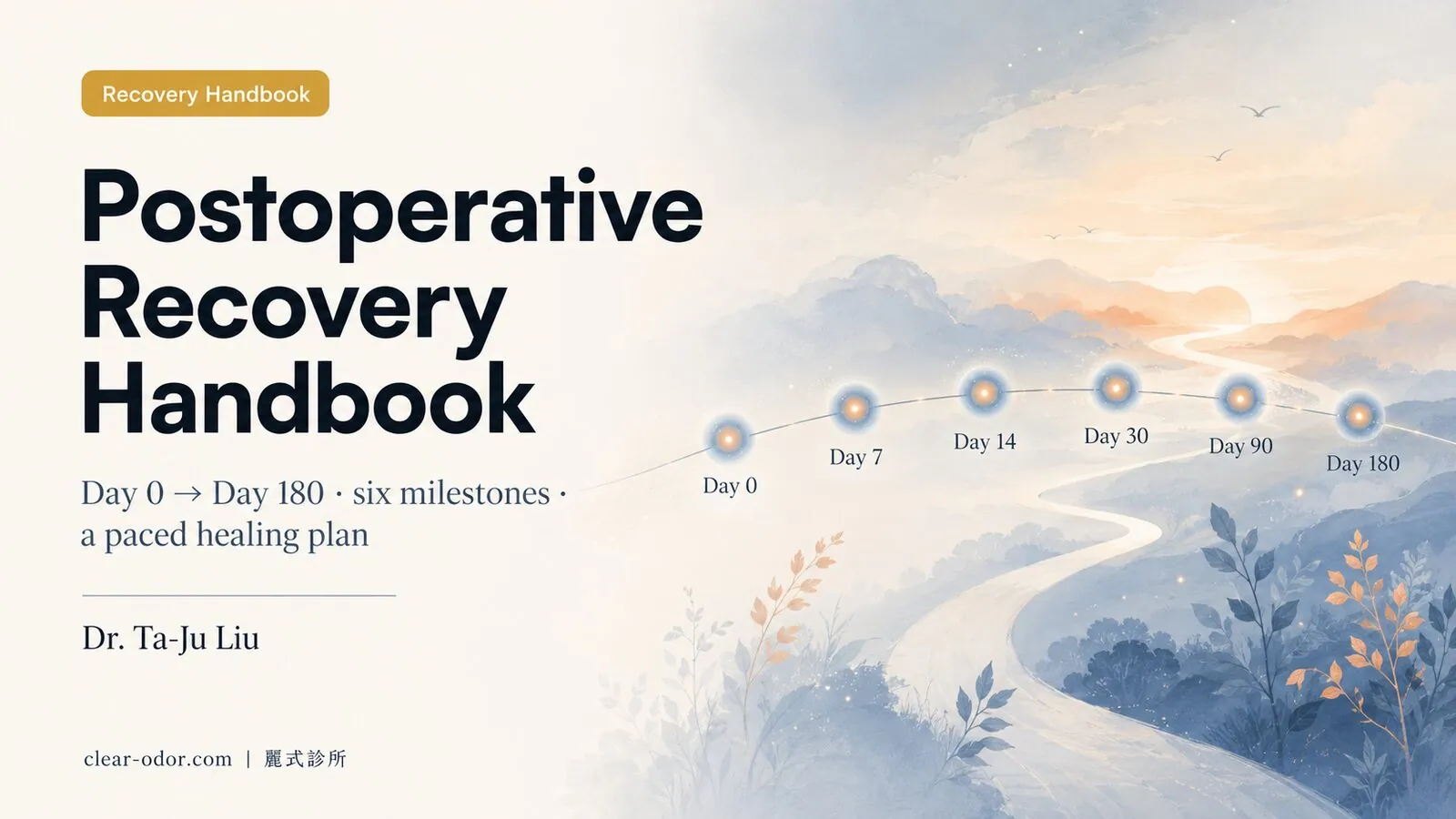
Recovery from sweat-gland surgery (direct-visualization rotational curettage, laser sweat-gland ablation, miraDry) isn't linear. The first 3 days are the most uncomfortable, the firmness peaks in week 1, the visible appearance returns to normal around month 1, the tissue enters a remodeling phase at month 3, and the scar enters maturation around month 6. Each segment has its own "do" and "don't" list.
This manual consolidates the postoperative questions most asked over 20 years in clinic into a timeline you can hold against a calendar. By the end you should be able to answer:
- How do you plan the day of surgery?
- What changes physiologically — and what's restricted — during the acute phase (Day 0–7), maturation phase (Day 7–30), and remodeling phase (Day 30–180)?
- Why does compression matter, for how long, and when can it come off?
- The timing and material choices for scar care (silicone sheet, silicone gel, sunscreen)
- Which symptoms warrant an immediate phone call, and which are normal recovery?
- Special considerations for lactating mothers, athletes, and physical-labor workers
- How we decide whether you need a touch-up procedure at the 6-month evaluation
This manual doesn't replace the pre-operative consultation — it lets you walk into that consultation with specific questions about the time points that matter most to you.
Scope note: This article covers postoperative recovery for axillary direct-visualization rotational curettage, areolar apocrine surgery, perineal apocrine surgery, laser sweat-gland ablation, and miraDry microwave thermolysis. It does not cover ETS (endoscopic thoracic sympathectomy) — ETS is chest-cavity surgery with a fundamentally different recovery pathway and needs to be reviewed separately by the operating surgeon.
Multi-site odor? If you have odor in more than one area, see the Odor Map for site-by-site triage first to identify the primary source before diving into this guide.
What 4 phases does sweat-gland surgery recovery go through over 6 months?
Recovery isn't linear — physiologically it's 4 phases: surgery day (Day 0), acute (Day 1–7), maturation (Day 7–30), and remodeling (Day 30–180). Each phase the body is doing something different, so care priorities shift — understanding them turns the day-by-day timeline into a "where am I now, what should I do" tool.
Tissue recovery from sweat-gland surgery follows 4 distinct physiological phases. The body is doing different things in each phase, so the focus of care shifts accordingly.
Phase 1: Day of Surgery (Day 0)
- Body state: Local anesthesia still in effect; surgery just completed
- Physiological priority: Hemostasis, compression in place, inflammation beginning
- Care focus: The first 24 hours are the most critical — wound bleeding risk is at its highest
- Typical sensation: Tightness in the axilla, mild pain, restricted arm motion
Phase 2: Acute Phase (Day 1–7)
- Body state: Peak inflammatory response; tissue fluid exudation
- Physiological priority: Coagulation stabilization, epidermal healing, early fibrin network formation
- Care focus: Keep the compression dressing on for 3–5 days — once it's removed at follow-up, compression is over and no compression garment is needed; avoid vigorous movements that pull on the wound, follow the antibiotic prescription
- Typical sensation: Swelling and bruising peak around Day 2–3, the firm "lump" sensation begins to appear, demand for painkillers tapers down
Phase 3: Maturation Phase (Day 7–30)
- Body state: Sutures removed on Day 14, with normal showering once the clinic confirms healing; bruising and swelling gradually resolving, firm lump sensation persists
- Physiological priority: Collagen deposition, complete re-epithelialization, lymphatic reorganization
- Care focus: Begin initial scar care (moisturization, sun protection), progressively resume daily activities
- Typical sensation: Arm range of motion recovers by week 2; the firm lump sensation peaks but starts to soften around weeks 3–4; appearance approaches baseline
Phase 4: Remodeling Phase (Day 30–180)
- Body state: The skin looks "healed" on the surface, but the deeper tissue is still remodeling
- Physiological priority: Collagen realignment, scar color shifting from red to pink to near skin tone, sensory nerve regeneration
- Care focus: Mature-phase scar care (silicone sheet or gel, sun protection, massage), gradual return to full exercise
- Typical sensation: Firmness softens dramatically across months 2–3; scar color fades across months 4–6; the result stabilizes after month 6
Why Split the Recovery This Finely?
Because the cost of misjudging each phase is different:
- Phase 1 — Inadequate compression → hematoma, increased infection risk, possibly compromised clearance result
- Phase 2 — Lifting weight or swinging the arm too early → internal tissue retearing, hematoma
- Phase 3 — Sun exposure or wound neglect → scar hyperpigmentation, prolonged red phase
- Phase 4 — Skipping scar care entirely → keloid-prone patients develop thickened scars; otherwise-normal patients see slower color fading
Once you understand these 4 phases, the day-by-day timeline below becomes a tool for "which phase am I in, and what should I be doing" — not an abstract checklist.
From Day 0 to Day 180, what should you do — and feel — at each point?
Using axillary rotational curettage as the baseline: Day 0 surgery, Day 1 first follow-up, Day 2–3 peak swelling and bruising, Day 3–5 dressing removed (compression ends, back to work possible; school-age children usually back to school about 1 week after surgery), Day 14 suture removal with normal showering once healing is confirmed, Day 30 most exercise resumes, Day 90 results-evaluation window, Day 180 final assessment — each point has its own allowed activities and things to watch.
The timeline below uses axillary direct-visualization rotational curettage as the baseline (other modalities recover at slightly different rates — miraDry has no incision and a shorter acute phase; laser ablation sits between the two; areolar and perineal apocrine surgeries differ by anatomical location, with specifics noted later in this section).
Day 0: Day of Surgery
- Procedure: Local anesthesia; 30–60 minutes of post-op observation in clinic
- State on leaving the clinic: Axillae covered with a compression dressing (gauze pads held in place with an elastic bandage); arm motion restricted
- Transport home: Have a family member or take a taxi — do not ride a scooter or drive yourself (one-handed steering stability is compromised)
- That evening: Strict rest. Do not raise the arm above shoulder height. Light meals; avoid alcohol.
- Medications: Take prescribed anti-inflammatory analgesics and antibiotics; antiemetics on an as-needed basis
- Pain level: Roughly 3–5 on a 10-point scale; the peak is usually before bed once anesthesia wears off. Most patients manage with oral analgesics alone.
- "Can do" list: Use your phone, watch TV, eat small amounts, use the bathroom
- "Don't do" list: Shower, raise arms above the shoulder, lift weight, sexual activity, exercise
Day 1: First Post-op Visit
- Key event: First follow-up (typically within 24 hours of surgery). The physician checks drainage volume, whether compression is correctly placed, and looks for early signs of hematoma.
- Drainage: A small amount of yellow-tinged, lightly pink-red tissue fluid is normal. If gauze is completely saturated or there is significant bright-red blood, contact the clinic immediately.
- Pain: Drops to about 2–4; take analgesics as needed
- Arm motion: Still restricted — elbow can bend to 90°, but do not raise the arm above the shoulder
- Bathing: Sponge bath only; keep the axilla and wound area completely dry
- Can resume: Work from home (seated, no repetitive arm raising), light walking
- Cannot do: Commute (especially crowded transit), hold/carry a child, cook tasks requiring heavy arm motion
Day 2–3: Peak of Swelling and Bruising
- Typical presentation: Axillary swelling and bruising at their maximum — this is the normal manifestation of tissue fluid accumulation plus inflammatory response
- Pain: Usually drops to 1–3 from Day 2 onward; most patients no longer need analgesics after Day 3
- Compression: Maintained until the dressing is removed at the Day 3–5 follow-up; once the gauze is off, compression ends
- Daily life: Most sedentary activities at home are fine; wear loose-fitting clothing when going out
- Watch for: (1) Sudden unilateral increase in swelling → possible hematoma; (2) Fever above 38°C → infection warning; (3) Severe wound redness and swelling → cellulitis risk
- For detailed at-home self-monitoring through Day 2–7, see the How Long Is Underarm Odor Surgery Recovery? Aftercare Guide.
Day 3–5: Dressing Removed, Compression Ends
- Key event: Follow-up to remove the compression dressing; the surgeon checks skin adhesion and looks for hematoma or fluid collection
- Compression: Once the gauze is off, compression is over — no compression garment or chest binder afterward
- Work / school: Rest at home until the dressing comes off; after that you can go back to work, and school-age children can usually go back to school about 1 week after surgery, as long as you watch your arm movements, look after the wound, and keep it dry. Some patients prefer to take the full 14 days until suture removal
- Bathing: Still sponge baths only, or shower while keeping the underarms out of the water and dry
Day 7: Healing, Sutures Still In
- Key event: The wound surface is healing, but the sutures stay in — suture removal is on Day 14
- Bathing: Keep the underarms dry; normal showering waits until the sutures are out on Day 14 and healing is confirmed
- Activity: Seated office work, school, and light household tasks (cooking, light cleaning) are fine
- Cannot do: Vigorous exercise, lifting more than 3 kg, holding a child for more than 10 minutes at a time, swimming
- Typical sensation: The firm lump sensation becomes noticeable — this is the normal entry signal into the tissue remodeling phase
Day 14: Suture Removal
- Key event: Follow-up for suture removal and a healing check
- Arm motion: Keep it gentle and don't lift, carry, or push anything heavy; normal arm use returns from about Day 30, once the wound has fully healed
- Return to work: If you went back to work after the dressing came off, you're already working; if you took the full 14 days, you can return now. Physical-labor workers should be evaluated individually with the surgeon
- Bathing: Normal showering starts only once the sutures are out and the clinic has confirmed the wound has healed (you can send the clinic a photo to check; slower healers may need another 2–3 weeks); after that you can begin light massage around the wound (not on the wound itself)
- Typical sensation: Firmness persists, appearance is close to baseline, bruising largely resolved
- Scar care starts here: With the wound surface fully healed, you can begin silicone gel or silicone sheet — this is the key window for scar care
Day 30: 1-Month Follow-up — Appearance Back to "Normal"
- Key event: One-month follow-up — the surgeon assesses softening of firmness, early scar appearance, and any residual odor or sweating
- Typical presentation: Firmness persists but progressively softens; surface swelling fully resolved; bruising gone
- Activity: Can return to most exercise (yoga, jogging, cycling), but avoid heavy overhead pressing, push-ups, and pull-ups
- Scar: Color is usually pale pink to red — this is the signal of actively remodeling collagen, not a worsening scar
- Can resume: Swimming (wound is now waterproof), sexual activity, evening hot springs (still better to wait until 6 weeks)
- Odor assessment: This is still too early to evaluate the surgical result — firmness and residual tissue fluid distort perception. A 3-month evaluation is more reliable.
Day 90: 3-Month Follow-up — Effect Evaluation Phase
- Key event: The surgeon formally evaluates the 4 dimensions — odor, sweating, appearance, and scar — and discusses whether a touch-up procedure may be needed
- Typical presentation: Firmness has softened substantially; palpable only under firm pressure; scar shifts from red to pink
- Activity: Fully restored — strength training, martial arts, full yoga range, all permissible
- Scar care: Continue silicone sheet or gel until 6 months, or until color has faded close to surrounding skin
- Odor evaluation: You can start evaluating the surgical result here — for most patients, the reduction in odor and sweating now is close to the final outcome (though some additional improvement still occurs over the next 3 months)
Day 180: 6-Month Final Evaluation
- Key event: Six-month final follow-up — scar enters mature phase, tissue remodeling largely complete
- Typical presentation: Firmness gone, or palpable only in specific positions; scar close to skin tone or a faint pink line; odor and sweat improvement stabilized
- Scar: Most patients now have a scar that requires deliberate searching to spot. For keloid-prone patients, scar thickening (if any) is at its most visible — discuss further options with your surgeon (intralesional steroid injection, laser, etc.)
- Need for a touch-up?: If there is still meaningful residual odor or sweating, most clinics (ours included) offer a necessary localized touch-up within 1 year — see the service page for details.
Recovery Differences by Modality (Quick View)
| Modality | Acute phase | Compression | Suture removal | Return to work | Full return to exercise |
|---|---|---|---|---|---|
| Direct-visualization rotational curettage | 1–7 days | Compression dressing, ends when removed on Day 3–5 | Day 14 | After dressing removal (Day 3–5) | Day 30 |
| Laser sweat-gland ablation | 3–5 days | 3–5 days | Case by case | Day 7–10 | Day 21 |
| miraDry | 1–3 days | Not needed | No incision | Day 1–3 | Day 7 |
| Areolar apocrine surgery | 7–10 days | Lighter (avoid friction) | Day 7 | Day 14 | Day 30 |
| Perineal apocrine surgery | 7–14 days | Underwear with gauze pad | Day 7 | Day 14 | Day 21–30 |
Clinical viewpoint: The two traps patients most often fall into are (1) being too optimistic during the acute phase — assuming Day 3 is fine and playing tennis, only to find internal bleeding and a larger lump by Day 5; and (2) being too pessimistic during the remodeling phase — worrying that the firmness at Day 30 means the surgery failed, before the dramatic softening at Day 90 has even begun. The point of this timeline is to keep you from being anxious about a normal recovery rhythm.
How do you care for the wound — and when do compression, dressing changes, and silicone come in?
The 3–5 days of compression dressing matter most — pressing the cleared skin and deep tissue together to lower the risk of hematoma and infection. Once the dressing comes off on Day 3–5, compression is over and no compression garment is needed; after the sutures come out on Day 14 and healing is confirmed, it's the prime window to start scar care (silicone sheet/gel plus sun protection).
Compression: Why Are the First 3–5 Days So Critical?
After direct-visualization rotational curettage, the axilla contains a potential space — the empty volume left behind once apocrine glands and part of the subcutaneous fat have been removed. If this space isn't compressed:
- Blood or tissue fluid accumulates → increased risk of hematoma
- Skin and deeper tissue don't reapproximate → increased risk of skin necrosis
- Pooled tissue fluid becomes inflamed → increased risk of infection
The goal of compression is to keep the cleared skin and deeper tissue pressed firmly together until biological healing takes over. That's why the 3–5 days before the dressing comes off are the critical window. Once the gauze is removed at follow-up, compression ends — no compression garment or chest binder afterward.
Layers of the Compression Dressing
From outermost to innermost, the typical compression assembly is:
- Direct wound-contact layer: Antimicrobial gauze pad (non-adherent so it doesn't stick to the wound)
- Cushioning / absorbent layer: Gauze or cotton padding
- Compression layer: Elastic bandage, elastic wrap, or sport compression sleeve
- Outer fixation: Tape or bandage holding the whole dressing in place so it doesn't slip
When to Change Dressings
- Day 0–1: Don't change yourself — the surgeon inspects at the first follow-up
- Day 1 until the dressing comes off (Day 3–5): Don't remove or change the compression dressing yourself — contact the clinic if it gets soaked or loosens
- From dressing removal to suture removal on Day 14: Change dressings as your surgeon instructs and keep the underarms dry
- After suture removal on Day 14, once healing is confirmed: After showering, pat dry and switch to breathable paper tape or a silicone sheet for protection
When to Start Scar Care
Day 14 is the most commonly cited critical inflection point. At this stage:
- The wound surface is fully healed (re-epithelialization complete)
- Collagen deposition and alignment begins — this is the formative stage of scar
- Intervening here shapes the scar far better than treating it once it's already formed
Choosing Scar Care Materials
| Material | Start time | Frequency | Primary effect | Best for |
|---|---|---|---|---|
| Silicone gel | Day 14 | Twice daily, AM and PM | Moisture barrier, reduces scar hypertrophy | Most patients' first choice; leaves no marks |
| Silicone sheet | Day 14 | 12–24 hours daily | Compression + moisture, stronger effect | Keloid-prone patients, more visible scars |
| Paper tape | Day 7–14 | Continuous 1–2 months | Physical tension reduction, prevents scar widening | Areas under high tension (less commonly used for axillae) |
| Sunscreen (SPF 50+) | Day 14 | Daily | Prevents scar hyperpigmentation | Everyone — even when the axilla is covered by clothing, UV penetrates thin fabric |
| Intralesional steroid injection | From Day 90 | Per scar hypertrophy | Suppresses keloid formation | Keloid-prone patients with visible raised scarring |
| Laser scar therapy | From Day 180 | Multiple sessions | Improves red phase / texture | Mature scars needing further refinement |
A Note for Keloid-Prone Patients
Keloid-prone patients need special pre-operative evaluation. With a family history or personal history of keloids, axillary wounds carry a higher probability of hypertrophic scarring. This doesn't mean surgery is impossible, but it does require:
- Thorough pre-op discussion of expectations
- Active silicone sheet use starting Day 14 (not just gel)
- Intralesional steroid injection considered from Day 90 if hypertrophy emerges
- Subsequent options include pulsed-dye laser or non-ablative fractional laser
Each week after surgery, what can you do and what should you avoid?
The rule is gradual progression: rest at home until the dressing comes off on Day 3–5 (even showering is off-limits), back to work after that (school-age children usually back to school about 1 week after surgery), normal showering only after suture removal on Day 14 once healing is confirmed, swimming and light cardio from about Day 30 once your doctor confirms, Months 2–3 almost all exercise, Months 4–6 no restrictions — manual workers and athletes have extra individual considerations.
Week 1 (Day 1–7): Conservative Phase
✅ Can do: Until the dressing comes off, rest at home — work from home, watch TV, read, use your phone, light walking, use the bathroom, eat lightly, small household tasks; once the dressing is removed on Day 3–5, you can go back to work (mind your arm movements and wound care); school-age children can usually go back to school about 1 week after surgery
❌ Cannot do: Bathing (including showering), raising arms overhead, lifting (>1 kg), driving, riding a scooter, holding a child, sexual activity, exercise, cooking tasks requiring heavy arm motion, flying before the gauze is removed
Note: Sleep on your side or back is fine; avoid sleeping prone (face-down) which presses on the axilla
Week 2 (Day 8–14): Phased Return to Daily Life
✅ Can do: Sponge baths, or washing while keeping the underarms dry (normal showering waits until suture removal on Day 14 and confirmed healing), work or school, light household chores (cooking, dishwashing), driving (short distances, slow speed), longer light walks
❌ Cannot do: Full-immersion bathing, swimming, sauna, gym workouts, sexual activity (avoid positions that compress the chest), holding a child over 5 kg, carrying shopping bags over 3 kg, yoga inversions, push-ups
Scar care starts here: After suture removal on Day 14, once the wound is confirmed healed → begin silicone gel or silicone sheet
Week 3–4 (Day 15–30): Still Go Easy on the Arms
✅ Can do: Walking and other low-intensity activity that doesn't use the arms
❌ Cannot do: Swimming, lifting, carrying or pushing heavy things (including holding a child), heavy upper-body strength training (overhead press, pull-ups, push-ups), sparring/martial arts, high-intensity interval training (HIIT) involving heavy arm motion
Scar care: Daily silicone gel / silicone sheet + sunscreen
Month 2–3 (Day 30–90): Full Recovery Phase
✅ Can do: Almost all exercise — heavy upper-body training, martial arts, full yoga range, climbing
Note: When restarting heavy upper-body training, progress gradually for the first 2 weeks — start at 50% of previous weight
Scar care: Continue silicone + sunscreen; scar shifts from red to pink
Month 4–6 (Day 90–180): Scar Maturation Phase
✅ Can do: All activities without restriction
Scar care: Gradually reduce silicone use; continue sunscreen until the scar is fully mature (close to skin tone)
Special Considerations for Physical-Labor Workers
- Construction workers, movers, kitchen staff: Recommend at least 14 days off after surgery; in the first month back, avoid unilateral heavy pulling
- Physicians, nurses, beauty therapists (frequent overhead reaching): You can return after dressing removal, but be especially careful with arm movements at work; if you can arrange it, taking time off until suture removal on Day 14 is more comfortable — discuss with your surgeon before going back
- Teachers, reception staff (standing but minimal arm raising): Can typically return once the dressing is removed (Day 3–5), minding arm movements and wound care
Special Considerations for Lactating Mothers
- Axillary surgery: Breastfeeding mechanics are unaffected, but mind arm-support distribution when holding the baby in the first 2 weeks — use pillow support
- Areolar surgery: Strongly advised to complete breastfeeding first — during lactation, mammary tissue is active and the anatomical plane isn't favorable for clearing apocrine glands
- Postpartum timing: Recommend waiting 3–6 months after weaning for breast glandular tissue and blood flow to stabilize
Special Considerations for Athletes / Gym Enthusiasts
- For those with a strength-training habit: Progressive return from Day 30, starting with light weight
- Martial arts / sparring sports: At least 6 weeks before returning to full-contact sparring — avoid chest impact
- Climbing / pull-ups: Can attempt from Day 30, full intensity by Day 60
- Competitive athletes: Schedule surgery after the competitive season ends, allowing 2–3 months for recovery
Which signs mean you should call or seek care immediately?
Nine red flags warrant an immediate call: heavy bleeding or a rapidly enlarging hematoma, fever above 38°C, spreading wound redness/heat/pain, purulent discharge, difficulty breathing, persistent arm numbness or weakness, skin turning purple-black or white, sudden severe pain after Day 3, and drug allergy — if something "feels off," it's worth a call.
The list below covers symptoms that warrant immediate contact with the clinic or an ER visit, at any time post-op. Screenshot this list and keep it on your phone for the first 14 days.
1. Heavy Wound Bleeding or Rapidly Expanding Hematoma
- Normal: Small amount of yellow-tinged, lightly pink-red drainage
- Abnormal: Gauze completely saturated within 30 minutes, bright-red blood, unilateral axillary swelling expanding suddenly to feel like a balloon
- Possible cause: Hematoma (incomplete vascular hemostasis)
- Action: Contact the clinic or go to the ER immediately — a hematoma needs evacuation to prevent infection or skin necrosis
2. Fever Over 38°C (Persisting Over 24 Hours)
- Normal: Mild temperature elevation in the first 24 hours post-op (37–37.8°C)
- Abnormal: Temperature above 38°C, lasting more than 24 hours
- Possible cause: Wound infection, deep-tissue infection
- Action: Contact the clinic to assess whether antibiotics need adjustment or a culture is required
3. Expanding Redness, Heat, and Pain Around the Wound
- Normal: Mild peripheral redness is a normal early healing response
- Abnormal: Redness with a continuously expanding margin, distinct warmth to the touch, significant pain on light pressure
- Possible cause: Cellulitis, deep infection
- Action: Same-day follow-up
4. Purulent Discharge
- Normal: Yellow-tinged, lightly pink-red tissue fluid
- Abnormal: Milky-white, green, or foul-smelling discharge
- Possible cause: Bacterial infection
- Action: Same-day follow-up, culture, and antibiotics
5. Difficulty Breathing or Chest Tightness
- Possible cause: Extremely rare — pneumothorax risk applies to chest surgery (ETS, not the axillary surgery covered in this article)
- For axillary surgery covered here: Does not directly enter the thoracic cavity, but if difficulty breathing occurs within the first week post-op, seek immediate medical attention
6. Persistent Numbness or Weakness in the Arm or Fingers
- Normal: Transient axillary numbness or mild loss of sensation post-op (nerve traction)
- Abnormal: Persistent weakness in the fingers or forearm, inability to grip a pen or turn a doorknob, expanding numbness
- Possible cause: Nerve compression (rare), compression dressing too tight
- Action: Same-day follow-up
7. Skin Turning Purple-Black or White
- Normal: Mild purple-red bruising around the wound
- Abnormal: A large patch of skin in the surgical area turns purple-black or pale and hard
- Possible cause: Skin perfusion compromise (necrosis warning)
- Action: Seek immediate medical attention — skin necrosis needs aggressive management
8. Sudden Severe Pain (After Day 3)
- Normal: Day-by-day reduction; essentially pain-free after Day 7
- Abnormal: Sudden sharp severe pain appearing after Day 3 — contrary to the recovery trajectory
- Possible cause: Late hematoma, infection, rare internal tearing
- Action: Same-day follow-up
9. Allergic Reaction
- Normal: No significant reaction to anti-inflammatory analgesics or antibiotics
- Abnormal: Generalized urticaria, facial swelling, difficulty breathing, dizziness — possible drug allergy
- Action: Stop the medication immediately. If breathing is difficult or the throat is swelling, call emergency services (119 in Taiwan / 911 in the US). For other reactions, contact the clinic to switch medication.
Clinical viewpoint: In most cases, "something feels off" is reason enough to make the call. The last thing a clinic wants to hear is "I didn't want to bother you, so I didn't ask." Calling 24 hours earlier means most small problems never become big ones. Save the clinic's number in your contacts and label it "post-op consult."
Why can't you evaluate the odor result at Day 30 after surgery?
Because it's too early — 90% of what you smell at Day 0–14 comes from post-op tissue fluid, not residual apocrine glands, and Day 14–30 is clouded by the firm-lump feeling and fibrosis. The stable point closest to the long-term result is Day 90–180; judging "did it fail?" sooner is usually a misread.
Patients often ask: "It's only been a week and I'm starting to smell again — does that mean the surgery failed?"
In almost every case, no — the evaluation point is just too early. Here's why:
Day 0–14: The Body Is Still in "Post-op State"
- Large amounts of tissue fluid, bruise resorption products, and lymphatic fluid accumulate in the axilla
- These fluids have their own smell (independent of apocrine secretion)
- Compression dressings affect olfactory perception
- The "odor" perceived at this stage is 90% post-op physiology, not residual apocrine activity
Day 14–30: Firmness Distorts Evaluation
- Active internal fibrosis can be perceived as "pressure," which can be anxiety-provoking
- Some patients perceive a "faint sour smell" — usually transient protein metabolites in tissue fluid
- This is not the final post-op state
Day 30–90: Observation Phase, Not Final Verdict
- Most tissue remodeling has passed the halfway mark; you can begin to perceive the post-op steady state
- Slight further improvement still occurs — softening firmness and sensory nerve regeneration shift perception
- If significant odor persists at this point, discuss salvage options with the surgeon
Day 90–180: Formal Evaluation Window
- Tissue is in the late remodeling phase; odor and sweating have stabilized
- Perception now most closely reflects long-term state
- If substantial residual symptoms persist at 3 months, consider: (1) Localized surgical touch-up (most clinics offer necessary localized revision within 1 year); (2) miraDry as a supplementary step for superficial residue; (3) Botox for localized maintenance
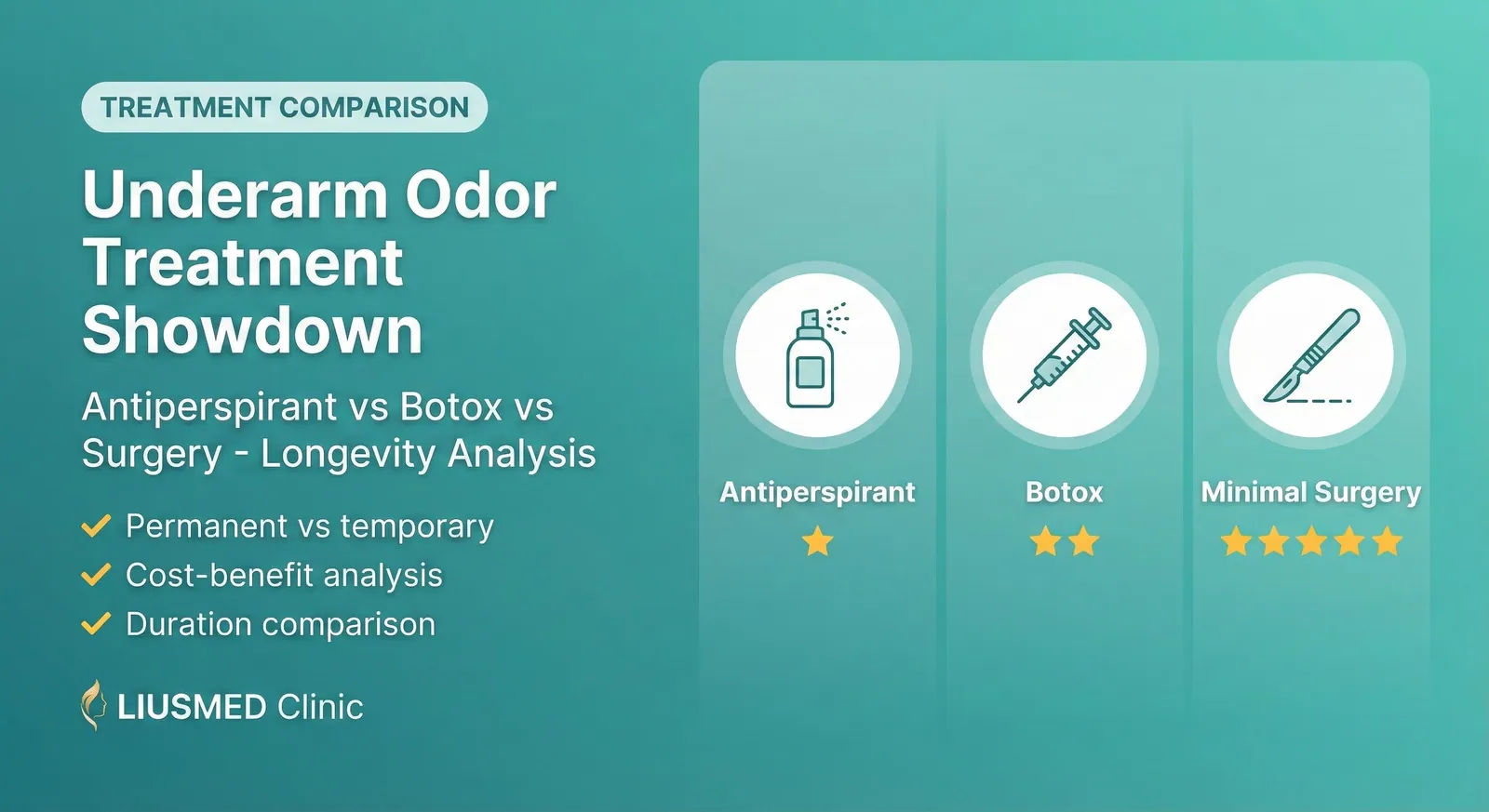
For more on options, see the Sweat Gland Surgery: Curettage vs Laser vs miraDry vs ETS and the Underarm Odor: Antiperspirant vs Botox vs Surgery.
Why Can't We Achieve "100% Clearance"?
Back to the biology:
- Apocrine glands aren't laid out in neat rows — some sit deep, embedded in fat, immediately adjacent to nerves and vessels
- Surgery must balance complete clearance against preservation of skin perfusion and sensation
- How much skin to leave is a matter of surgical judgment and experience
- This is the reasonable trade-off between surgical safety and thoroughness
Once this trade-off is understood, the misconception of "expecting 100% perfection" dissolves. Thorough removal takes judgment; scraping away more is not always better.
What special considerations apply to lactating, pediatric, elderly, and manual-labor patients?
Each group is handled differently: nursing mothers are advised to wait 3–6 months after weaning (especially for areola surgery), children can have surgery from age 9 (depending on cooperation and readiness, assessed in clinic), elderly patients need cardiovascular and skin assessment, manual workers should plan at least 2 weeks off, and anyone on anticoagulants must tell the doctor before surgery.
Lactating Women
- Axillary surgery: Breastfeeding mechanics are unaffected — apocrine and mammary glands are separate gland systems. But it's preferable to operate after the main breastfeeding period because pregnancy and lactation produce vascular engorgement and active lymphatic circulation that prolong axillary recovery.
- Areolar surgery: Strongly recommend completing breastfeeding first. Peri-areolar apocrine surgery involves anatomy beneath the areola; operating during lactation has two issues: (1) the anatomical plane between the mammary gland and the apocrine gland is indistinct; (2) it may affect subsequent lactation function.
- Timing recommendation: 3–6 months after weaning, once mammary tissue and blood flow have re-stabilized.
Children and Adolescents
- Surgery is possible from age 9, and any child 9 or older can be a candidate — what matters is the child's cooperation and readiness, assessed in clinic, not age alone
- No need to wait for development to finish: apocrine glands that have been cleared don't grow back, so "the glands are still growing" is not a reason to delay
- Anesthesia: Local anesthesia plus gentle pain-relief anesthesia — not general anesthesia
For detailed pediatric surgical timing, see When Can Children Have Odor Surgery? A Parent's Guide and Children's Odor Surgery Without General Anesthesia.
Seniors (Age 60+)
- Surgery is possible, but requires assessment of: (1) Cardiovascular status (can the patient tolerate local anesthesia?); (2) Skin condition (older skin is thinner; bruising lasts longer); (3) Whether bothersome odor still exists — many women over 60 see natural attenuation after menopause and may not need surgery
- Recovery may be slightly slower — skin elasticity is reduced and bruising resolves more gradually
Physical-Labor Workers
- Carpenters, construction workers, kitchen cooks, farmers, fishermen — occupations heavily reliant on the upper limbs
- Plan at least 2 weeks off before surgery; if work flexibility is limited, discuss scheduling with your surgeon
- In the first month after returning to work, avoid unilateral heavy pulling
Athletes / Strength Trainers
- Covered in detail in Section IV: progressive return from Day 30, full intensity Day 60–90
- Key recommendation: Schedule surgery after the competitive season, allowing yourself a 6–8 week buffer
Patients Who Bruise Easily / On Anticoagulants
- Patients on aspirin, warfarin, or NOAC-class anticoagulants must inform the surgeon pre-op — medication may need to be paused (in discussion with the prescribing physician)
- Those with easy-bruising tendencies (coagulopathies, porphyria, etc.) require pre-op laboratory evaluation
Patients with Prior Surgical History or Axillary Radiation
- History of axillary lymph node dissection, breast surgery involving the axilla, or axillary radiation: the anatomical plane may be altered, requiring individualized evaluation
- Not an absolute contraindication, but a detailed conversation with the surgeon is essential
Frequently Asked Questions
Q1: When can I shower? Is there really a difference between showering and full-immersion bathing?
A significant one. Showering only lets water flow briefly over the skin, but the underarm wounds still need to stay dry until the sutures are out — normal showering starts after suture removal on Day 14, once the clinic confirms the wound has healed (you can send the clinic a photo to check; slower healers may need another 2–3 weeks). Until then, stick to sponge baths or wash while keeping the underarms dry. Full-immersion bathing submerges the wound for a prolonged period and raises infection risk, so it also waits until healing is confirmed. Swimming, hot springs, and saunas combine immersion with high bacterial density, so wait until after Day 30.
Q2: Can I use deodorant or antiperspirant?
- Day 0–14: Absolutely not — chemical ingredients on newly healed skin will irritate
- Day 14–30: Sensitive-skin, fragrance-free versions can be tried, but avoid direct contact with the wound area
- After Day 30: Normal use is fine — most patients don't need it post-op, but individual circumstances may warrant it
Q3: When can I do chest exercises (strength training, yoga inversions)?
- Upper-body strength training: Start with light weights at Day 30, full intensity at Day 60
- Yoga inversions, headstands: Simple versions from Day 30; full poses from Day 90
- Push-ups: Half push-ups from Day 30; standard form from Day 60
Q4: Is it normal for the firm lump sensation to persist past 3 months?
In most cases, yes. Tissue remodeling after direct-visualization rotational curettage can continue for 6 months — Day 60–90 is the period of most dramatic softening. If significant firmness persists past Day 90, discuss with your surgeon whether to add: (1) Ultrasound physical therapy (offered at some clinics); (2) Warm compresses; (3) Massage. Only in very rare cases does firmness persist beyond 6 months — these warrant evaluation for residual hematoma or excessive fibrosis.
Q5: Can I wear makeup or paint my nails after surgery?
- Facial makeup: Anytime after surgery — axillary surgery doesn't affect facial skin
- Axillary skincare products: Avoid until Day 14
- Nail polish: Yes — but don't paint nails on surgery day (it interferes with pulse oximetry monitoring)
Q6: What can I eat after surgery? What should I avoid?
- Eat: Balanced diet, rich in protein (meat, eggs, legumes), rich in vitamin C (citrus, kiwi)
- Reduce: Spicy foods (may stimulate sweating), caffeine (increases heart rate, destabilizes blood pressure), alcohol (completely avoid within Day 14 — affects healing and coagulation)
- Smoking: Strongly recommend smoking cessation for 2 weeks before and after surgery — nicotine constricts microvasculature, severely impairing wound healing
Q7: Can I fly after surgery? How long should I wait?
- Rotational curettage (underarm): ideally stay until the gauze comes off on post-op day 5 before flying; at the minimum, wait until it is removed on post-op day 3. The gauze is removed at the clinic, so flying with it still on is not advised
- Areolar apocrine surgery: overseas patients should plan on about 3 days — come back on day 3 to have the gauze removed, then you can fly home
- Perineal surgery: plan your return trip as your doctor advises
- On the plane: avoid raising your arms high, ask for help with overhead bins, and move your ankles regularly during the flight; if you have other health conditions, talk with your doctor before you travel
- Confirm with the clinic before your trip how day-14 stitch removal will be handled
Q8: When can I resume sexual activity?
- Axillary surgery: After Day 14 — avoid positions involving direct chest compression until Day 30
- Areolar surgery: After Day 14, general intimacy is fine, but direct breast contact or suckling-type movements should wait until Day 30
- Perineal surgery: After Day 21 — this region requires longer healing
Q9: Can I keep using silicone sheets indefinitely? When do I stop?
Silicone sheets are recommended for 3–6 months — most patients see the scar fade close to skin tone by month 6, at which point you can stop. Keloid-prone patients may extend to 9–12 months. How to judge that you no longer need it: scar color is close to surrounding skin, no longer raised, no longer itchy or with a pulling sensation.
Q10: Can I do laser hair removal? When?
- Before axillary surgery: Yes — but complete hair removal at least 2 weeks before surgery so the follicular environment is stable
- After axillary surgery: Recommend after Day 90 — skin is stable and laser thermal energy won't interfere with healing
- For laser treatment of post-op residue (e.g., IPL): Discuss with your surgeon for individualized assessment
Q11: When does it count as "really healed"?
The "stabilization" time points for various markers:
- Pain gone: Day 7
- Swelling gone: Day 30
- Firmness substantially softened: Day 90
- Scar enters mature phase: Day 180
- Odor improvement stabilized: Day 90–180
- Scar color close to skin tone: Day 180–365
"Full recovery" is generally referenced at Day 180 (6 months) — most patients see odor, appearance, and range of motion stabilize by then.
Q12: What can I do if I'm still unhappy at 6 months?
Options depend on which dimension is unsatisfactory:
- Residual odor: Discuss with the surgeon — (1) localized surgical touch-up (most clinics offer necessary revision within 1 year); (2) supplementary miraDry for superficial residue; (3) Botox for localized maintenance
- Residual sweating: (1) Botox (4–6 months of effect); (2) supplementary miraDry
- Scar dissatisfaction: (1) Continued silicone sheet use (keloid-prone patients); (2) intralesional steroid injection; (3) pulsed-dye laser for the red phase; (4) non-ablative fractional laser for texture
- Overall result below expectations: Detailed discussion with the surgeon — in a small number of cases this is just "evaluated too early" (Day 90 can sometimes be insufficient); in rare cases, individual anatomical variation may warrant a revised plan
Related Reading
- How Long Is Underarm Odor Surgery Recovery? Aftercare Guide
- Areola Odor Surgery Recovery: Swelling, Scars & Nursing
- Children's Odor Surgery Without General Anesthesia
- Sweat Gland Surgery: Curettage vs Laser vs miraDry vs ETS
- Bromhidrosis Guide: Causes, Diagnosis, Treatment & Recovery
- Axillary Bromhidrosis
- Areola Bromhidrosis
- Perineal Bromhidrosis
- Pediatric Bromhidrosis
Conclusion: Treat the 6-Month Recovery as a Paced Plan, Not "Waiting for It to End"
The outcome of sweat-gland surgery is half on the table, half in the 6 months that follow.
- The on-the-table half belongs to the surgeon — thoroughness of clearance, hemostasis, accurate compression placement
- The post-op half belongs to you — following activity restrictions, attending follow-ups, scar care, self-monitoring for red flags
The point of this manual is to let you know what to do at each time point — not to make recovery anxious or complicated, but to give you concrete reference points at each critical inflection.
The most common "post-op regrets" are:
- Not understanding the cost of being too optimistic in the acute phase → Day 5 internal hematoma, worse final result
- Not knowing when to start scar care → starting silicone only at Day 30, with diminished effect
- Doubting the result at Day 14 instead of evaluating at Day 90 → anxiety, possibly requesting unnecessary revision
- Not knowing to call on red-flag signs → small infection escalating into cellulitis
If you'd like Dr. Liu to personally assess your individual recovery rhythm, follow-up frequency, and personal considerations, you can request a consultation. Dr. Ta-Ju Liu has 20 years of focused experience in odor and sweat surgery and over 10,000 cases, and can help you plan a pre- and post-operative schedule suited to the rhythm of your own life.
This article is for educational purposes; individual outcomes vary. Actual post-op care, activity restrictions, and follow-up frequency must be guided by your operating surgeon's individualized instructions. The timeline here references general axillary direct-visualization rotational curettage — recovery rhythms for other modalities (laser, miraDry, ETS, areolar, perineal) differ and must follow the operating surgeon's specific guidance. This article does not replace pre-operative consultation or post-operative follow-up clinical judgment.