Why Bromhidrosis Surgery Prices Vary So Widely in Taiwan
Search around and you'll see Taiwan bromhidrosis surgery quotes vary by 2-3× between clinics. This isn't arbitrary pricing; six concrete cost components drive it. This article breaks each one down, explains the hidden costs of cheaper packages, and gives you 5 clinic-selection checks for picking your own. The specific figures for your case require personal evaluation by Dr. Liu.
The 6 Cost Components
| Component | % of total | Notes |
|---|---|---|
| Surgeon technique | 30–40% | Years of practice, case accumulation, whether they personally operate |
| Equipment | 10–15% | Rotational curette vs laser, OR grade |
| Anesthesia | 10–15% | Local only vs IV sedation vs general |
| Surgical area | 5–10% | Standard bilateral vs over-area surcharge |
| Follow-up | 5–10% | 7-day, 1/3/6-month follow-ups included or extra |
| Overseas / special services | 0–15% | 4-lang report, airport pickup, remote follow-up |
1. Surgeon Technique (30–40%)
The biggest variable. Differences aren't just about "fame" — they include:
- Whether the same person evaluates AND operates: many large cosmetic centers send a sales rep first, the surgeon shows up only at OR, and a different surgeon may operate.
- Cumulative cases for this single procedure: 50/year vs 500/year produces very different technique maturity.
- Quality of follow-up records: a surgeon who can show 5- or 10-year tracking data prices differently from one who only reports "1 week post-op."
Dr. Ta-Ju Liu has spent 20 years dedicated to axillary bromhidrosis treatment, with over 10,000 cases — same person from evaluation to OR. Individual results may vary.
2. Equipment (10–15%)
The main split is rotational curette vs laser:
- Rotational curette: mechanical blade, direct-vision operation, higher per-case consumable cost but visually controllable.
- Laser: thermal device, higher initial investment but cheaper consumables — but heat penetration limits often mean more sessions are needed for equivalent clearance.
The equipment cost itself doesn't differ dramatically, but the number of sessions required for equivalent results does — that affects the total.
3. Anesthesia (10–15%)
| Anesthesia mode | When | Extra fee |
|---|---|---|
| Local only | Most adults + cooperative teens | Included in surgical fee |
| Local + IV sedation | High-anxiety / "half-asleep" preference | Additional, varies by duration |
| General | Uncooperative children / special cases | Additional, requires anesthesiology coordination |
Most bromhidrosis surgeries don't need general anesthesia. If a clinic defaults to GA, ask why.
4. Surgical Area (5–10%)
Standard underarm area (about 8×6 cm per side) is typically included in the base surgical fee.
- If apocrine distribution exceeds standard area (slim/long body type or large-area cases), per-cm² surcharges apply.
- During evaluation, the surgeon should mark the area with a skin pen so you see exactly what's billed.
5. Follow-up (5–10%)
A common hidden cost in cheap packages is "follow-up costs extra":
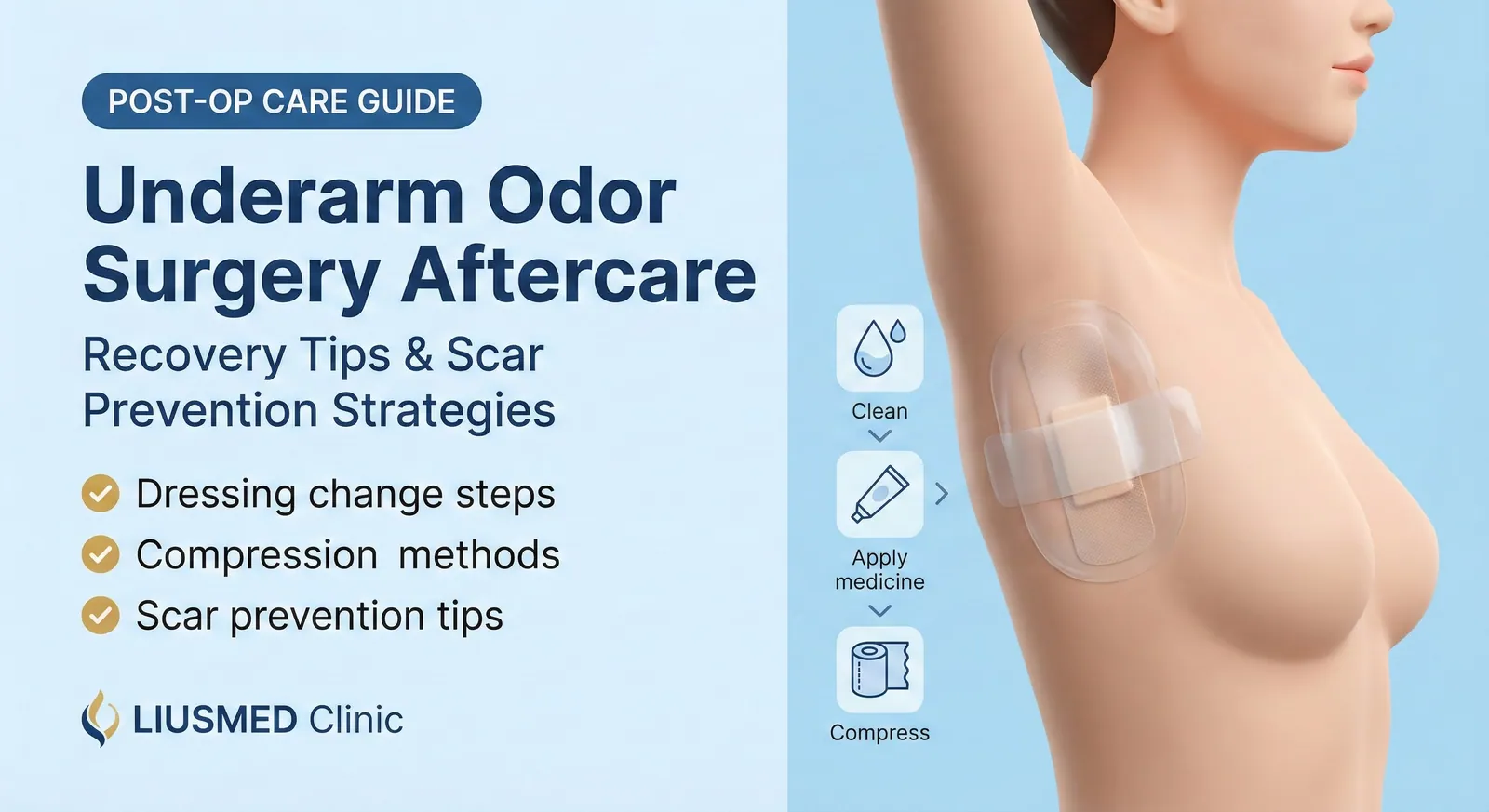
- 7-day compression dressing guidance: should be included
- Day-14 stitch removal / dressing change: should be included or low-cost
- 1 / 3 / 6-month follow-up: ask whether included or à la carte
- Complication management: ask whether included
A complete package should bundle "all 7-day dressing changes + 1/3/6-month follow-ups" into the surgical fee — no surprise charges later.
6. Overseas / Special Services (0–15%)
Common add-ons for overseas patients:
- 4-language pre-op evaluation report (for family / second opinion)
- Airport pickup assistance
- Hotel / dining recommendations
- Post-op LINE one-on-one follow-up
- Multilingual customer service
Clinics typically price these separately (or bundle them in premium packages). Local Taiwan patients don't need them, so they aren't in standard quotes.
Why Cheap Isn't Always Smart
Common hidden costs in packages priced clearly below the local market range:
| Surface savings | Real cost |
|---|---|
| Surgeon doesn't personally operate | Technique inconsistency, follow-up gaps |
| Laser "needs 2-3 sessions" | Total cost may end up higher |
| Skimped local anesthesia (under-coverage) | Intra-op pain, poor experience |
| Follow-up à la carte | Dressings, visits, complication handling stack up |
| No compression dressing instruction | Slower recovery, higher bruising risk |
Medicine isn't a discount-hunting market — cheap packages typically recover their cost from you in the form of "time / pain / recurrence / re-treatment."
5 Clinic-Selection Checks
Ask these 5 questions when shopping:
- "How many cases has the operating surgeon accumulated? How many per year?" — direct experience indicator
- "Will the same surgeon evaluate me AND perform the surgery?" — avoids "sales first → surgeon at OR → different surgeon operates" funnels
- "Are all 7-day dressing changes included?" — hidden-cost check
- "Are 1/3/6-month follow-ups included? Can I see follow-up data?" — surgeon's commitment to long-term outcomes
- "Can I see real cases at 1-year and 5-year marks?" — not just "pretty 1-week-post-op photos"
Clinics willing to answer these 5 questions transparently usually justify a higher price. Those who dodge or use sales talk to confuse — don't pick them even if cheap.
FAQ
Does Taiwan's NHI cover bromhidrosis surgery?
No. Bromhidrosis is currently classified by Taiwan's NHI as "cosmetic / quality-of-life" rather than disease treatment, so it falls outside NHI coverage.
Can I claim commercial insurance reimbursement?
Commercial medical insurance varies by policy. Bromhidrosis surgery is typically not classified as "disease treatment" (commonly excluded). Reimbursement-style policies may partially cover certain surgical items — check with your insurer before traveling.
Why do some quotes include post-op laser / extra treatments?
Add-on lasers, Botox, or skin treatments are typically "after-sale upsells" that don't affect the bromhidrosis surgery's clearance rate itself. If add-ons aren't what you need, don't pay for "perceived value" — focus on main surgery quality.
Any overseas medical insurance I can use?
Specific products vary widely by country. We recommend checking 30 days before travel for Taiwan medical-visa travel insurance options and whether they cover preparation workdays, plus confirming how your home-country policy handles post-return continuity.
Related Reading
- Bromhidrosis & Sweat Treatment: How to Choose What Fits You
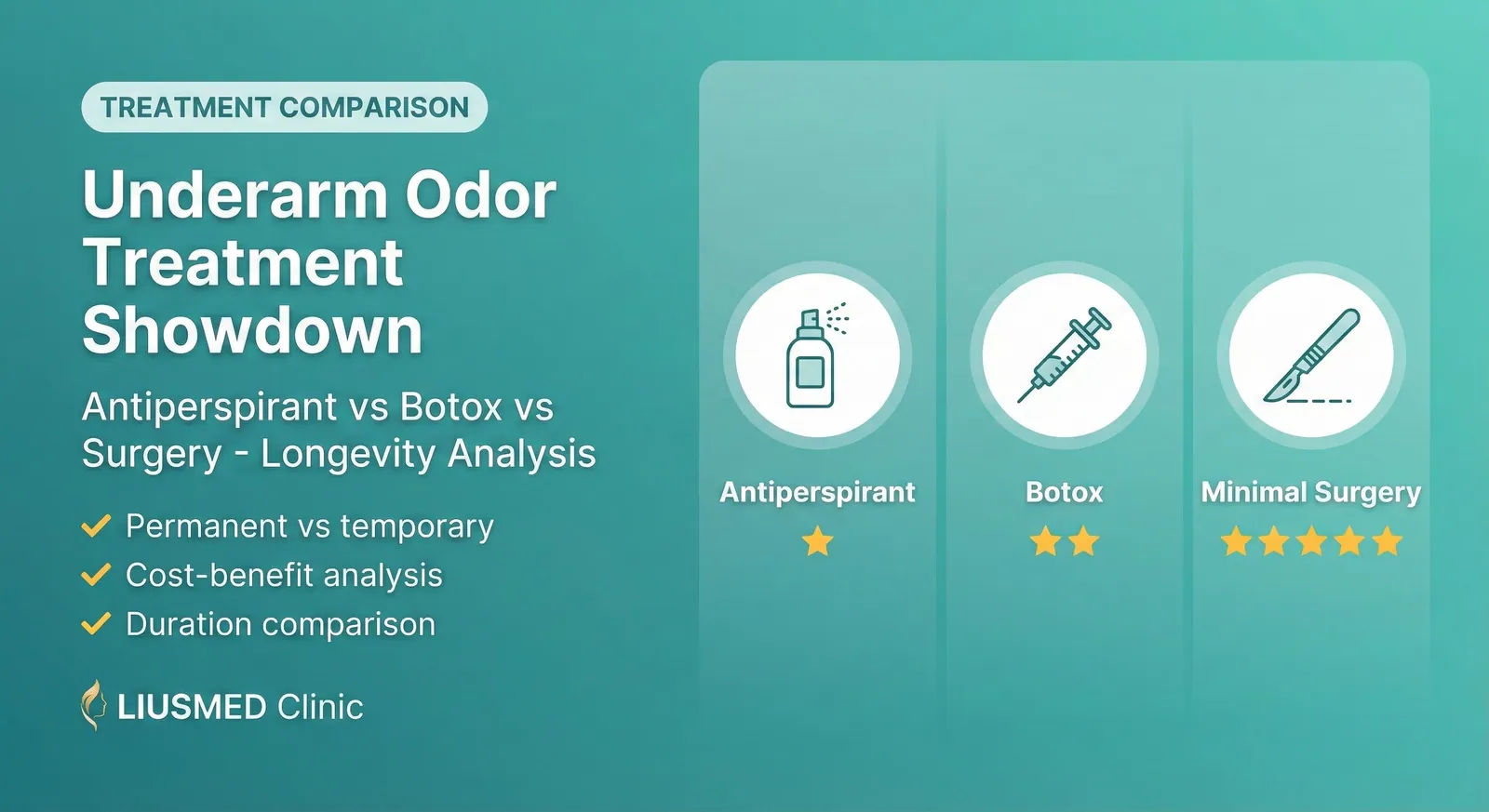
- Underarm Odor: Antiperspirant vs Botox vs Surgery
- Rotational Curettage vs Laser for Odor: Which Lasts Longer?
- Coming to Kaohsiung for Odor Surgery: A 3-Day Itinerary
- Axillary Bromhidrosis
- International Patients
Conclusion
Bromhidrosis surgery pricing has structural reasons, driven by 6 factors: surgeon technique + equipment + anesthesia + area + follow-up + overseas services. Cheap packages typically recover cost via "follow-up extras," "extra sessions needed," or "sales first, surgeon later" funnels.
When choosing, screen with 5 indicators: case volume, same-person evaluator/operator, follow-up bundling, long-term case visibility, post-op transparency. Dr. Ta-Ju Liu has 20 years of dedicated practice, over 10,000 cases, and offers full 4-language consultation and post-op tracking. If you're comparing clinics, Add us on LINE for a detailed quote — message in any language, auto-translated.
Related Reading
- Underarm Odor: Antiperspirant vs Botox vs Surgery
- Coming to Kaohsiung for Odor Surgery: A 3-Day Itinerary
- Rotational Curettage vs Laser for Odor: Which Lasts Longer?
- Axillary Bromhidrosis
This article is educational. Individual results may vary; actual quotes require in-person evaluation by Dr. Ta-Ju Liu.