In clinic, bromhidrosis—the distinctive body odor produced by the underarm apocrine glands—is rarely just one person's issue. Often a mother brings her child in, and only as we talk does she mention, "Actually, I have it too." And often, once one person has been treated, they later bring in their siblings, and sometimes the older generation as well.
This is not a coincidence, and it is not a family who "all neglect cleanliness." Bromhidrosis appears in clusters within families for a very simple reason—it is an inherited constitution, not a hygiene problem.
Bromhidrosis Shows Up in Family "Clusters"—That's Genetics
The apocrine-gland constitution that produces bromhidrosis is a dominant inherited trait: if you inherit the relevant gene, it tends to show up, which is why having several people in the same family with it is very common.
What's more interesting is that the same gene that decides the bromhidrosis constitution (ABCC11) also determines whether earwax is wet or dry—which is why "wet earwax" is often used as one clue to the underlying constitution. I go into more detail on inheritance probability, and how to do a preliminary self-check from earwax, in Is Bromhidrosis Hereditary and Wet Earwax and Bromhidrosis.
But here I want to say something more important first: since it is a constitution, it should never be treated as something shameful.
Key point: Bromhidrosis is an inherited constitution—not poor hygiene, and certainly not anyone's fault. Understanding it as "a constitutional trait the family shares" is the first step to handling it well, together.
A Common Family Scene: "Now Only I'm Left"
I've seen many situations like this: within one family, the younger members were treated one after another and their odor was gone, until in the end it was the older family member who said—"Everyone at home is fine now; now only I'm left"—and so they, too, decided to come and face it.
That image has stayed with me, because it illustrates two things. First, bromhidrosis is inherited across all ages, from children to the elderly. Second, when a family treats it as "something we can deal with together" rather than "a secret that can't be mentioned," each person finds it easier to set down the emotional burden and calmly decide whether they want to do something about it.
Age is never a reason for "whether it's worth caring about." The distress is real, and wanting to address it is reasonable—and that has nothing to do with how old you are.
Why Facing It Together Beats One Person Toughing It Out
The hardest part of bromhidrosis is often not the odor itself, but the self-consciousness and social anxiety it brings. Quietly bearing it alone makes it easy to spiral into feeling isolated; but when the whole family understands that "this is a constitution we share," the power of that support changes everything.
- No more straining to hide it, because the family already understands.
- Whether to address it, and when, can be discussed together rather than agonized over alone.
- For a child who is still growing, seeing family members face it openly protects their self-esteem far more than any lecture could.
Turning bromhidrosis from "my private embarrassment" into "a constitution our family faces together"—that shift, by itself, already resolves a large part of the emotional difficulty.
My Child Has Bromhidrosis—What Now? Evaluate First, Don't Rush to Surgery
This is the question parents ask most. And here I want to be especially clear: when a child has bromhidrosis, the first step is evaluation, not rushing to schedule surgery.
Children and adolescents are still developing, so whether treatment is needed and when depends on age, developmental stage, how pronounced the odor is, and its real impact on the child's daily life and social world—this calls for a parent-accompanied consultation with individual assessment by the doctor, rather than applying adult standards directly. Very often, getting good daily hygiene in place, providing education, and giving the child the right attitude already helps a great deal. For more on timing in children, see the decision framework in At What Age Can a Child Have Bromhidrosis Surgery.
Key point: For children, a de-shaming attitude comes before any treatment. Evaluate first, support first, and leave "whether and when to treat" to individual judgment at the consultation.
Even Post-Operative Care Can Become a "Family" Effort
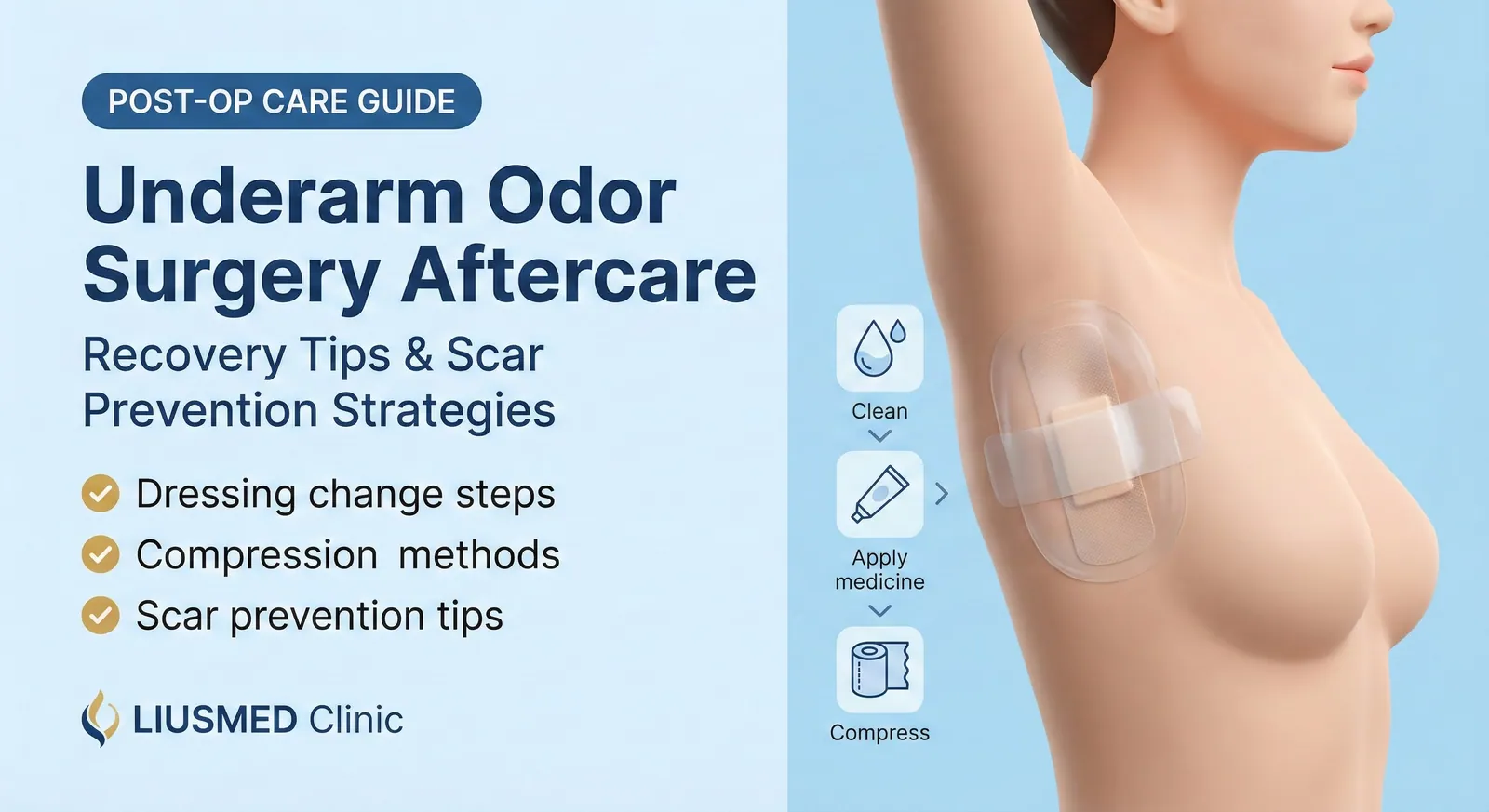
Facing it as a family has another practical benefit: post-operative care reminders happen between family members.
I've seen siblings who came in together to be treated—the two of them would supervise each other's wound care, remind one another what to watch out for, and keep their follow-up appointments—and both recovered smoothly. How well wound care is followed has always been one factor in the final result; when family members keep an eye on it together, it tends to be done more thoroughly than going it alone.
This echoes something I often say: doing the surgery well is only half of it; how well post-operative care is followed is the other half—and family support fills in exactly that half. As for what "doing the surgery well" actually means in technical terms—why the thoroughness of clearance makes such a difference to the odor result from one and the same operation—I explain it more fully on the Minimal-Cut Surgery page → Understand how clearance thoroughness determines the result.
How Should You Begin?
If you've noticed that more than one person at home has bromhidrosis, that's actually good news—it means you can figure it out together and decide together how to handle it, instead of each carrying it alone.
Getting started is simple: bring the family's situation (who has it, their ages, how much it bothers them) to the consultation together, and let the doctor assess each person individually—the criteria for adults and children differ and are looked at separately. You can start by reading the underarm bromhidrosis surgery page, or simply book a consultation for an assessment by Dr. Ta-Ju Liu. Treating bromhidrosis as a constitution the family shares, rather than each person's private secret, is the healthiest—and most effective—place to start.
Frequently Asked Questions
Is bromhidrosis hereditary?
Yes. The apocrine-gland constitution is a dominant inherited trait, so it's very common for several people in the same family to have it. It's a constitution, not a hygiene problem.
Why is "wet earwax" often used to judge the bromhidrosis constitution?
Because the bromhidrosis constitution and whether earwax is wet or dry are decided by the same ABCC11 gene. Wet earwax can serve as a preliminary clue, but it still needs to be confirmed at a consultation.
Several people in my family have bromhidrosis—is that normal?
Yes, and it's exactly what a dominant inherited trait looks like. Treating it as a constitution the family shares and facing it together is easier to handle than each person quietly bearing it alone.
My child has bromhidrosis—do they need surgery right away?
No. The first step is evaluation, not surgery—it depends on age, developmental stage, and how much it actually troubles the child, with a parent-accompanied consultation and individual judgment by the doctor. Very often, getting daily hygiene and education right already helps a great deal.
Is it still worth treating bromhidrosis in an older family member?
Yes. Age is not a reason for whether it's worth caring about; the distress is real, and whether to address it has nothing to do with how old you are. Leave that to individual assessment at a consultation.
What are the benefits of a family dealing with bromhidrosis together?
Emotionally, no one has to hide it alone, and decisions feel more reassuring. Practically, family members can remind each other about post-operative care, which improves how well it's followed and helps recovery.