"Doctor, since I had my baby, my underarms and intimate area seem to smell stronger — is something wrong with me?" "Since menopause started, I've noticed a body odor I never used to have. Is that normal?"
These are changes many women go through but rarely feel comfortable bringing up. First, the reassuring big picture: shifting hormones really do affect your sweat glands, skin, and the intimate microbiome, and in turn can change how you smell — and most of this is normal physiology, not a sign that "something is wrong" with you. That said, part of it — especially certain changes in intimate odor — can signal an infection, and that needs to be told apart. This article will help you separate the "normal changes" from the "warning signs worth watching."
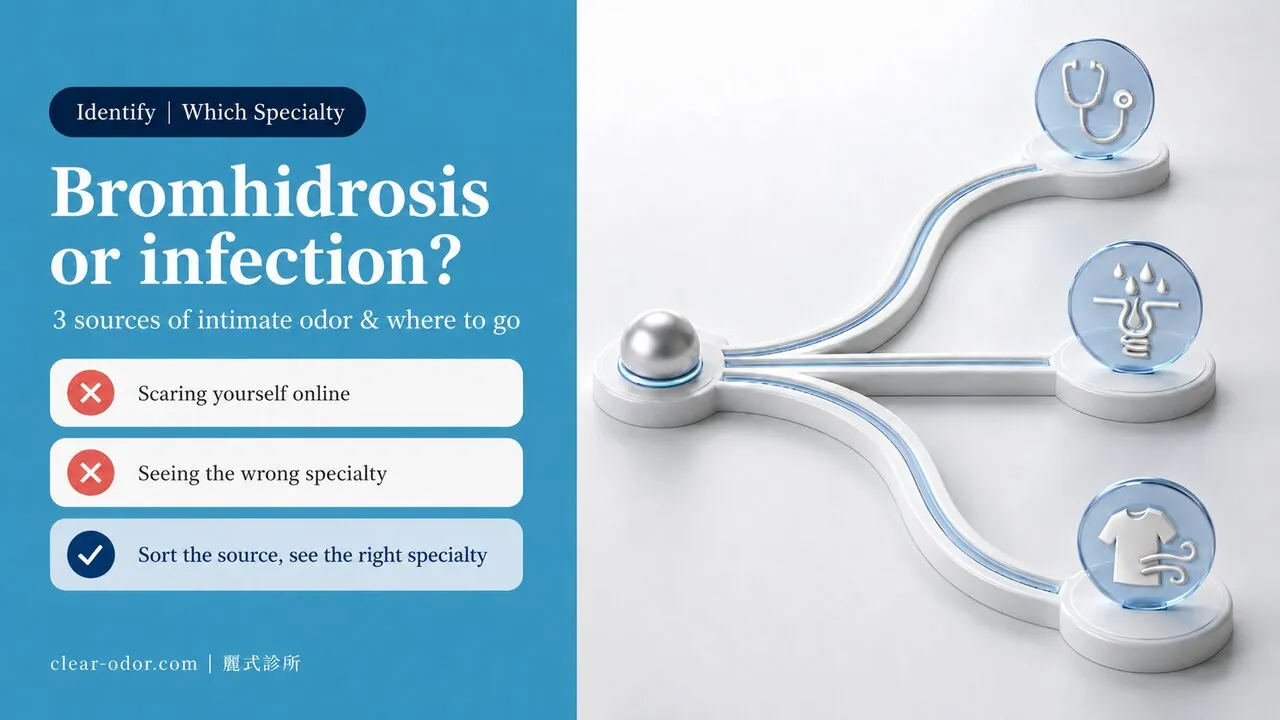
Want to first figure out where the odor is coming from? Body odor can come from the skin, the mouth, or the intimate area. Start with the Midlife Body Odor & Aging Odor Complete Guide for the full picture, then come back here for the hormone thread.
How Do Hormones Affect Body Odor?
Shifting hormones change sweat gland activity and the skin and intimate microbiome, which in turn changes how you smell — a change with a physiological basis, not a sign that you're unclean or ill.
Three key stages
Over a woman's lifetime, estrogen and other hormones go through pronounced shifts — most noticeably during pregnancy, the postpartum period, and menopause. These hormonal changes can affect body odor along several pathways:
- Changes in sweat gland activity: hormonal swings can affect how much you sweat and the makeup of that sweat. When you sweat more or feel hot and clammy, the odor produced as skin bacteria break down sweat shifts too;
- Changes in the skin and intimate microbiome: estrogen influences the environment of the skin and the vagina (for example, vaginal pH and the population of lactobacilli). When the microbiome changes, the odor can change with it;
- Links with metabolism, mood, and sleep: menopause often comes with hot flashes, night sweats, and changes in sleep — all of which can indirectly affect how you perceive your own odor.
In other words, a change in body odor during these stages has a physiological basis. It doesn't mean you're unclean or ill. Understanding this alone tends to ease some of the worry.
Postpartum Odor Changes: What's Normal?
Most postpartum odor changes ease as your hormones and body recover; but if the intimate area develops abnormal discharge, a strong unusual odor, itching, or pain, it should be evaluated with infection in mind.
Three common changes
The postpartum period is a time of dramatic hormonal change. Add in breastfeeding, sleep deprivation, and increased sweating, and shifts in body odor are very common:
- Changes in underarm and overall body odor: in the early postpartum weeks it's common to sweat more (your body is releasing the fluid built up during pregnancy), and stronger sweating tends to mean a more noticeable odor — for most women this eases as the body recovers;
- Changes in intimate odor: during lochia (postpartum bleeding), wound healing, and the resetting of the microbiome, the intimate area may smell different than it did before pregnancy. This is common during recovery;
- How you perceive your overall odor: when you're sleep-deprived and under stress, you tend to be more sensitive to your own smell.
When to pay attention
Most postpartum odor changes ease as your hormones and body recover. But if the intimate area develops abnormal discharge, a strong unusual odor, itching, or pain, that's no longer just "normal postpartum change" — it should be evaluated with infection in mind (see sections 4 and 6).
Why Does Body Odor Change in Menopause? Hot Flashes, Night Sweats, and the Microbiome
As estrogen falls in menopause, hot flashes and night sweats make sweat odor more noticeable, the skin may show aging odor, and vaginal dryness with microbiome shifts can change the smell — mostly normal physiology, where the focus is gentle management.
What falling estrogen brings
Around menopause, estrogen declines, and several odor-related changes are common:
- Hot flashes and night sweats: sudden warmth and increased sweating, once that sweat is broken down by skin bacteria, can make body odor more noticeable. Night sweats can also leave odor in your bedding;
- Skin changes: the state of the skin and sebum changes, and some people start to notice a more "oily, stuffy" aging odor (2-Nonenal) around this time — menopause and aging odor often overlap in timing;
- Vaginal dryness and microbiome changes: as estrogen falls, the vaginal environment changes, which can bring dryness and discomfort, and the odor may differ when the microbiome shifts.
Where to focus
Most of these are normal physiological changes of menopause. The focus of care is managing sweat and keeping skin, clothing, and bedding clean — not over-cleansing or douching (over-cleansing can actually disrupt the skin barrier and the microbiome).
Intimate Odor: How Do You Tell Normal Changes from Signs of Infection? (This Is the Most Important Section)
A faint natural scent that varies with your cycle and brings no discomfort is usually normal; but a distinct fishy odor, increased or discolored discharge, and itching, burning, or pain more likely point to infection and need a gynecology evaluation rather than masking the odor yourself.
One table to tell normal from "see a doctor"
The intimate area naturally has its own scent, and it shifts somewhat with your cycle and your hormonal stage — most of which is normal. But a few situations are more likely to point to an infection, and these need a gynecology evaluation rather than trying to mask the odor with cleansing products. The table below helps you separate "normal change" from the "infection signs worth a doctor's visit":
| Feature | Normal change | Infection sign worth a doctor's visit |
|---|---|---|
| Smell | A faint natural scent that varies slightly with your cycle | A distinct fishy odor, more noticeable after intercourse |
| Discharge | Amount, color, and texture stay roughly stable | A clear increase in amount, a change in color (gray, yellow-green), or a change in texture |
| Accompanying sensations | No discomfort | Itching, burning, redness, swelling, pain, or discomfort when urinating |
| Trend over time | Eases as the body recovers and with the cycle | Persists or worsens |
When infection signs appear, see gynecology first
When the situations in the right-hand column appear, the goal isn't to get rid of the smell — it's to see gynecology and find the cause — because this kind of odor is "your body flagging a problem," and masking it can delay care. For a fuller breakdown of when intimate odor is normal versus a sign of infection, see How to Tell Intimate Odor from Infection Odor.
An important reminder: do not douche (rinsing inside the vagina). Douching disrupts the normal microbiome and can actually increase the risk of infection and odor. Gently cleansing the vulva and keeping the area breathable is safer than aggressive cleaning.
How Should You Manage Postpartum and Menopausal Body Odor Day to Day?
Cleanse gently without douching, manage sweat and clamminess, keep a regular routine and stay hydrated, and talk with gynecology when menopausal symptoms are significant — the shared spirit is to work with your physiology and manage gently, not fight it with aggressive cleaning.
Four gentle, body-friendly directions
For postpartum and menopausal body odor, a gentle, body-friendly approach includes:
- Cleanse gently, avoid overdoing it: the vulva can be cleansed with plain water or a mild product. Do not douche, and don't strip the area of its natural oils, so you don't disrupt the skin and intimate barrier and microbiome.
- Manage sweat and clamminess: choose breathable clothing, change promptly after sweating, and when night sweats are noticeable, stay on top of changing and washing bedding (odor can also lodge in your pillow and clothing fibers).
- Keep a regular routine and stay hydrated: sleep and stress affect both how you perceive your odor and your metabolism.
- When menopausal symptoms are significant, talk with gynecology: if hot flashes, night sweats, or dryness clearly affect your daily life, gynecology has appropriate ways to assess and address them — you don't have to just tough it out.
The shared spirit of these approaches is to work with your physiology and manage gently — not to fight natural hormonal change with aggressive cleaning.
When Should You See a Doctor?
See gynecology for a distinct intimate fishy odor, abnormal discharge, or itching and pain; rule out a metabolic problem if sweat, urine, and breath all carry a fruity, ammonia-like, or fishy smell; and when you can't pinpoint the source, an integrated evaluation can help clarify where it's coming from.
Three situations that warrant a visit
Separating "normal change" from "see a doctor" is the most practical part of this article. Situations where seeing a doctor is advised include:
- Intimate area: a distinct fishy odor, abnormal discharge, itching, burning or pain, or odor that worsens after intercourse → gynecology;
- A systemic, unusual odor: if it isn't localized but instead your sweat, urine, and breath all take on a fruity, ammonia-like, or fishy smell, along with weight changes, extreme fatigue, and the like → systemic metabolic problems need to be ruled out (see the Body Odor Red-Flag Checklist);
- Persistent distress when you can't pinpoint the source: if the odor causes you ongoing anxiety and you can't tell whether it's coming from the skin, the intimate area, or your whole body → an integrated evaluation can help clarify the direction.
Most postpartum and menopausal odor changes are normal — but the signs above are worth confirming with a professional rather than quietly carrying on your own.
Frequently Asked Q&A
Q1. My body odor is stronger after having a baby — is that normal?
Most of the time, yes. Increased postpartum sweating and the resetting of hormones and the microbiome all change body odor, and it usually eases as your body recovers. But if the intimate area has abnormal discharge, a strong unusual odor, or itching, it should be evaluated with infection in mind.
Q2. Since menopause I've had a body odor I never used to. What's going on?
During menopause, falling estrogen, hot flashes and night sweats, and changes in the skin and intimate microbiome can all make body odor different — and this period often overlaps with aging odor. Most of it is normal physiology, and the focus is gently managing sweat and cleansing.
Q3. I have a fishy intimate odor — should I wash more and use more cleansing products?
Not recommended. A distinct fishy odor (especially one that worsens after intercourse) can be a sign of infection, so the priority is to see gynecology and find the cause — not to mask the odor with cleansing products or douching. Douching actually disrupts the microbiome and can make the problem worse.
Q4. Can I douche to get rid of intimate odor?
Douching (rinsing inside the vagina) is not recommended. It disrupts the normal microbiome and increases the risk of infection and odor. Gently cleansing the vulva and keeping the area breathable is enough.
Q5. Do postpartum or menopausal body odor changes need a doctor's visit?
Normal physiological changes don't necessarily require one — gentle cleansing and sweat management are usually enough. But when signs of an intimate infection appear, or a systemic unusual odor comes with whole-body symptoms, seeing a doctor (gynecology or internal medicine) to confirm the cause is advised.
Q6. How do I tell whether the smell is from the intimate area, the skin, or my whole body?
A useful clue is "whether it's concentrated in one spot": odor in just one area is usually local, while sweat, urine, and breath all carrying an odor points more toward a systemic cause. When you're unsure, using the Midlife Body Odor Complete Guide to sort out the source is a more efficient approach.
A Final Word
The body odor changes of pregnancy, the postpartum period, and menopause are often hormones in flux behind the scenes — a normal phenomenon with a physiological basis, not a sign that you're unclean or ill. The spirit of managing it is to "work with your physiology and manage gently": manage sweat, cleanse gently, avoid douching and over-cleansing, and pay attention to clothing and bedding.
At the same time, it helps to know the warning signs: a fishy intimate odor, abnormal discharge, itching or pain, or a systemic unusual odor with whole-body symptoms are your body's way of saying "it's time to have a professional take a look" — and at that point, masking the odor can delay care. If you're troubled by these changes and can't tell whether they're normal or not, you're welcome to contact us online. Dr. Ta-Ju Liu can help you clarify the direction and, when needed, connect you with gynecology or a relevant specialty.
This article is integrated health-education information and cannot replace a formal in-person consultation. For intimate infections and gynecology-related concerns, evaluation by a gynecologist is advised.