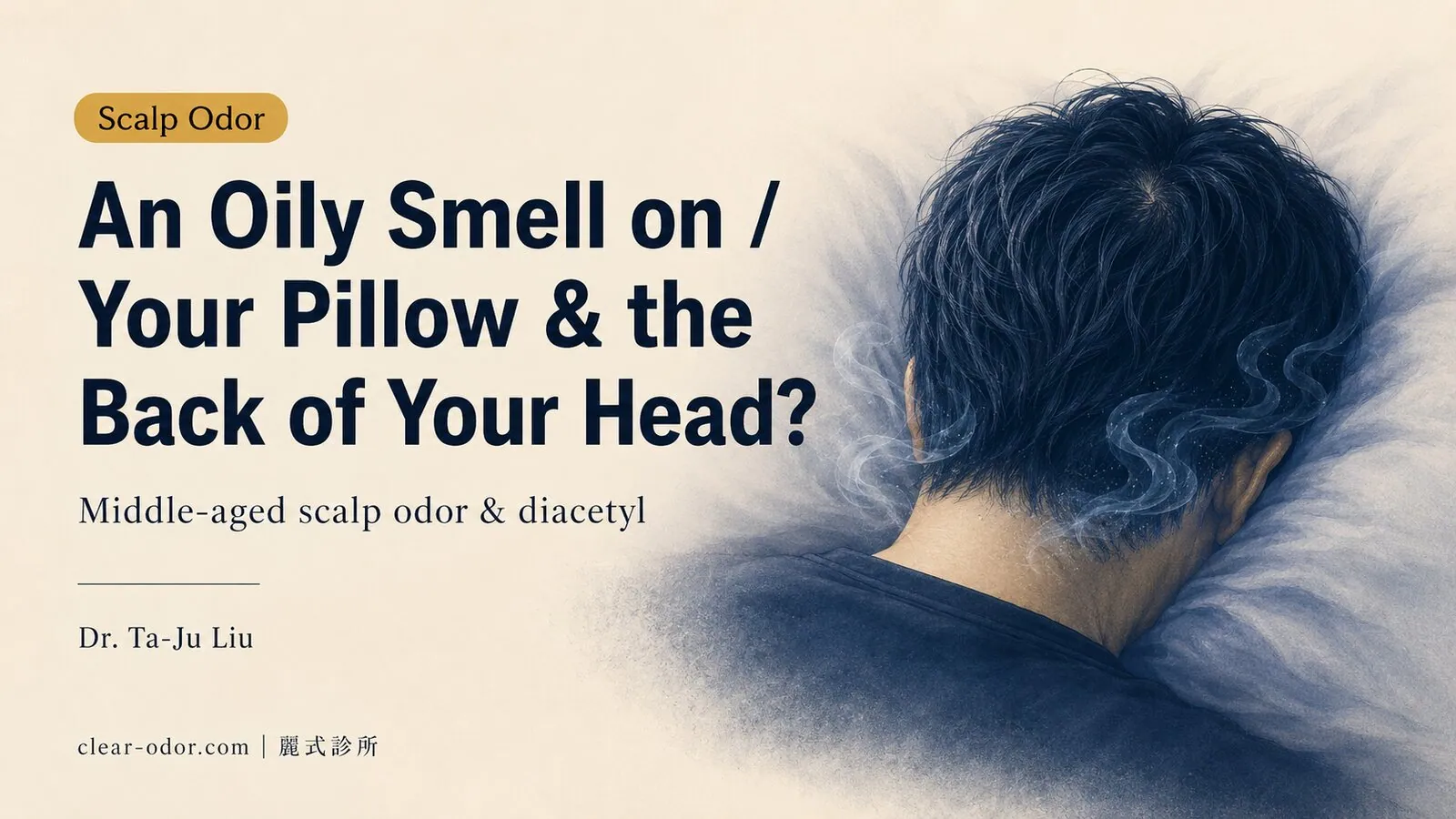
"Doctor, I'm only 38—surely I'm not at the 'old-person smell' age yet? But my pillow, my helmet, and the back of my head always carry a stale, oily smell, like cooking oil that's been sitting out. A few hours after I wash my hair, it's back—what exactly is this?"
This is a very common complaint that rarely gets named correctly. When people smell something on their scalp, they tend to chalk it up either to "aging body odor" or to "not washing well enough." But in reality, that stale, oily smell concentrated on the back of the head and the pillow in people in their 30s and 40s is very likely not aging body odor, but the "middle-aged greasy odor" proposed in Japanese research and rarely discussed in Taiwan—known in Japanese as "middle-fat odor."
It differs from aging body odor in molecule, age, and location. Telling them apart is the only way to know where to put your effort. This article focuses specifically on this overlooked scalp smell.
Is it more than just your scalp? If you have a smell in more than one place, start with the Midlife Body Odor & Aging Odor Integrated Guide to separate aging body odor, bad breath, and scalp smell from one another, then come back here for the scalp piece.
What Is That Oily Smell on Your Pillow and the Back of Your Head — Is It Aging Body Odor?
Usually it's not aging body odor, but the earlier-arriving "middle-aged greasy odor" (Japanese: "middle-fat odor"), concentrated on the back of the head and pillow — a different molecule, age, and location from aging odor.
Japanese Research Splits "Age-Related Body Odor" Into Two
Japanese body-odor research divides age-related body odor into two somewhat different things:
- Aging body odor: usually noticeable after age 40, with the core molecule being 2-Nonenal, formed by the oxidation of sebum. The smell leans toward "oily, old books, musty," and tends to appear on the chest, upper back, behind the ears, and the upper body overall.
- Middle-aged greasy odor (Japanese: "middle-fat odor"): appears earlier, and is most noticed roughly between the 30s and 40s. Its core molecule is diacetyl, and the smell is described as "like oil that's been sitting out, used frying oil, or rancid dairy." It is especially concentrated on the back of the head, the hairline, the nape of the neck, and the pillow.
It Arrives Earlier and Sits More at the Back of the Head
In other words, "middle-aged greasy odor" reports for duty earlier than aging body odor and is more concentrated at the back of the head. Many people in their 30s who feel they are "not at the old-person-smell age yet" but are bothered by a pillow smell are actually dealing with this type. For the full science of the aging-body-odor track (2-Nonenal), see Why Do Pillows, Collars, and Behind the Ears Smell So Bad After 40? 2-Nonenal and Sebum Oxidation.
What Is the Key Molecule Behind Middle-Aged Greasy Odor, and Why Diacetyl Instead of 2-Nonenal?
The key molecule is diacetyl — a volatile compound produced when scalp sebum is metabolized by resident bacteria, and the lead actor behind that stale, rancid-oil smell. It is not the 2-Nonenal of aging body odor.
How Diacetyl Forms: Four Steps of Sebum Being Metabolized
The mainstream explanation for the source of middle-aged greasy odor is currently:
- High density of sebaceous glands: the scalp (especially the back of the head and the hairline) has a high density of sebaceous glands and secretes actively;
- Medium-chain fatty acids metabolized by bacteria: the medium-chain fatty acids in the sebum are metabolized by resident bacteria on the scalp (for example, the Staphylococcus epidermidis group);
- Diacetyl is produced: this metabolism produces diacetyl, a volatile compound that is the lead actor behind that "stale, rancid oil" smell;
- It sticks to fabric and replays: diacetyl also tends to adhere, together with sebum and sweat, to pillows and the linings of hats, forming a smell that keeps replaying.
Read the Evidence Level Honestly
To be honest about the evidence: the "middle-fat odor" and diacetyl framework was first proposed and promoted by Japanese research teams and companies. The related evidence is mostly mechanistic and brand-funded research, which places the evidence level at low to moderate—not as strong as some of the evidence for oral sources. So the stance of this article is: the concept is useful for understanding and for sorting smells by region, but there is no need to talk up any single product as a cure-all.
Why Does the Back of the Head, Hairline, and Pillow Smell — Not the Crown?
Because the back of the head, hairline, and nape have active sebaceous glands with poor ventilation, and are in direct contact with the pillow — sebum and diacetyl cling to the pillowcase all night, forming a secondary-release reservoir of smell.
Many people ask: "It's all scalp, so why does the back smell and not the crown?"
Three Reasons: Gland Distribution and Ventilation
The reason lies in sebaceous gland distribution and ventilation:
- Active glands, poor ventilation: the back of the head, the hairline, and the nape of the neck have active sebaceous glands, are covered by hair, get little air, and trap heat easily;
- A blind spot for your own nose: these areas are almost impossible to smell on yourself, so it's often a partner or a colleague who notices first;
- In direct contact with the pillow: most importantly, this area is in direct contact with the pillow. Sebum and diacetyl adhere to the pillowcase all night, forming a "secondary-release reservoir of smell." That's why it feels like "it's fine after a wash, but the moment I lie on the pillow, or the pillow comes close, the smell is there."
Why "Washing Your Hair Like Crazy" Often Fails
This is also why so many people "wash their hair like crazy" with limited results: because the pillowcase, hats, and helmet linings aren't being handled at the same time, which means they press their face and head right back into the reservoir every day. The logic is exactly the same as aging body odor "getting stuck on collars and pillows"—the warehouse of the smell is often in the fabric.
How Do You Tell Aging Body Odor, Middle-Aged Greasy Odor, and Seborrheic Scalp Smell Apart?
Go by location, age, and smell: back of the head + pillow + a stale-oil smell in your 30s–40s leans toward middle-aged greasy odor; the whole upper body, after 40, an old-books oily smell leans toward aging odor; a red, itchy, flaking scalp points to seborrheic dermatitis.
The Three Scalp Smells at a Glance
Scalp smell actually has several possible sources, and the three most easily confused are below. Here's a side-by-side comparison first:
| Type | Main Molecule | Typical Age | Typical Location | Smell Character | Common Companions |
|---|---|---|---|---|---|
| Middle-aged greasy odor ("middle-fat odor") | Diacetyl | Roughly 30s–40s | Back of head, hairline, nape, pillow | Stale oil, used frying oil, rancid | Oily scalp, trapped heat |
| Aging body odor | 2-Nonenal | Roughly after 40 | Upper body, behind ears, chest and back | Oily, old books, musty | Systemic, collar smell |
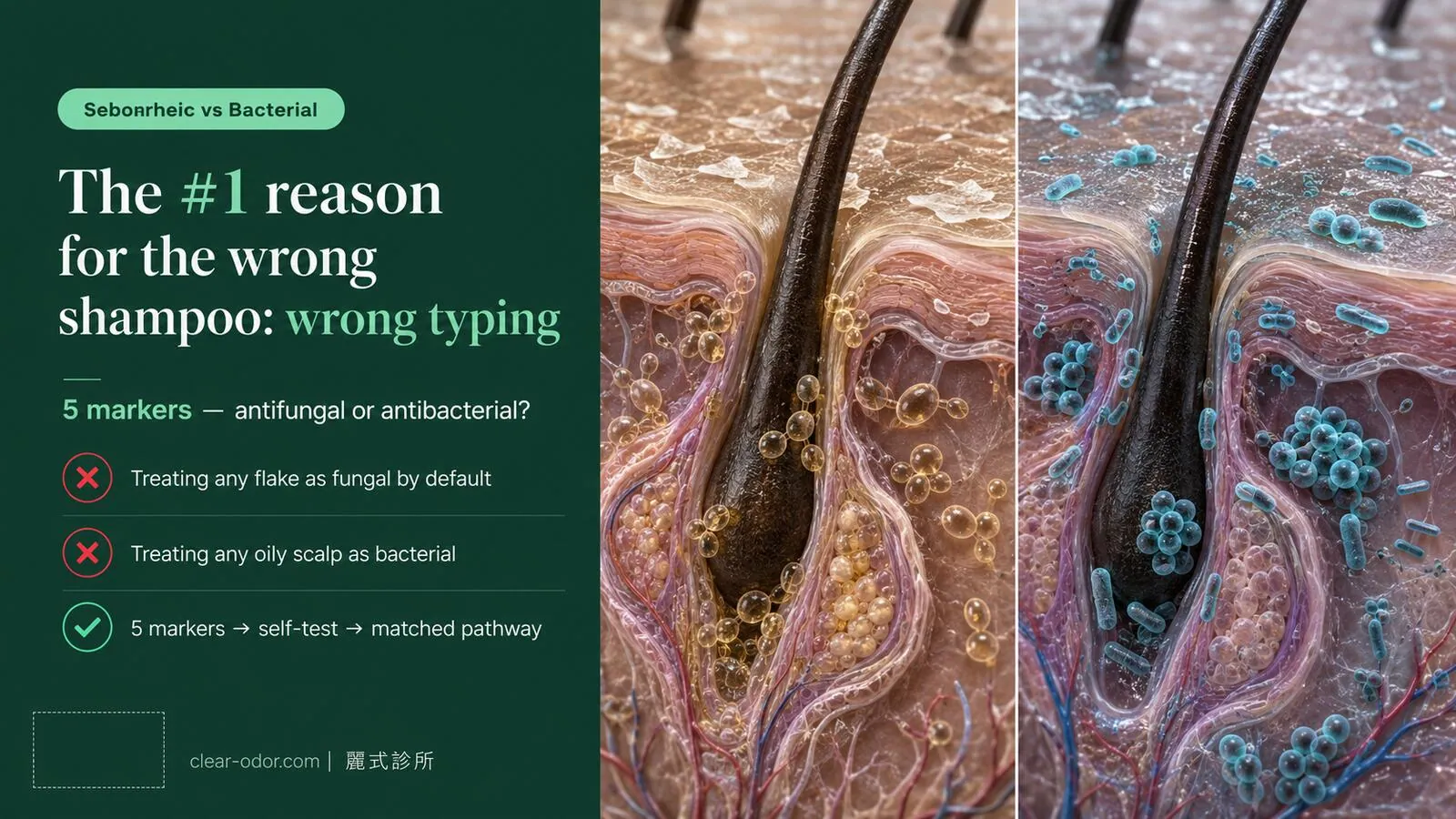
| Seborrheic scalp smell (seborrheic dermatitis) | Inflammation related to Malassezia yeast | Any age | Scalp, hairline, between the brows, sides of the nose | Stuffy, sour, with dandruff | Redness, itch, flaking, oiliness |
A Simple Way to Reason Through It
- Middle-aged greasy odor: if it's the back of the head + the pillow + a stale-oil smell in your 30s–40s, it's more like middle-aged greasy odor;
- Aging body odor: if it's the whole upper body, after 40, an old-books oily smell, it's more like aging body odor;
- Seborrheic dermatitis: if the scalp is clearly red, itchy, and flaking in patches, then it's not just "a smell"—you should consider seborrheic dermatitis and have a dermatologist evaluate it.
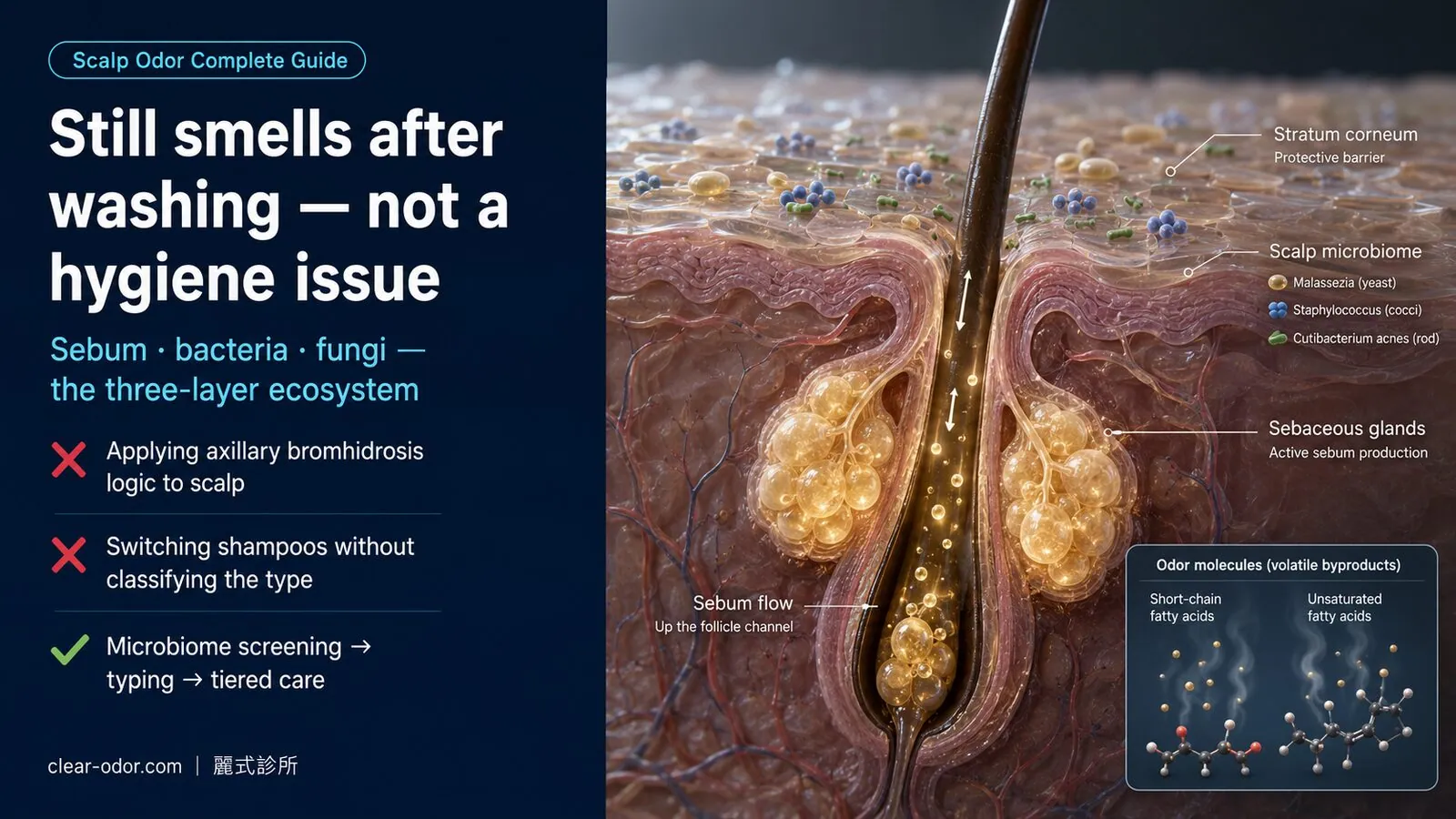
For the microbial and seborrheic details of all three, you can read further in The Complete Guide to Scalp Odor: The Microbiome Truth Behind Why It Still Smells After Washing.
How Do You Actually Address Middle-Aged Greasy Odor — How to Wash, and Do You Change the Pillowcase?
The key is washing the right spot rather than scrubbing all over: center cleansing on the back of the head, hairline, and nape, control oil moderately without over-degreasing, and wash pillowcases, hats, and helmet linings frequently.
Four Directions You Can Comfortably Follow
For middle-aged greasy odor, the more reasonable directions you can comfortably follow are:
- Center your cleansing on the back of the head, the hairline, and the nape: these are the spots where the sebaceous glands are most active and that get skipped most often during washing. Working your fingertips properly into the back of the head and hairline matters more than switching to a more expensive shampoo.
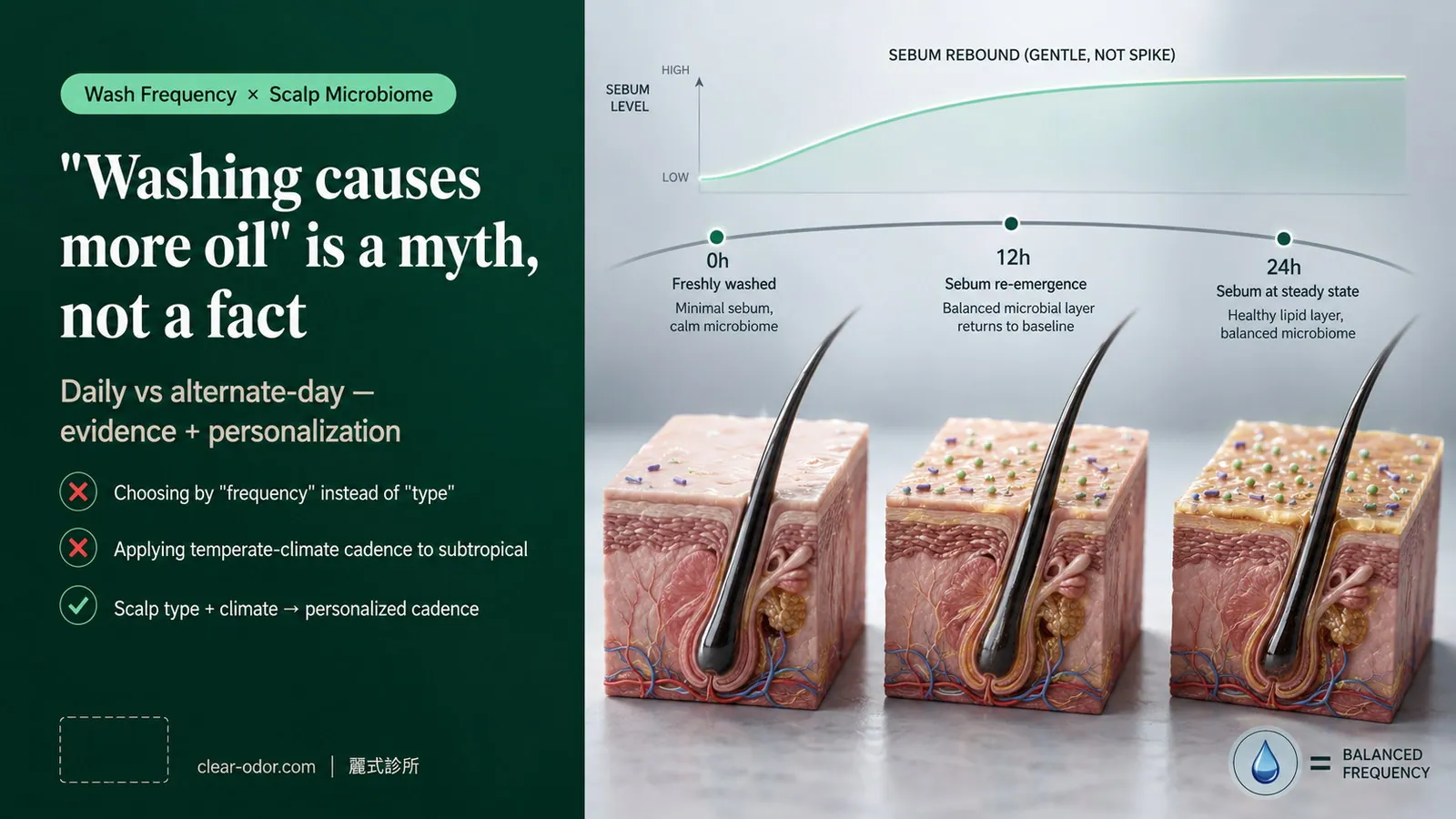
- Control oil moderately, but don't over-degrease: washing sebum away to the point of "excessive dryness" can actually trigger compensatory oil production and even damage the scalp barrier. The goal is "regular and clean," not "wash harder and harder."
- Wash pillowcases, hats, and helmet linings frequently: this is the most underrated step. The warehouse of the smell is on the pillow; if you don't wash the pillowcase, washing your hair gives you half the result for twice the effort.
- If you have an oily scalp or trap heat easily, watch ventilation and avoid styling-product buildup: excess wax and hair oil add to the raw material for sebum and microbial metabolism.
Anti-Odor Products Are an Adjunct, Not a Cure
As for the various "anti-middle-fat-odor" shampoos and sprays on the market—they can be supportive, but not a cure. Most of their evidence is brand research; getting the basics right (washing the right spot + changing the pillowcase) is usually the main driver of improvement. If you also have noticeable sweating and heat making the smell worse, that can be assessed at the same time, and it falls within the scope of an integrated scalp odor assessment.
When Is a Scalp Smell a "Condition" That Needs a Doctor?
When the scalp shows redness, itch, flaking, weeping or crusting, pustules, or abnormal hair loss, the root may be inflammation or infection — treat it as a signal to see a dermatologist, not just a smell to mask. An integrated odor clinic can also help sort out the source.
These Signs Warrant a Dermatologist
The vast majority of middle-aged scalp smells are the normal metabolism of sebum and microbes—manageable territory. But there are a few situations to treat as a signal to see a dermatologist, rather than just a smell to mask:
- Redness, itch, flaking, weeping or crusting: the scalp is clearly red, itchy, flaking in patches, or even weeping and crusting—consider seborrheic dermatitis, scalp folliculitis, or a fungal infection;
- Localized pain, pustules, or abnormal hair loss: folliculitis or another scalp condition needs to be ruled out;
- Marked short-term worsening with feeling unwell: the smell worsens markedly over a short period and is accompanied by feeling unwell overall—watch for whether another systemic problem is involved.
In these situations, switching shampoos or using deodorizing products won't solve the problem, because the root cause is inflammation or infection in the scalp and needs medical care. If you're not sure whether you have "just a smell" or a "scalp condition," you can contact us online and Dr. Ta-Ju Liu can help point you in the right direction.
Frequently Asked Questions
Q1. I'm only in my 30s and my pillow already smells oily—is that aging body odor?
Not necessarily. Aging body odor usually appears after 40, leans systemic and toward the upper body, and is 2-Nonenal. A stale-oil smell in your 30s–40s concentrated on the back of the head and the pillow is more like "middle-aged greasy odor" (Japanese: "middle-fat odor"), whose lead molecule is diacetyl. The two are not the same.
Q2. Why does it smell again a few hours after I wash my hair?
Partly because sebum and microbes keep metabolizing, and partly because the pillowcase and hat linings aren't washed at the same time—you press your head right back into the smell warehouse. Frequently washing your bedding and headwear often makes more of a difference than constantly switching shampoos.
Q3. Is it because I don't scrub hard enough or wash often enough?
It's not "harder is better." Over-degreasing triggers compensatory oil production and damages the scalp barrier, leaving it oilier and more sensitive. The point is to wash the right spots (the back of the head, the hairline), regularly, and thoroughly—not to scrub your scalp until it feels tight.
Q4. Do anti-"middle-aged greasy odor" shampoos really work?
They can be supportive. But the evidence for "middle-fat odor" and the related products is mostly mechanistic and brand research, with a low-to-moderate evidence level—don't treat it as a cure. Getting the fundamentals right (washing the right spot + changing the pillowcase) is usually the main driver of improvement.
Q5. Can you have scalp smell and aging body odor at the same time?
Yes. Middle-aged men often have a stacking of "sebum odor at the back of the head + aging body odor on the upper body," with both present. It works better to first separate each by location and approach, then manage them together. For the full integrated view, see the Midlife Body Odor Integrated Guide.
Q6. When should I see a doctor rather than handle it myself?
When the scalp is clearly red, itchy, flaking, weeping, has pustules, or shows abnormal hair loss, consider seborrheic dermatitis, folliculitis, or a fungal infection. That is a scalp "condition" that needs a dermatologist or an integrated assessment—not something switching shampoos can solve.
A Final Word
A middle-aged scalp smell is often mistaken for "aging body odor" or "not washing well enough," but much of the time it's actually the earlier-arriving "middle-aged greasy odor," concentrated on the back of the head and the pillow—where the key molecule is diacetyl, not 2-Nonenal. Once you understand this difference, you'll stop "washing your hair like crazy with nothing to show for it" and instead put your effort in the right place: wash the back of the head and the hairline properly, control oil moderately without over-degreasing, and wash the pillowcase and headwear along with your hair.
And when the scalp shows signs like redness, itch, flaking, or pustules, please treat it as a scalp condition that warrants medical care, not just a smell. If you'd like to figure out which type of scalp smell you have and how to address it, you're welcome to contact us online, and Dr. Ta-Ju Liu will assess based on your individual situation.
This article is integrated educational information and cannot replace a formal in-person consultation. Actual diagnosis and treatment still require a physician's personal evaluation.
How midlife body odor can be assessed and improved
Midlife body odor and aging odor are not something you "just have to tolerate, or just keep washing away." They have clear sources, and there are places where you can actually make a difference — we first help you tell whether it's sebum oxidation, bromhidrosis, or something else, and then map out an individualized, overall direction for improvement based on your situation. The detailed assessment and arrangements are explained during the consultation, according to your particular circumstances.
If this is troubling you, you're welcome to book an assessment, where Dr. Ta-Ju Liu can help you tell the sources apart and discuss a direction that suits you.
Related Reading
- Stale Smell on Your Pillow After 40? 2-Nonenal Explained
- Clothes & Pillows Still Smell After Washing? How to Fix It
- Scalp Odor After Washing? The Microbiome & How to Manage
- Scalp Odor: Antifungal or Antibacterial Shampoo? 5 Signs
- How to Tell Three Body Odors Apart: Aging, Bromhidrosis, Sweat
- Midlife Body Odor & Aging Odor Guide
- Scalp Odor Integrated Assessment